
Extruded Base Profile
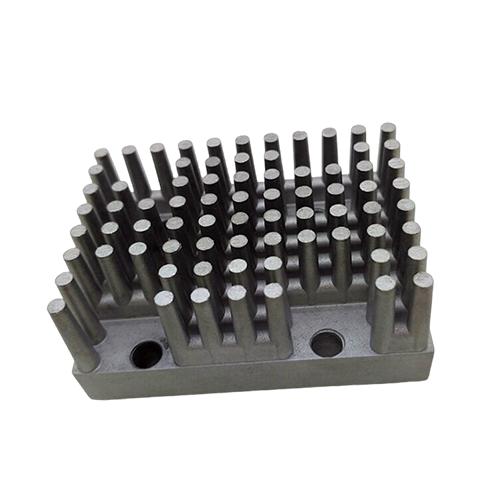
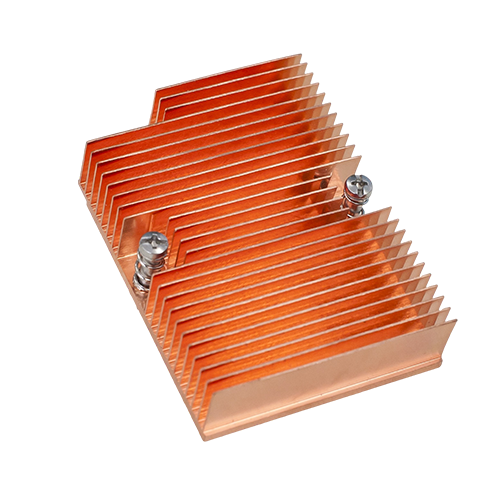
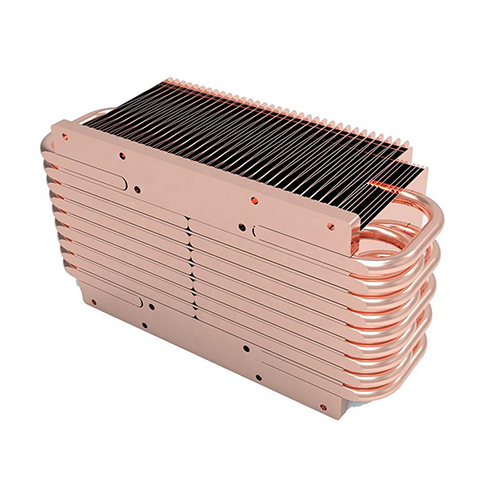
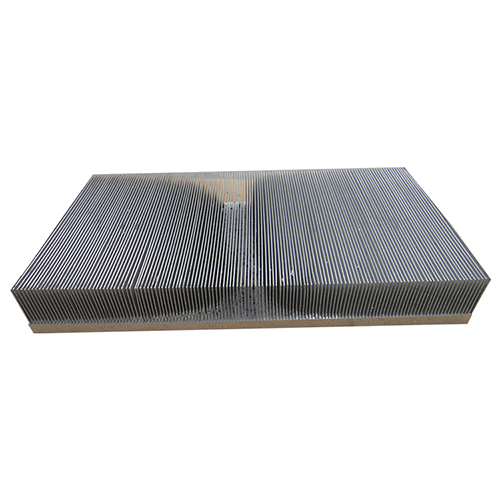
An aluminum (or sometimes copper) extrusion forms the primary body of the cold plate, featuring precisely shaped internal channels designed for coolant flow.

Cover Plate
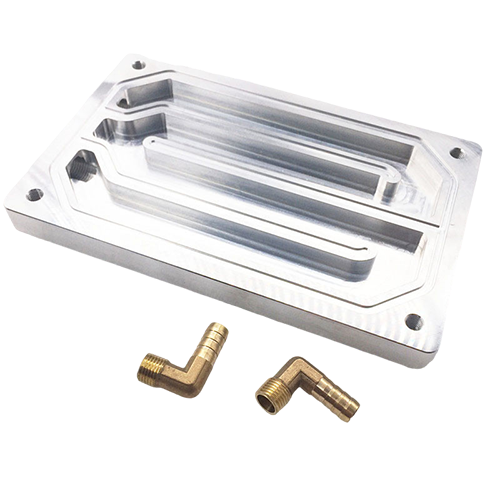
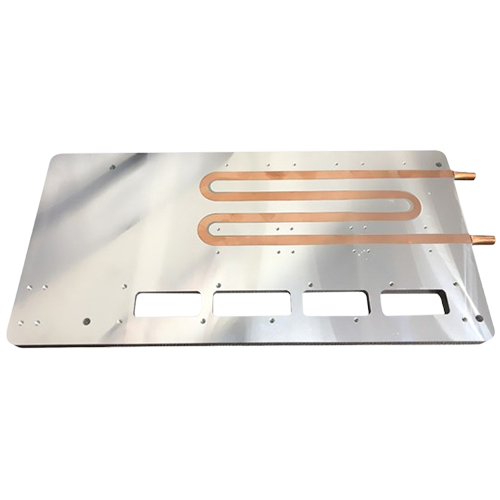
A flat cover plate is joined to the top of the extruded profile, sealing the channels and forming a closed loop for the liquid coolant.

Joining Process
The cover plate is then brazed or Friction Stir Welded (FSW) onto the extruded base. These advanced joining techniques ensure a robust, hermetically sealed bond, critical for preventing leaks.

Inlet/Outlet Connections
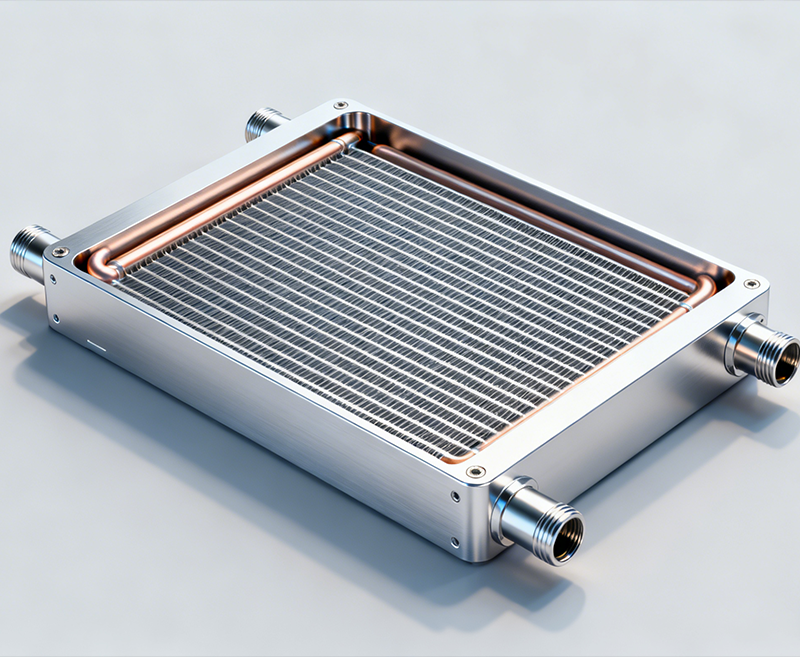
Machined ports and attached fittings allow for the integration of the cold plate into a liquid cooling loop.
 Economical Manufacturing: The extrusion process itself is highly efficient and economical, especially for high-volume production. This translates to lower unit costs compared to more complex manufacturing methods.
Mass Production Capabilities: Jindu's optimized extrusion molding process is specifically designed to support mass production volumes of up to 10,000+ pieces, ensuring cost control without sacrificing quality.
Superior Liquid Cooling Performance: As with all liquid cold plates, extruded versions leverage the high thermal conductivity of liquids (thermal conductivity efficiency 1000 times that of air) to manage high heat flux densities, ranging from 500W to 20kW.
Effective Heat Transfer: The direct contact between the heat source, the cold plate's base, and the circulating coolant ensures rapid and efficient heat absorption and dissipation.
Optimized Flow Paths: While typically featuring straight channels, these can be optimized for specific flow rates and pressure drop considerations (with pressure drop reduced by 30% through design optimization).
Minimized Weight: Aluminum extrusions offer an excellent strength-to-weight ratio, resulting in lightweight cold plates that are beneficial for weight-sensitive applications.
Durable & Reliable: The robust joining of the cover plate to the extruded base (via brazing or FSW) ensures a durable, hermetically sealed solution with long-term stability and reliability.
Tailored Channel Designs:The extrusion die can be designed to create specific channel configurations, allowing for customization to meet unique cooling requirements.
Dual-Sided Cooling Capability: Extruded designs can often be adapted to allow for cooling from both sides, maximizing heat removal from multiple components or increasing cooling capacity for single, larger heat sources.
Spatial Adaptability: Despite their robust construction, our cold plates can be made as thin as 10mm (in copper/aluminum materials), making them suitable for installation in confined spaces.
Material Selection
We primarily utilize high thermal conductivity aluminum alloys for our extruded cold plates:
Aluminum Alloys: Such as 6061 and 6063. These materials offer an excellent balance of thermal performance, machinability, and cost-effectiveness. Our chosen materials achieve thermal conductivity up to 200 W/mK.
While less common for extrusion itself, copper can be used for other components or as a base plate if a secondary joining process is involved.
Advanced Joining Techniques
The integrity of the seal is paramount for liquid cold plates. For our extruded cold plates, we employ highly reliable joining methods for the cover plate:
Brazing: Provides a strong, leak-proof metallurgical bond, ideal for complex designs and high-volume applications.
Friction Stir Welding (FSW): A solid-state joining process that creates robust, defect-free welds with minimal distortion, offering exceptional leak integrity and mechanical strength.
Precision Manufacturing & Quality Control
Every KINGKA Extruded Liquid Cold Plate benefits from our commitment to precision and quality
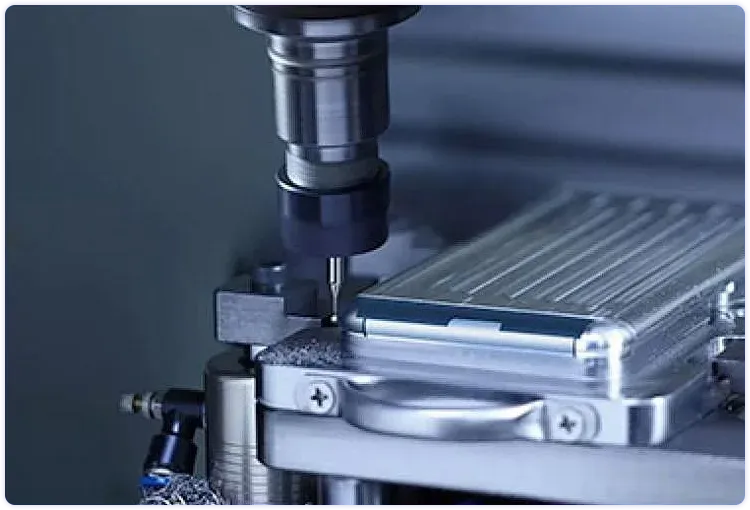
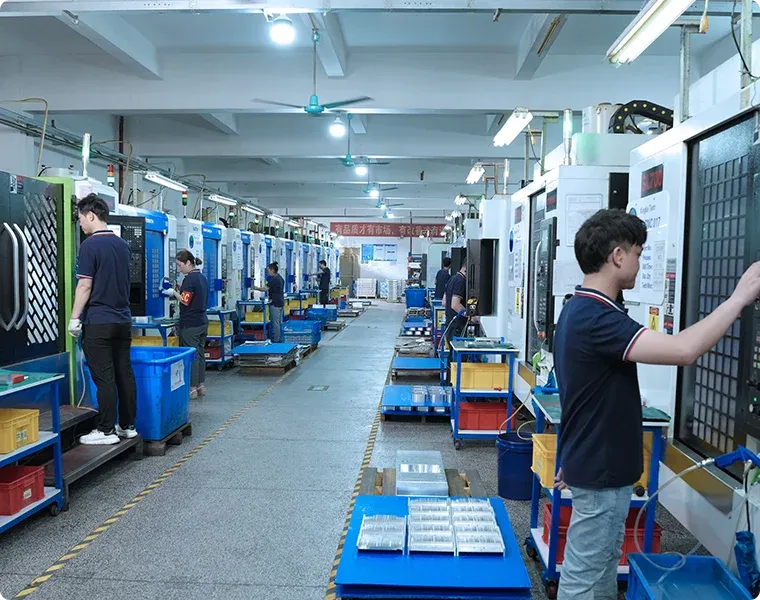
CNC Precision Processing: After extrusion and joining, our cold plates undergo CNC precision processing with a tight tolerance control of ±0.05mm. This ensures perfect flatness for optimal thermal contact with heat-generating components.
Rigorous Testing: Our comprehensive quality assurance includes:
Thermal Simulation (ANSYS Fluent): Predicting and optimizing performance under various conditions.
Pressure Testing:Verifying structural integrity and burst resistance.
Sealing/Leakage Testing:Ensuring hermetic integrity with a leakage rate of < 1×10⁻⁸ Pa·m³/s.
Flow Channel Cleaning:Internal channels are meticulously cleaned with 80°C hot water to remove any residual oils or debris before shipment.

Anodizing (Anodic Oxidation)
Methodology: The aluminum cold plate is immersed in an acidic electrolyte, and an electrical current is passed through, causing the aluminum surface to convert into a durable, porous aluminum oxide layer. This layer can then be sealed to maximize its protective qualities.
Key Advantages:
○Superior Corrosion Protection: The generated oxide layer acts as an effective barrier against various corrosive agents.
○Increased Hardness and Wear Resistance: Hard anodizing, in particular, creates a surface that is exceptionally resistant to abrasion and wear.
○Electrical Insulation: The aluminum oxide formed is electrically insulative, which is often a critical requirement to prevent unintended electrical pathways in electronic assemblies.
○Improved Aesthetics: Anodizing also provides a clean, professional finish, often available in different colors.
To significantly boost the native corrosion resistance of aluminum and enhance its surface hardness, anodizing is a widely adopted technique. This process fundamentally transforms the surface of the aluminum.

Chemical Conversion Coatings (e.g., Chromate Conversion)
Methodology: The aluminum component is subjected to a chemical solution that reacts with the metal surface to form a very thin, gel-like film, typically containing chromium (either hexavalent or, more commonly now, trivalent for environmental compliance).
Key Advantages:
○Effective Corrosion Inhibition: These coatings offer good protection against corrosion, even when very thin.
○Maintained Electrical Conductivity: Crucially, the conductive nature of the film allows for grounding or electromagnetic shielding without needing to remove the coating.
○Excellent Paint Adhesion: They serve as an outstanding primer for subsequent painting or powder coating, ensuring strong, lasting adhesion.
○Cost-Efficiency: Generally, these are more economical to apply for base-level protection and paint preparation.
For applications where maintaining electrical conductivity on the surface is as important as achieving corrosion resistance, chemical conversion coatings present an ideal solution. This method provides a protective layer without creating an insulative barrier.

Electroless Nickel Plating
Methodology: Unlike electroplating, this process does not require an external electrical current. Instead, a chemical reduction process deposits a uniform layer of nickel-phosphorus alloy directly onto the aluminum surface from a liquid bath.
Key Advantages:
○Exceptional Corrosion Protection: The nickel layer provides a robust barrier against a wide array of corrosive chemicals and environments.
○Enhanced Hardness and Durability: The deposited nickel alloy is significantly harder than aluminum, offering superior resistance to wear and abrasion.
○Uniform Coating Thickness: Due to the nature of the chemical deposition, the coating thickness is remarkably uniform across all surfaces, including intricate channels and blind holes.
Improved Solderability: It can provide a highly solderable surface, which is beneficial for attaching other components or connections.
When extreme corrosion resistance, high hardness, and absolute coating uniformity are paramount, electroless nickel plating is often selected. This process is particularly adept at coating complex internal and external geometries evenly.
○
○
○
○

○
○
Fundamental Pre-Treatment: Cleaning and Degreasing
Methodology: This involves multi-stage processes, including alkaline or acidic cleaning to remove oils, greases, fingerprints, and other manufacturing residues, followed by thorough rinsing. Mechanical cleaning or ultrasonic agitation may also be employed for difficult-to-reach areas, especially within internal channels.
Rationale: Contaminants on the surface will prevent proper adhesion of the protective coating, leading to defects such as blistering, peeling, or inconsistent coverage. A pristine surface ensures the applied treatment forms a strong, continuous, and effective barrier, thereby maximizing the cold plate's thermal performance and operational lifespan.
Before any of these specialized surface treatments can be applied effectively, a foundational and absolutely critical step is required: comprehensive cleaning and degreasing of the cold plate. The success and longevity of any subsequent coating directly depend on a meticulously clean substrate.

Fundamental Pre-Treatment: Cleaning and Degreasing
Methodology: This involves multi-stage processes, including alkaline or acidic cleaning to remove oils, greases, fingerprints, and other manufacturing residues, followed by thorough rinsing. Mechanical cleaning or ultrasonic agitation may also be employed for difficult-to-reach areas, especially within internal channels.
Rationale: Contaminants on the surface will prevent proper adhesion of the protective coating, leading to defects such as blistering, peeling, or inconsistent coverage. A pristine surface ensures the applied treatment forms a strong, continuous, and effective barrier, thereby maximizing the cold plate's thermal performance and operational lifespan.
Before any of these specialized surface treatments can be applied effectively, a foundational and absolutely critical step is required: comprehensive cleaning and degreasing of the cold plate. The success and longevity of any subsequent coating directly depend on a meticulously clean substrate.
Fundamental Pre-Treatment: Cleaning and Degreasing
Methodology: This involves multi-stage processes, including alkaline or acidic cleaning to remove oils, greases, fingerprints, and other manufacturing residues, followed by thorough rinsing. Mechanical cleaning or ultrasonic agitation may also be employed for difficult-to-reach areas, especially within internal channels.
Rationale: Contaminants on the surface will prevent proper adhesion of the protective coating, leading to defects such as blistering, peeling, or inconsistent coverage. A pristine surface ensures the applied treatment forms a strong, continuous, and effective barrier, thereby maximizing the cold plate's thermal performance and operational lifespan.
Before any of these specialized surface treatments can be applied effectively, a foundational and absolutely critical step is required: comprehensive cleaning and degreasing of the cold plate. The success and longevity of any subsequent coating directly depend on a meticulously clean substrate.
Fundamental Pre-Treatment: Cleaning and Degreasing
Methodology: This involves multi-stage processes, including alkaline or acidic cleaning to remove oils, greases, fingerprints, and other manufacturing residues, followed by thorough rinsing. Mechanical cleaning or ultrasonic agitation may also be employed for difficult-to-reach areas, especially within internal channels.
Rationale: Contaminants on the surface will prevent proper adhesion of the protective coating, leading to defects such as blistering, peeling, or inconsistent coverage. A pristine surface ensures the applied treatment forms a strong, continuous, and effective barrier, thereby maximizing the cold plate's thermal performance and operational lifespan.
Before any of these specialized surface treatments can be applied effectively, a foundational and absolutely critical step is required: comprehensive cleaning and degreasing of the cold plate. The success and longevity of any subsequent coating directly depend on a meticulously clean substrate.
Fundamental Pre-Treatment: Cleaning and Degreasing
Methodology: This involves multi-stage processes, including alkaline or acidic cleaning to remove oils, greases, fingerprints, and other manufacturing residues, followed by thorough rinsing. Mechanical cleaning or ultrasonic agitation may also be employed for difficult-to-reach areas, especially within internal channels.
Rationale: Contaminants on the surface will prevent proper adhesion of the protective coating, leading to defects such as blistering, peeling, or inconsistent coverage. A pristine surface ensures the applied treatment forms a strong, continuous, and effective barrier, thereby maximizing the cold plate's thermal performance and operational lifespan.
Before any of these specialized surface treatments can be applied effectively, a foundational and absolutely critical step is required: comprehensive cleaning and degreasing of the cold plate. The success and longevity of any subsequent coating directly depend on a meticulously clean substrate.






15 Years of Proven Experience
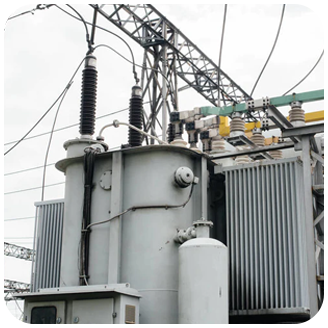
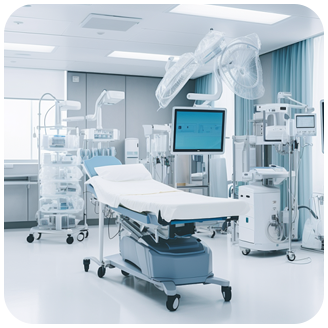
Our extensive experience in thermal management has enabled us to serve and earn the trust of global industry leaders like NVIDIA and ABB.

Integrated One-Stop Solution
From initial thermal design and simulation to precision manufacturing, rigorous testing, and efficient mass production, Jindu offers a seamless, integrated approach.

Rapid & Reliable Delivery
We offer a rapid 7-day sample cycle for quick validation and maintain an impressive 98% on-time delivery rate for mass production.

Unwavering Commitment to Quality
Our dedication to the highest quality standards is underlined by our IATF16949 certification, with ISO14001 and ISO13485 certifications actively in progress.

Investing in the Future
We are continuously expanding our capabilities. Our planned relocation to a new, twice-expanded factory in 2026, equipped with state-of-the-art new production lines, will further enhance our capacity and technological advancements.

Customer-Centric Partnership
We believe in a collaborative approach. Our team of experts works closely with you, providing comprehensive technical support, design consultation, and transparent communication throughout your project.


Discovery & Requirements Analysis
We start by understanding your project's specific thermal needs, power dissipation, and environmental factors.
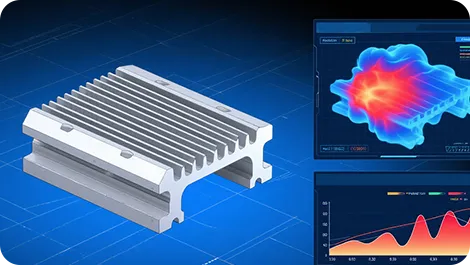

Custom Design & Simulation
Our engineers develop an optimized Extruded Liquid Cold Plate design, validated through advanced CAD modeling and comprehensive thermal simulations using ANSYS Fluent.
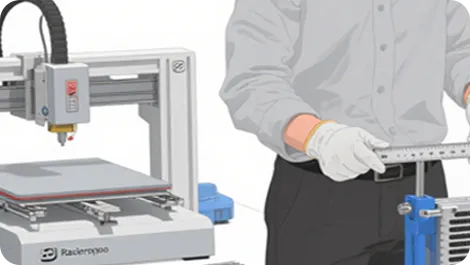

Prototyping & Validation
We rapidly produce prototypes for your evaluation and conduct rigorous testing to ensure the design meets all performance and reliability specifications.
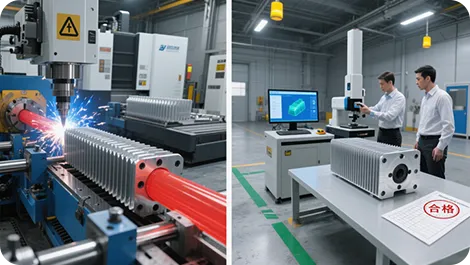

Manufacturing & Quality Control
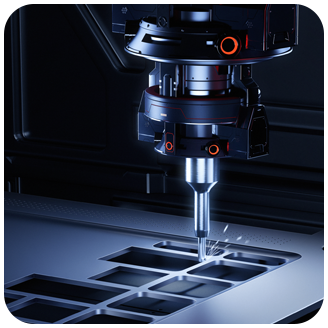
Leveraging our extrusion, joining (brazing/FSW), and CNC capabilities, we proceed with precision manufacturing, with strict quality checkpoints at every stage.


Delivery & Ongoing Support
We ensure on-time delivery of your high-quality Extruded Liquid Cold Plates and provide continuous technical support for seamless integration and long-term performance.