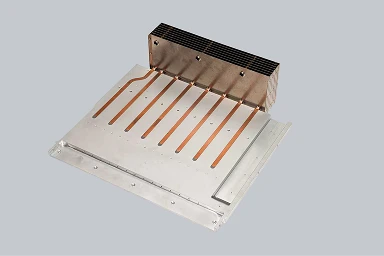
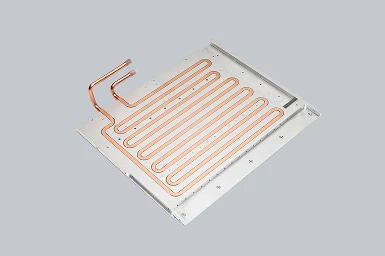
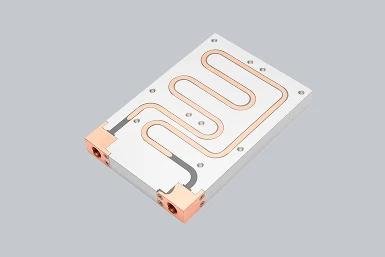
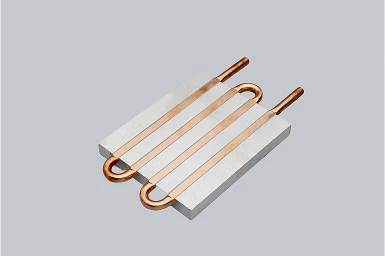
Jindu Copper-Tube Embedded Cold Plates

Superior Thermal Interface, High Flexibility, and Low Flow Resistance for Your Critical Cooling Needs.

What is Tube Liquid Cold Plate Technology?

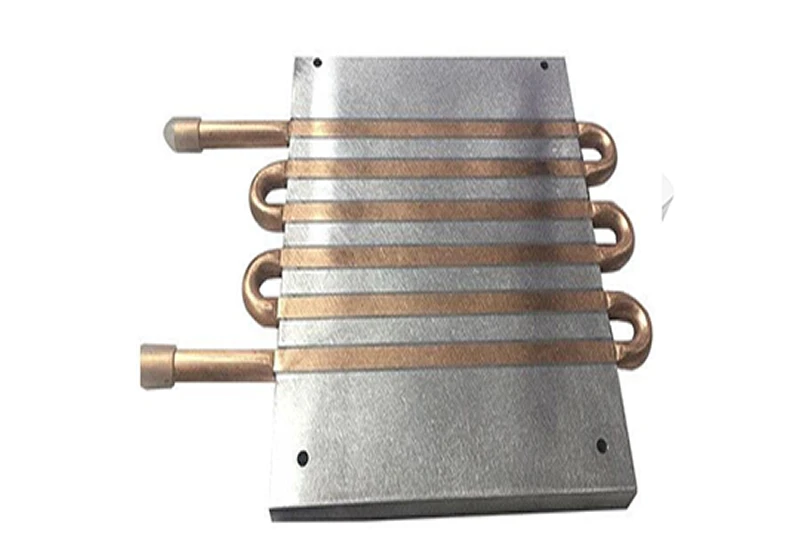
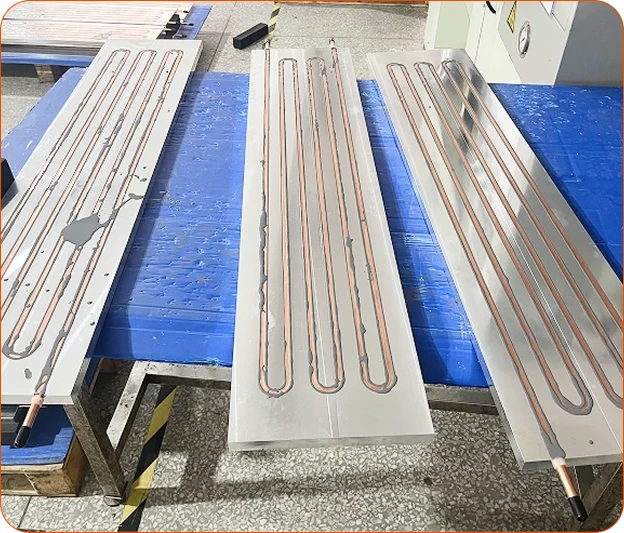
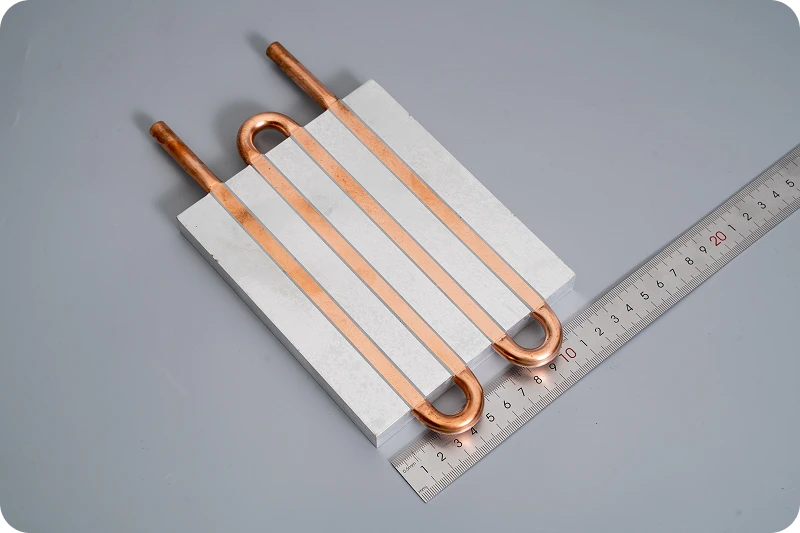
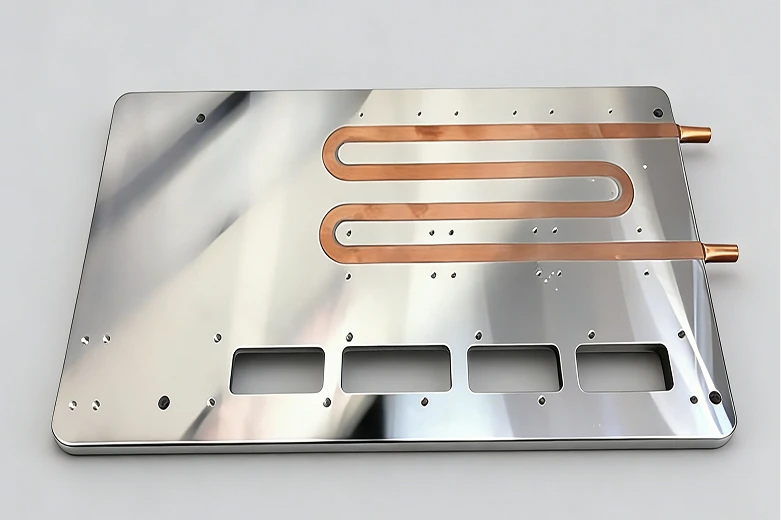
Tube Liquid Cold Plates are constructed by pressing a continuous metal tube (typically Oxygen-Free Copper) into pre-machined channels within a base plate (typically Aluminum 6061/6063).

Unlike brazing or FSW, this technology utilizes a “Press-Fit + Epoxy” mechanical bond. The tube is mechanically locked into the aluminum base, often supplemented by a high-conductivity thermal epoxy to eliminate air gaps and maximize heat transfer.

Why Choose Tube Cold Plates?

Compared to Vacuum Brazing or FSW, Tube Cold Plates offer distinct advantages for specific applications

Hot-selling products

Manufacturing Process: 3D Bending & Epoxy Bonding for Tubed Cold Plates

We follow a rigorous protocol derived from our “Aluminum Plate + Copper Tube” processing standards  to ensure optimal thermal performance.

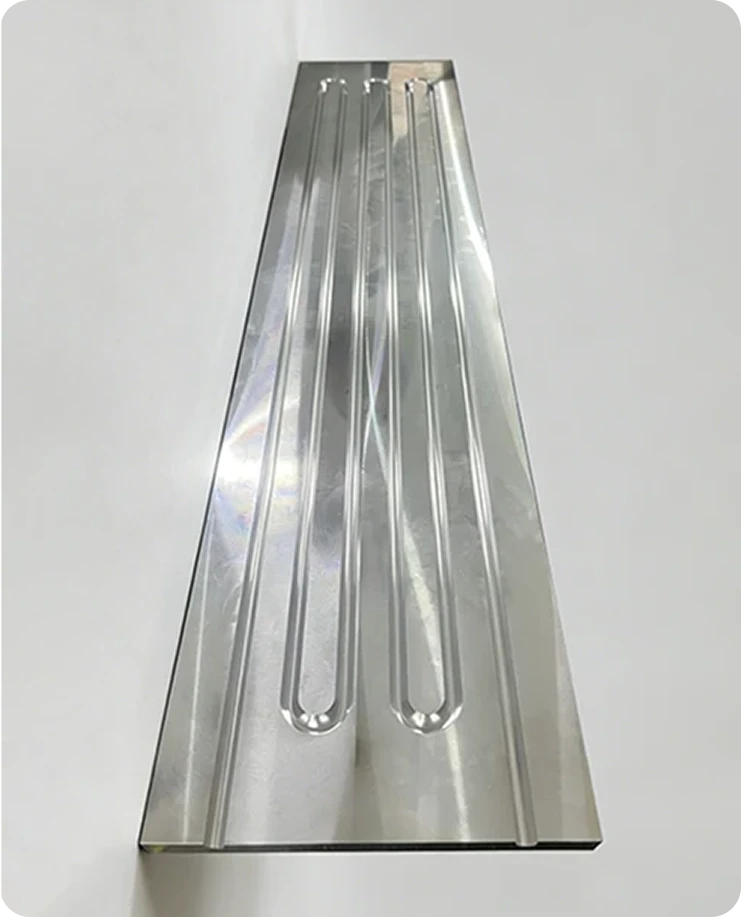
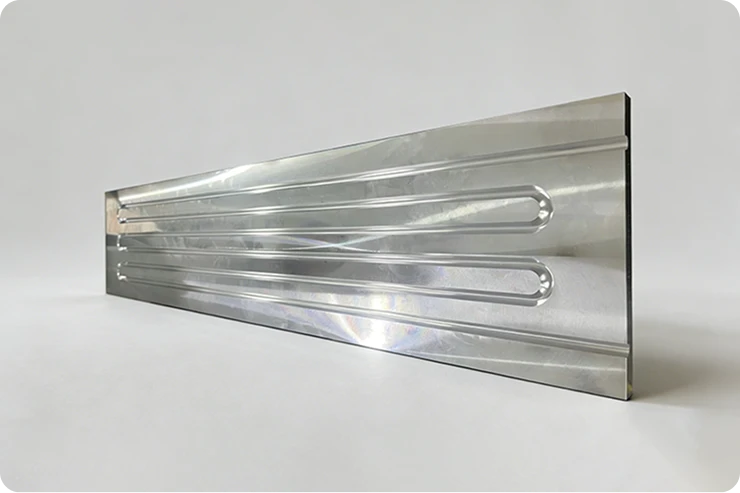
Base Plate Machining & Grooving

CNC-mill precision grooves into the aluminum/copper base plate according to the thermal simulation layout. The process includes material prep, precision milling of channels and mounting features, and thorough ultrasonic cleaning to ensure a perfectly clean bonding surface.
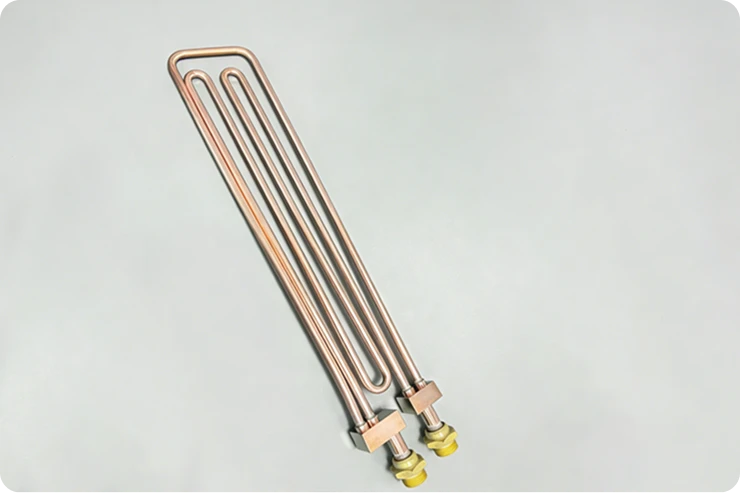
Copper Tube Forming & Pre-treatment

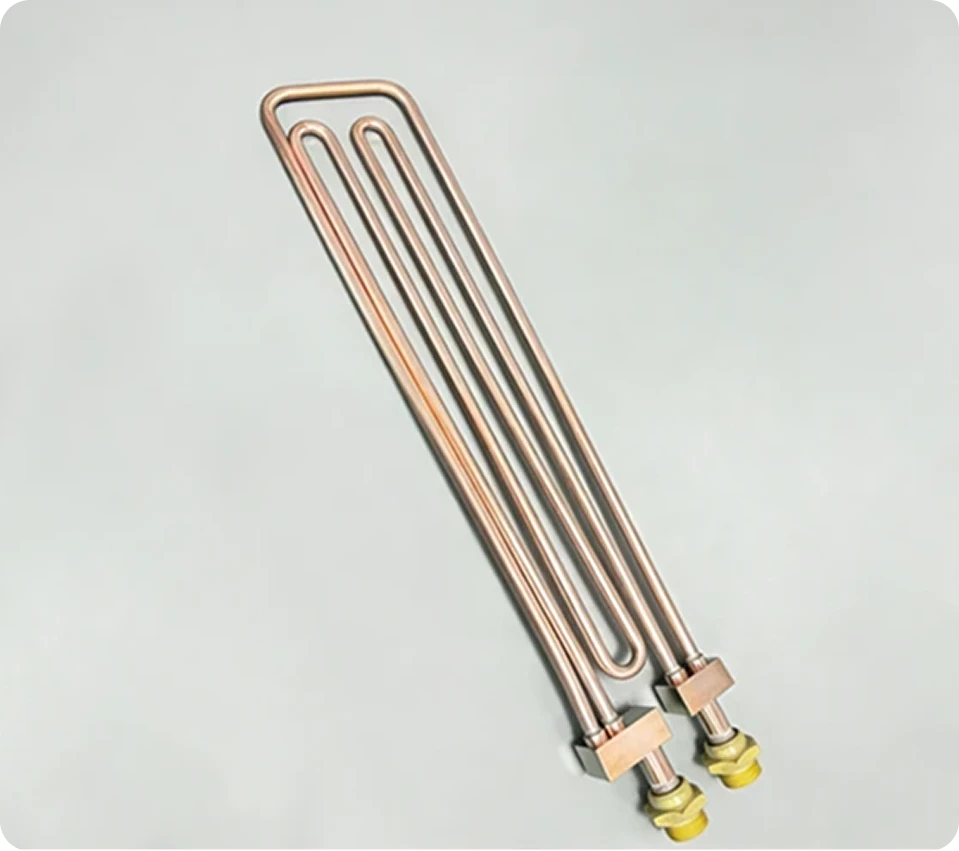
Precision-cut and CNC-bend copper tubes to match the 3D groove pattern. Tubes undergo surface treatment (cleaning, plating with solder) to ensure optimal bonding readiness and are pre-fitted for inspection.

Epoxy & Sealing Process

The pre-formed tube is placed into the grooved base plate with a layer of high-thermal-conductivity epoxy. The assembly cures under controlled conditions (time/temperature), forming a permanent, sealed bond without requiring high-temperature metal joining processes.
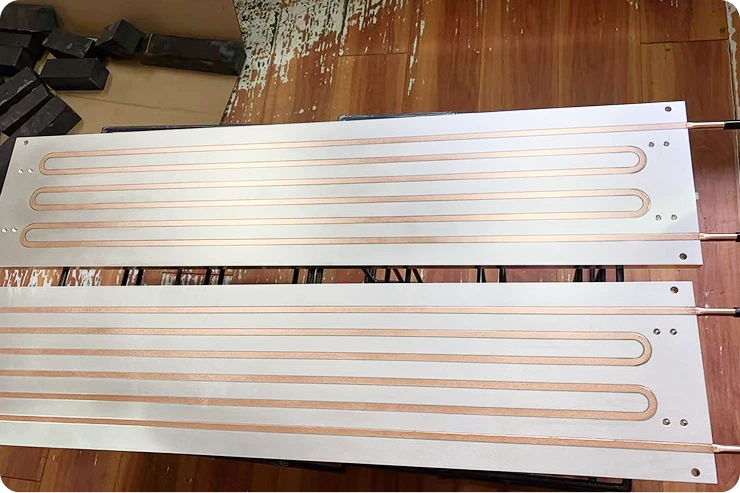
Post-Processing & Final Testing

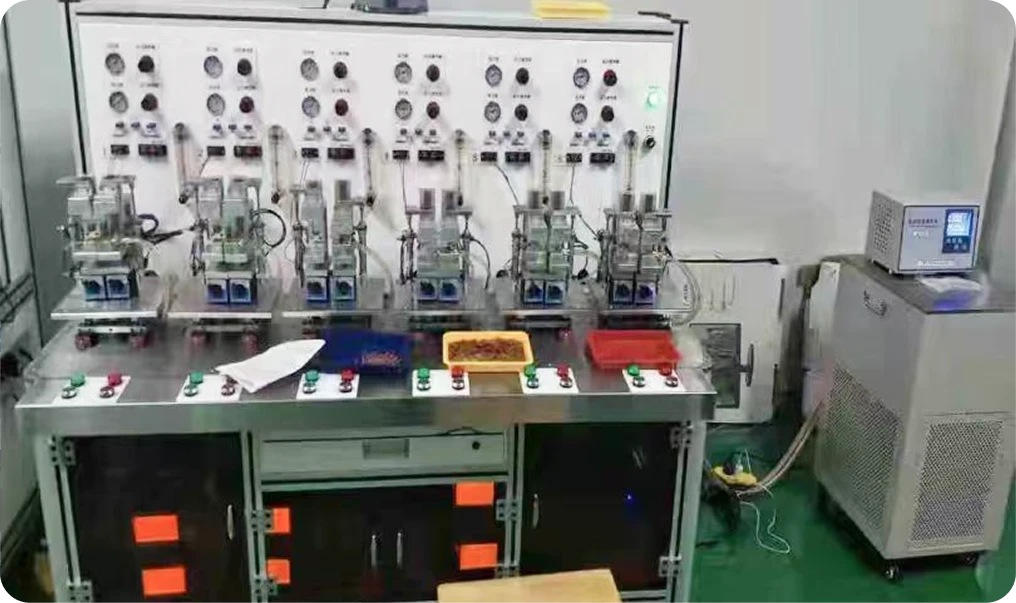
The bonded cold plate is finished, cleaned, and rigorously tested. This includes Helium Leak Testing (for ultra-low leak rates), Pressure/Burst Testing, Flow Resistance (ΔP-Q) Testing, and Thermal Resistance Validation to ensure performance, reliability, and longevity.

Ready to Elevate Your Thermal Management with Jindu?

Choose Jindu Gun Drilled Cold Plates for custom, high-performance liquid cooling solutions that meet the most demanding specifications.

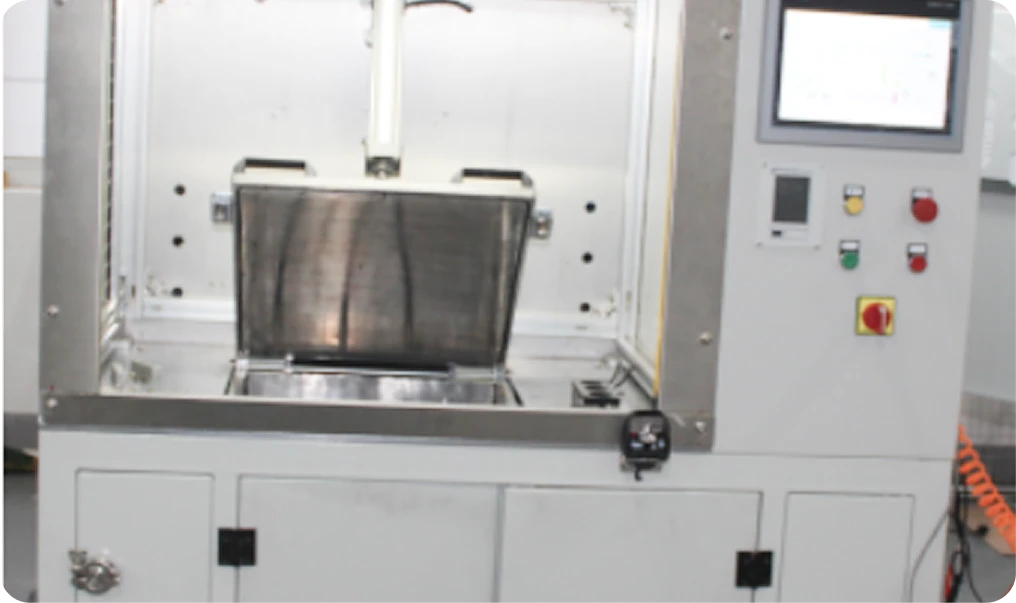
Helium Leak Detection For high-spec requirements, we detect leaks down to 1×10⁻⁶ mbar·L/s.
Pressure Decay Test

Plates are pressurized with Nitrogen to 1.5x Operating Pressure and held for 5 minutes (Pressure Drop ≤0.5%).
mbar·L/s.
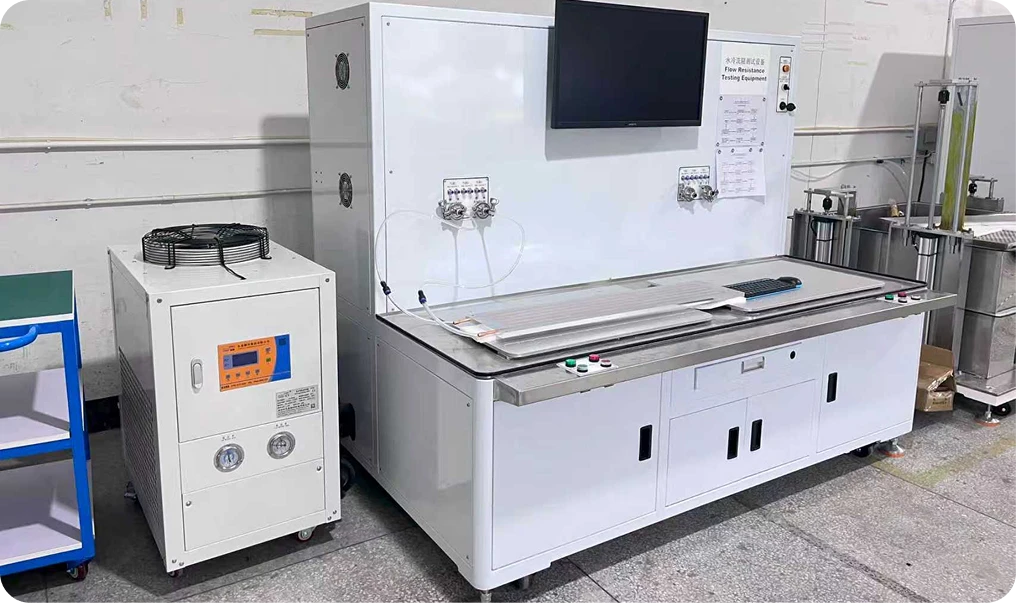
Thermal Performance

We verify Thermal Resistance (Rth) and Pressure Drop (ΔP) using water/glycol flow ranging from 0.5-5 L/min.
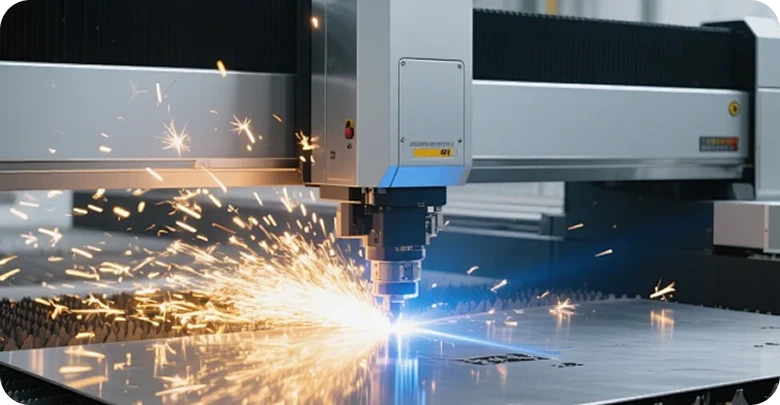
Dimensional Check

CMM inspection ensures groove depth tolerance within ±0.05mm.
Tube Liquid Cold Plate Specifications & Customization Options

While we offer 100% customization, the following “Standard Configurations” help customers select the most cost-effective options quickly.

Spec Parameter Standard Option A Standard Option BCustom Capability
Tube Diameter (OD) φ 6.0 mmφ 8.0 mmφ 9.52mm (3/8″) / 12.7mm
Tube MaterialCopper (TP1 / C1100) Stainless Steel (304/316)Cu-Ni Alloys 
Base MaterialAluminum 6061-T6  Aluminum 6063-T6  Copper C1100
 Min Bending Radius R = 15mmR = 20mm
Max Plate Size600 x 400 mm  800 x 500 mm  Up to 1200mm 
Cooling Power~500W – 1000W~1000W – 3000W> 5kW (Multi-tube)  
Surface FinishFly-Cut (Ra 1.6)Nickel Plated Anodized (Alum only) 

(Note: Standard models reduce lead time by utilizing stocked copper coil sizes.)

Industry Applications for Tubed Cold Plates

We offer flexible configurations tailored to your space constraints and thermal loads.

Lasers & Optics

Cooling Laser Diodes
Corrosion Resistance: Copper tubes handle facility water that corrodes aluminum.

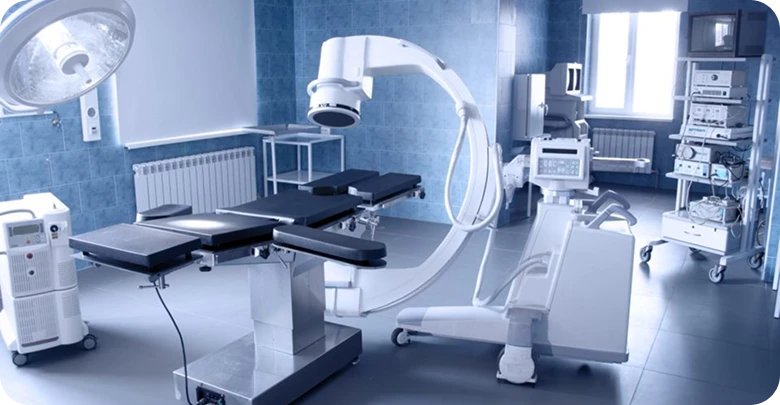
Medical Devices

MRI Gradient Coils
Safety: Continuous tube design guarantees zero leaks into expensive electronics.

Power Electronics

IGBT / Inverters IGBT/
Performance: Fly-cut surface ensures low Contact Thermal Resistance.

Semiconductors

Wafer Chuck Cooling
Cleanliness: Epoxy bonding eliminates flux residue risks common in brazing.

Jindu Tube Liquid Cold Plate Surface Finishing

Effective surface finishing is key to the durability, environmental protection, and performance of Jindu liquid cold plates. We offer various finishes to suit different needs.

Specialized Capabilities in Hybrid Thermal Architecture Manufacturing

At Jindu, we excel in the precision manufacture of tube-embedded cold plates. Our expertise lies in integrating high-conductivity copper tubes into aluminum bases through controlled adhesive epoxying process. This hybrid approach allows us to deliver custom, high-performance cooling solutions that perfectly balance thermal efficiency with design flexibility.

 
When to Choose Tube-Embedded Technology
Opt for our tube-embedded cold plate technology when your application requires a unique balance of performance, customization, and cost-effectiveness.

The Jindu Commitment


Our commitment is to deliver a solution tailored to your exact thermal and mechanical needs. We provide comprehensive CFD thermal simulation to optimize the tube layout, followed by meticulous manufacturing and 100% pressure and leak testing. When your project requires a bespoke cooling solution with complex geometries, hybrid material benefits, and reliable performance for medium-to-high power densities, our tube-embedded technology offers the ideal blend of custom engineering and value.

FAQ

A: We use AL6061-T6 or AL6063-T6 for the base plate due to their excellent machining properties. For the tubes, we exclusively use TP1/C1100 Oxygen-Free Copper to ensure high thermal conductivity and corrosion resistance. Stainless steel tubes are also available for special applications.

A: A standard round tube has very little contact area with a flat electronic component (line contact). By "Fly-Cutting" (milling flat) the top of the embedded tube, we create a wide, flat surface (area contact). This significantly reduces contact thermal resistance and improves cooling efficiency.

A:We strictly control the bending process using CNC 3D Benders and follow the "Minimum Bending Radius" rule (R ≥ 2.5D). We also monitor Ellipticity to ensure it stays below 8%, guaranteeing that the internal flow channel remains open and consistent.

A: Yes. We have 50+ CNC machines and can machine complex base plate geometries. For the tubing, as long as the bend radius allows, we can route the coolant exactly where your heat sources are located.

●Prototyping: 2-3 weeks (Includes tooling and DFM).
●Mass Production: 20-25 days typical lead time. We also offer a "Quick Turn" service for urgent engineering validation units.

A:We strictly control the bending process using CNC 3D Benders and follow the "Minimum Bending Radius" rule (R ≥ 2.5D). We also monitor Ellipticity to ensure it stays below 8%, guaranteeing that the internal flow channel remains open and consistent.

Any Question?
Write Down And Send Us

Base Plate Machining & Grooving

CNC-mill precision grooves into the aluminum/copper base plate according to the thermal simulation layout. The process includes material prep, precision milling of channels and mounting features, and thorough ultrasonic cleaning to ensure a perfectly clean bonding surface.

Detailed processing flow

Raw material cutting (water jet/laser) → Stress relief treatment (if needed)
CNC 1st Side Machining:
1. Rough processing of the flow channel (leaving a 0.5mm margin)
2. Fine processing of the flow channel (reaching the dimensional tolerance)
3. Processing of the glue groove (depth tolerance ±0.05mm)
4. Processing of the copper tube positioning hole (interference 0.02-0.05mm)
Flipping and processing → Establishment of the positioning reference point
2nd Side Machining:
1. Back sealing structure of the flow channel
2. Processing of interface threads (NPT/BSPP)
3. Installation holes/positioning holes
De-burring treatment (hand operation + vibration grinding) → Cleaning → Drying

Depth range (general experience):

For common copper tubes with diameters of φ6mm and φ8mm, the depth of the groove is usually between 42% and 48% of the outer diameter of the copper tube.

Specific numerical examples:
φ6mm copper tube: The groove depth is approximately 2.5mm to 2.9mm.
φ8mm copper tube: The groove depth is approximately 3.4mm to 3.8mm.
This depth range ensures that the copper tube has enough part embedded in the substrate to obtain support and heat conduction, while also having a sufficient “cap” protruding to ensure a tight bond with the cover plate in the subsequent pressing process.

Key dimension relationships and tolerances:
The relationship between groove depth (H), copper tube outer diameter (D), and protrusion amount (P) is: H = D – P
Outset: This is one of the most important control parameters. Usually, it is required that the top of the copper tube protrudes from the substrate plane by 0.1mm to 0.3mm after being embedded. This protrusion will undergo elastic/plastic deformation during the pressing of the cover plate, forming a tight metal-metal contact, which significantly reduces the contact thermal resistance.
Tolerance: The depth tolerance of the groove is usually very strict, generally within ±0.05mm, to ensure that the height of all copper tubes is consistent after embedding, and to ensure uniform welding or bonding quality.
Width: The width of the groove is usually 0.1mm to 0.2mm larger than the outer diameter of the copper tube, to facilitate embedding, and the gap is conducive to the filling of solder or epoxy resin.

Copper Tube Forming & Pre-treatment

Precision-cut and CNC-bend copper tubes to match the 3D groove pattern. Tubes undergo surface treatment (cleaning, plating with solder) to ensure optimal bonding readiness and are pre-fitted for inspection.

Copper Tube Processing

Copper Tube Pretreatment:
1. Straightening (straightness ≤ 0.1mm/m)
2. Cutting to fixed length (length tolerance ±0.2mm)
3. End forming (flaring/chamfering)

Bending Processing:
1. Loading and positioning on bending machine
2. Program calling and parameter setting
3. First piece bending and measurement
4. Batch bending (real-time monitoring)

Post-Bending Processing:
1. Ovality inspection (≤8%)
2. Angle and position measurement (CMM)
3. Surface cleaning (removing lubricant)

Minimum Bending Radius Rule of Thumb

For commonly used TP2 red copper drawn soft copper pipes, when cold bending on a mechanical bending machine:
The minimum safe bending radius (Rmin) ≈ 2 * D (twice the pipe diameter)
That is: for φ6mm copper pipe, the minimum bending radius Rmin ≥ 12mm; for φ8mm copper pipe, Rmin ≥ 16mm.
More conservative and common recommended values: To ensure extremely high yield and avoid any increase in flow resistance, many high-standard water cooling plate designs adopt R ≥ 2.5D ~ 3D.
φ6mm copper pipe: recommended bending radius R ≥ 15mm ~ 18mm.
φ8mm copper pipe: recommended bending radius R ≥ 20mm ~ 24mm.

Epoxy & Sealing Process

The pre-formed tube is placed into the grooved base plate with a layer of high-thermal-conductivity epoxy. The assembly cures under controlled conditions (time/temperature), forming a permanent, sealed bond without requiring high-temperature metal joining processes.

Aluminum plate positioning

1. Place in the assembly fixture for adhesion and fixation
2. Confirm positioning accuracy (±0.05mm)

Copper tube assembly:
1. Apply a small amount of lubricant (washable type) to the copper tube port
2. Insert vertically into the positioning hole
3. Check the insertion depth (depth gauge)
4. Check the verticality (right angle ruler)

Gluing Process

Injection Operation:
1. Start the injection (low pressure, slow start)
2. Continue injecting until overflow occurs (reaching the calculated amount + 5%)

Post-treatment:
1. Light vibration (60Hz, 30 seconds) to remove air bubbles
2. Clean the surface overflow (alcohol wiping)
3. Move to the curing area

Solidification

Room temperature curing stage:
1. Place horizontally (to prevent uneven flow of the glue)
2. Environmental control: Temperature 23 ± 2°C, humidity 50 ± 10%
3. Curing time: 4 – 8 hours (depending on the type of glue)
4. Regularly check the condition (no flow / thickening)