Precision Bonded Fin Heat Sinks: Expanding the Frontiers of Air Cooling

Engineered for high-power density environments where traditional extrusions reach their physical limits. Jindu  provides advanced bonded fin solutions that deliver up to 3x the surface area for maximum thermal efficiency.

What is a Bonded Fin Heat Sink?

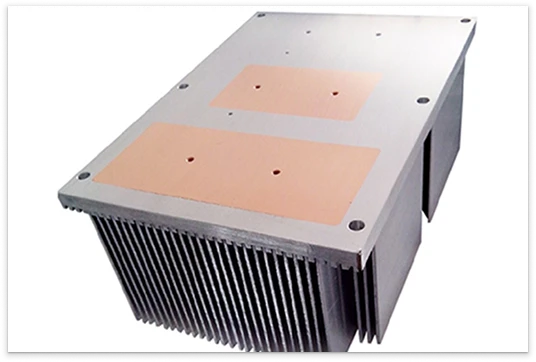
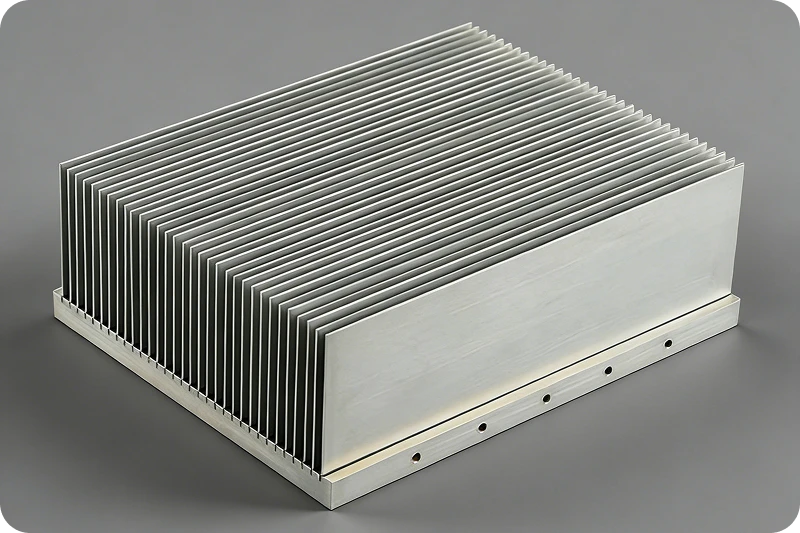
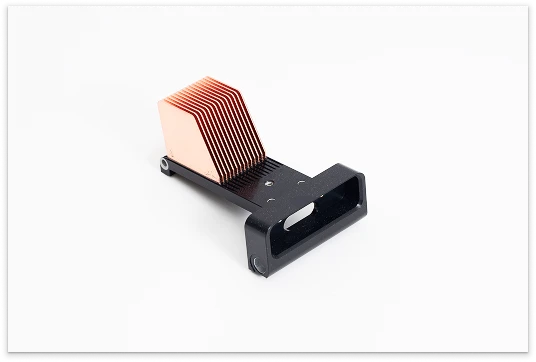
A Bonded Fin Heat Sink is a high-performance thermal assembly where individual, high-aspect-ratio fins are mechanically or chemically bonded into a precision-machined baseplate. Unlike single-piece aluminum extrusions, this method allows for significantly thinner fins and tighter spacing.

Overcoming the "Extrusion Limit"

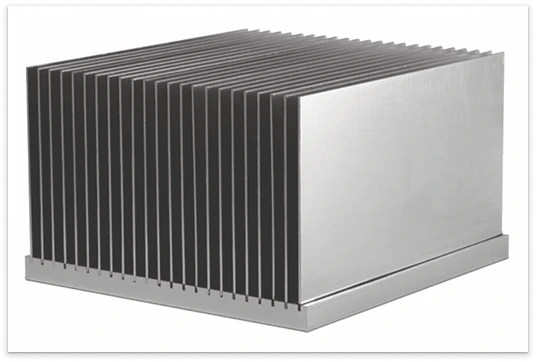
Standard aluminum extrusion is typically limited to an aspect ratio (fin height to gap) of roughly 12:1. Jindu’s bonded fin technology shatters this bottleneck, enabling aspect ratios of 20:1 to 40:1 or higher. By decoupling the fin and base manufacturing, we achieve a massive increase in heat dissipation area within the same physical footprint.


Professional Manufacturing Process: The Jindu Standard

Quality is at the core of Jindu’s manufacturing. We utilize advanced inspection equipment to guarantee performance

Baseplates: Selection of high-purity AA6063/6061 or C1100 Oxygen-Free Copper (3mm–20mm thickness). We verify thermal conductivity (Al ≥180W/m·K, Cu ≥380W/m·K) and perform chemical surface activation (Ra=1.6-3.2μm) to enhance bond adhesion.

Fins: Precision-slit aluminum or copper foil (0.2mm–0.8mm) with a width tolerance of ±0.02mm.
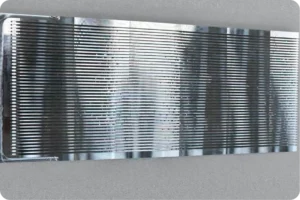
Using high-speed spindles (20,000+ RPM), we machine grooves into the baseplate with a width tolerance of ±0.02mm. This precision ensures a calibrated interference fit, crucial for minimizing “contact thermal resistance.”
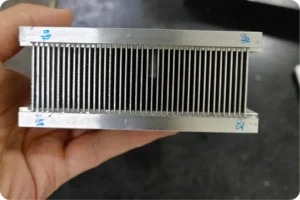
We apply high-performance thermal interface materials based on the application:

Thermal Epoxy: 1.5–3.0 W/m·K conductivity with optimized viscosity for gap-free filling.

Solder/Brazing Alloys: SAC305 (217-230°C) or specialized Al-brazing for high-reliability metallic bonds.
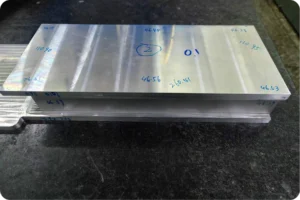
Fins are inserted into the grooves using custom-designed hydraulic fixtures. Controlled pressure ensures air pockets (voids) are completely eliminated from the interface layer.
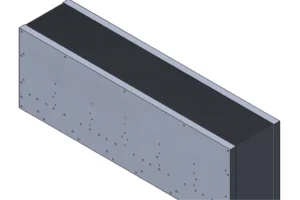
Assemblies undergo a strictly monitored temperature curve in specialized ovens. This cross-links the epoxy or melts the brazing alloy to create a permanent, vibration-resistant bond.
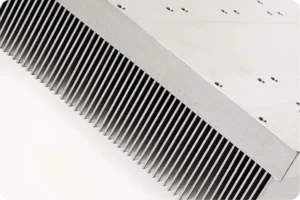
After bonding, the mounting surface is CNC-milled to achieve an ultra-flat profile (Flatness ≤0.05mm – 0.1mm).
Hot-selling products

Industrial Applications: Solving Critical Thermal Bottlenecks

Jindu’s bonded fin technology is the backbone for high-heat-flux industries.

Power Electronics & Energy Conversion

● IGBT & Thyristor Cooling: In high-voltage inverters and UPS systems, heat is concentrated in a tiny area. Our bonded fins provide the extreme surface area needed to dissipate thousands of watts without increasing the chassis size.


● Renewable Energy: Used in Wind Power Converters and Solar PV Inverters where the equipment must operate in outdoor cabinets with limited airflow. The high aspect ratio allows for efficient natural or forced convection.


Telecommunications & Data Infrastructure

● 5G Macro Base Stations: High-power RF components generate significant waste heat. Our Copper-Base/Aluminum-Fin hybrid sinks absorb heat rapidly from the RRU chips and dissipate it through lightweight aluminum fins.

● Edge Computing Servers: In environments where space is at a premium, bonded fins allow for ultra-dense fin spacing to maintain CPU/GPU stability.

Transportation & EV Infrastructure

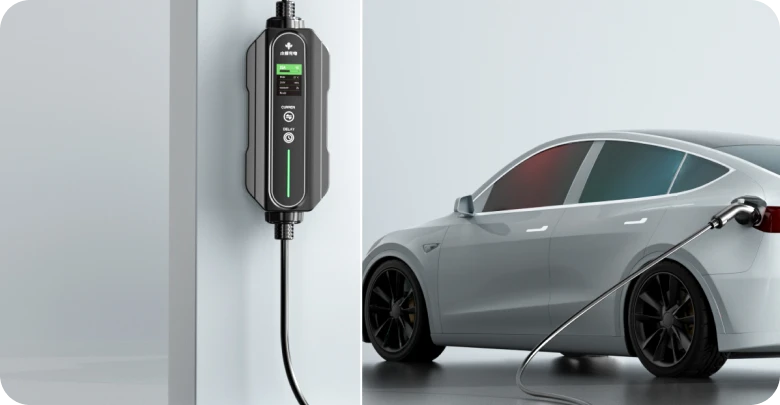
● Electric Vehicle (EV) Charging Stations: High-speed DC chargers generate massive heat during the 150kW+ charging cycle. Bonded fin sinks manage the thermal load of the power conversion modules with high reliability.

●Railway Traction: Designed to withstand the constant vibration of locomotives while providing consistent thermal performance over a 20-year service life.

Industrial & Medical Systems

● High-Power Laser Power Supplies: Precision cooling is required to prevent frequency drift in industrial lasers.


● Medical Imaging (MRI/CT): Manages the high heat flux of gradient amplifiers and power supplies, ensuring system uptime in critical healthcare environments.


FAQ Section

While a single-piece extrusion has zero joint resistance, Jindu's precision grooving (±0.02mm) and high-conductivity bonding agents minimize interface loss. This minor resistance is far outweighed by the 200%-300% increase in surface area, resulting in a significantly lower overall system temperature (Rth).

Yes. Unlike extrusion, which is limited by die circle diameter, our process is modular. We can produce large-scale industrial units exceeding 1000mm in length, ideal for heavy-duty power conversion systems and railway applications.

Absolutely. By using IATF 16949 certified processes and high-pressure hydraulic assembly, our fins achieve a pull-strength of >50N per fin. They are widely used in railway traction and automotive charging infrastructure where constant vibration is a factor.

Copper has nearly twice the thermal conductivity of aluminum but is heavy and expensive. By using a copper baseplate with aluminum fins, we capture heat rapidly from the source (the copper's job) and dissipate it into the air via lightweight fins (the aluminum's job), optimizing both performance and cost.

For custom designs, we can deliver functional prototypes in 7-10 working days using our in-house CNC centers, allowing you to validate your thermal designs quickly before committing to mass production.

Any Question?
Write Down And Send Us