High-Performance Copper & Aluminum Skived Heat Sinks
The JINDU Guarantee:
- Precision Control: Fin Height Tolerance ±0.05mm.
- High Efficiency: 300-500 parts daily capacity per machine.
- Reliable Material: 100% RoHS/Reach Compliant.
- Certified Quality: IATF 16949 & ISO 9001 Factory
首页 » Skiving Fin Heat Sinks
What is a Skiving Fin Heat Sink? (The Technology)
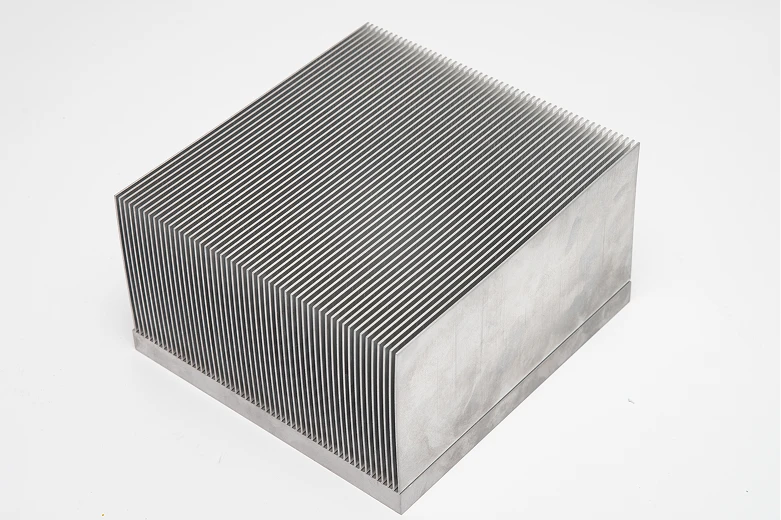
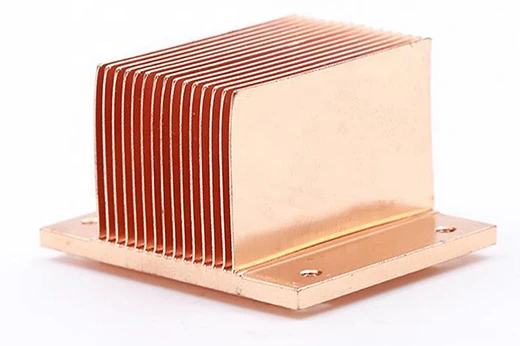
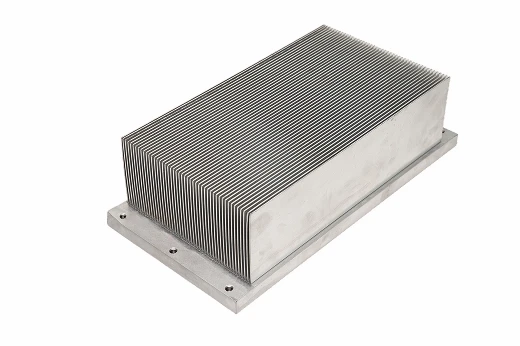
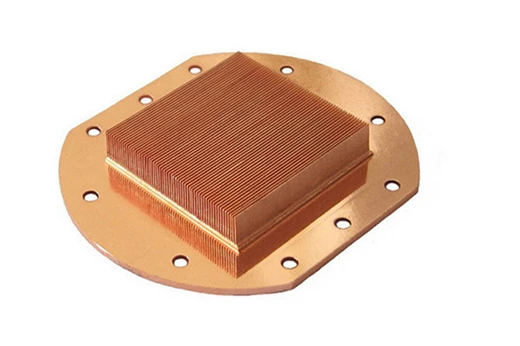
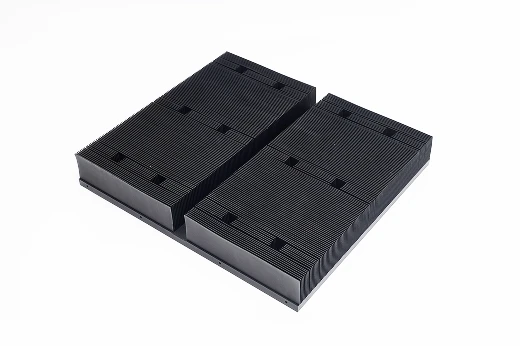
A Skiving Fin Heat Sink represents a pinnacle in air-cooling technology, where high-precision blades “peel” or slice fins from a solid block of metal (Copper or Aluminum). Unlike traditional bonded or soldered heat sinks, the fins are an extension of the base itself.
The "Zero Resistance" Advantage
Because the fins and the base are carved from a single piece of material, there is zero interface thermal resistance. In traditional heat sinks, the interface between the fin and the base (solder or epoxy) acts as a bottleneck for heat flow. Jindu’s skiving technology eliminates this barrier, allowing heat to move from the source to the fins with maximum efficiency.
Why Choose Skiving Fin Heat Sinks for High-Density Cooling?
For engineers and procurement professionals, Skiving Fin technology offers specific advantages that bridge the gap between low-performance extrusions and high-cost liquid cooling
- Extreme Aspect Ratios
Skiving can achieve fin heights and densities that are impossible for extrusion (up to 50:1 aspect ratio), providing significantly more surface area in the same footprint.
- Ultra-Thin Fin Profiles
We can produce fins as thin as 0.1mm, allowing for high-density arrays that maximize heat dissipation in forced-convection environments.
- Material Superiority
While copper is notoriously difficult to extrude, it is perfect for skiving. Jindu specializes in Pure Copper (Cu1100) skived sinks for high-heat-flux applications.
- No Tooling Barriers
Since the process is CNC-driven and machine-calibrated, there are no expensive die or mold costs, making it the most cost-effective solution for custom thermal prototypes and mid-to-high volume production.
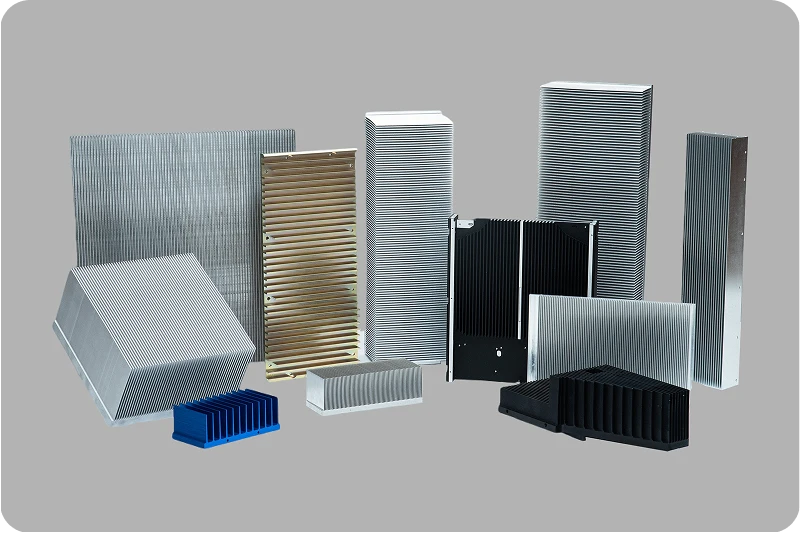
Hot-selling products


JINDU’s Precision Skiving Fin Heat Sinks Manufacturing Process
We follow a rigorous, document-controlled process to ensure every unit meets industrial-grade specifications
- Raw Material Management
- Engineering & DFM (Design for Manufacturing)
- Base & Skiving Processing
- Precision CNC Secondary Machining

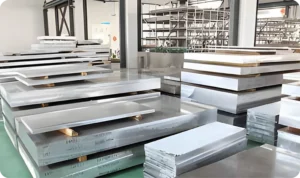
Sourcing: We utilize high-purity Aluminum/Copper coils and blocks.
Compliance: Every batch undergoes RoHS/Reach environmental testing and material certificate verification (Material Certificate/MTR).
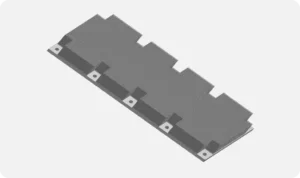
Review: We perform a complete process feasibility analysis on customer 3D models.
Optimization: We provide a DFM Report to confirm the optimal fin pitch and height for both performance and manufacturability.
Programming: CNC programs and CAM software instructions are developed alongside custom fixture designs.
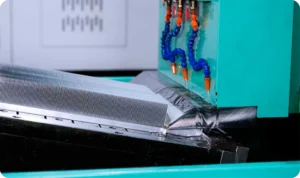
Pre-treatment: CNC rough machining establishes the reference planes and basic geometry.
The Skiving Process: Dedicated high-precision skiving machines peel the fins to the exact pitch and height.
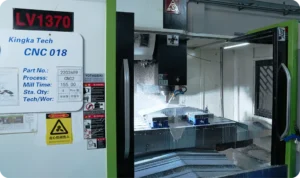
After the fins are formed, we use high-end CNC centers (tolerances up to $\pm 0.005$mm) to add mounting holes, threaded inserts, and complex positioning features.
Ordering Information: Skiving Fin Heat Sinks Capacity and Lead Times
We understand that time-to-market is critical for our customers. JINDU offers competitive lead times supported by robust production planning
- Engineering & Programming: 1–2 working days for DFM and CAM setup.
- Production Speed: Our dedicated skiving lines can produce 300–500 pieces per day per machine, depending on complexity.
- Standard Delivery: Typical standard lead times range from 7 to 15 working days from order confirmation.
- Full Documentation: Every shipment includes a complete quality package:
○ Processing Reports with actual dimensional data.
○ Material Certification documents.
○ Certificates of Compliance (QC PASS).
○Testing Reports (CMM, Salt Spray, etc.).
Global Industrial Applications of Skiving Fin Heat Sinks
As a specialist in precision thermal solutions, JINDU (Kingka) provides high-performance skived fin heat sinks for industries where thermal management is mission-critical
Telecommunications
Automotive (EV)
Power Electronics

Aerospace & Defense
How We Test Liquid Cold Plates?
| Process Step | Control Parameter | Inspection Method | Standard/Tolerance |
| Skiving | Fin Height Tolerance | CMM / Projector | $\pm 0.05$mm |
| Skiving | Fin Pitch Consistency | Optical Comparator | $\pm 0.02$mm |
| Surface Treatment | Film/Coating Thickness | Coating Thickness Gauge | Specs $\pm 10\%$ |
| Appearance | Surface Defects | Visual / AOI (Automated) | Zero Visible Flaws |
Comprehensive Testing Procedures
Our facility is equipped with accurate inspection and testing equipment to validate performance
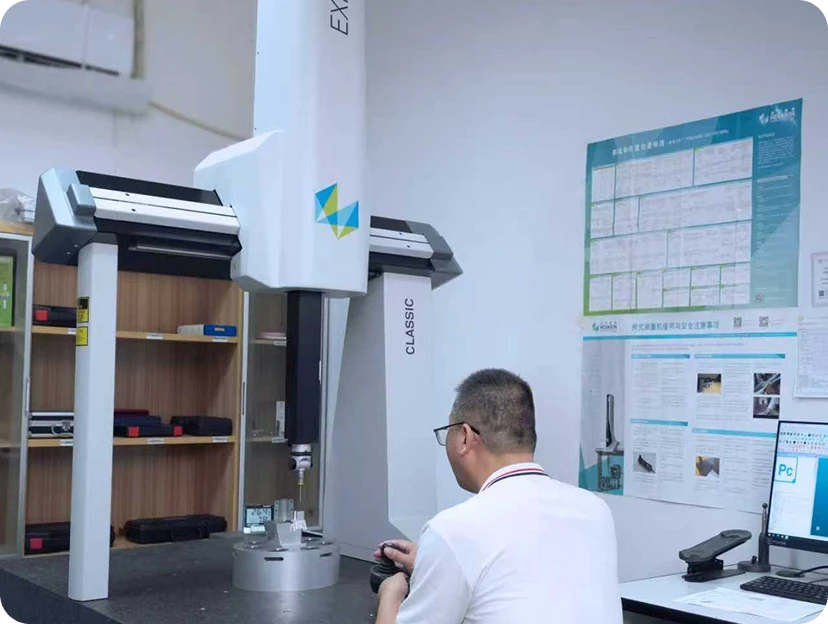
- Dimensional Testing:Using Coordinate Measuring Machines (CMM) for precise measurements of fin height, pitch, flatness, and parallelism.
- Profile Analysis:Projector systems are used to verify tooth profiles and precise angles.
- Reliability Testin:Includes Salt Spray Testing for corrosion resistance and Adhesion Testing for surface coatings.
- Advanced Validation:We offer Air Tightness Tests and Thermal Analysis to ensure the integrity of complex thermal assemblies.