High-Pressure Die Casting Solutions: Seamless Structural Integration and High-Density Cooling by jindu

Engineered by jindu to eliminate assembly interfaces and maximize design freedom. Our high-pressure casting process delivers thin-walled, multi-functional thermal enclosures with ±0.05mm precision for automotive, telecom, and power electronics.

What is a Die Casting Heat Sink?

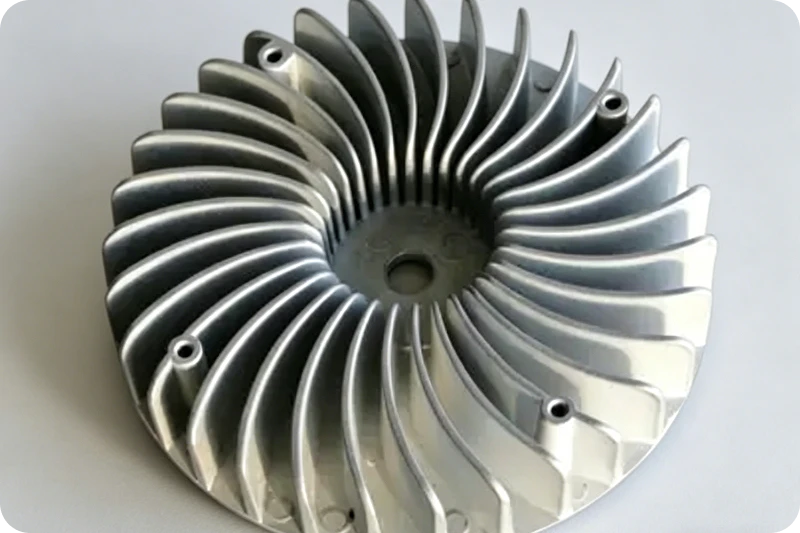
A Die Casting Heat Sink is a professional thermal component created by injecting molten aluminum alloy (ADC12, A380) into a precision-engineered steel mould under extreme pressure (40–120MPa).


Unlike standard extrusion, which is limited to constant cross-sections, jindu’s die-casting process allows for:

● Three-Dimensional Freedom: Create cooling fins in any orientation or shape.
● Integrated Functionality: Incorporate housings, brackets, and connectors directly into the heat sink body.
● Thin-Wall Engineering: Achieve wall thicknesses as low as 0.8mm–1.0mm, ideal for lightweight and compact designs.

How to make die casting heat sink?

Jindu follows a strictly controlled, 4-stage manufacturing process to ensure every heat pipe heat sink meets industrial-grade reliability.

High-Pressure Die Casting (HPDC)

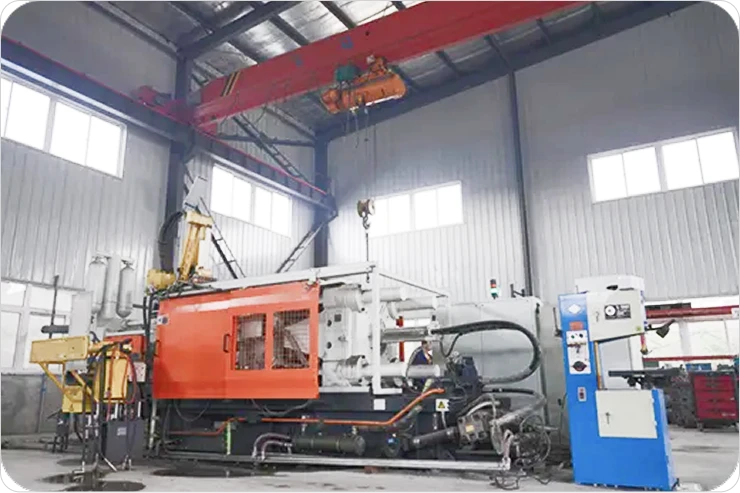
Real-Time Injection Monitoring: Utilizing high-tonnage machines, we control the injection velocity (high-speed phase at 3-5m/s) and injection pressure (40-120MPa).

Venting & Overflow: Our proprietary tapered runner and slag bag design (15-20% area ratio) effectively eliminates air entrapment, ensuring the fins are dense and free of cold shuts.
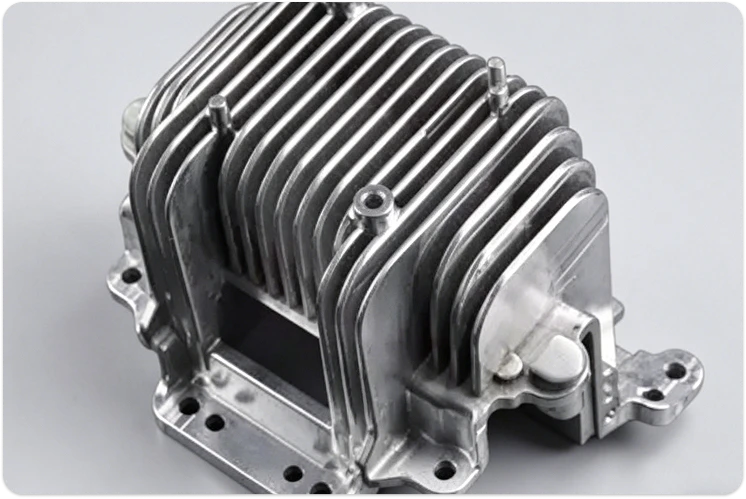
 Post-Casting & Stress Relief

Thermal Aging (T5/T6): To ensure long-term dimensional stability, products undergo T5 or T6 heat treatment (Hardness reach HB 80-95), preventing warping during high-temperature operation in the field.
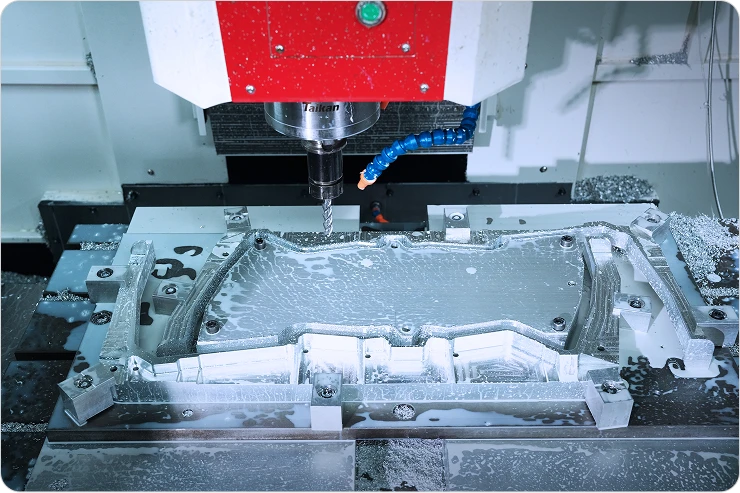
Precision CNC Machining

Since as-cast surfaces often lack the flatness required for high-end electronics, we utilize our plant’s 50+ CNC centers.

● High-Speed Milling: We use PCD (Polycrystalline Diamond) tools at speeds of 10,000–20,000 rpm to achieve a surface roughness of Ra ≤0.8μm.e.

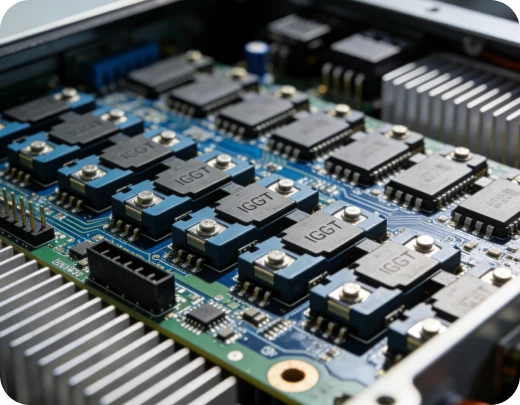
● Tight Tolerances: We refine critical contact areas to a tolerance of ±0.05mm and a flatness of ≤0.1mm/100mm, ensuring zero-gap contact with IGBTs or CPUs
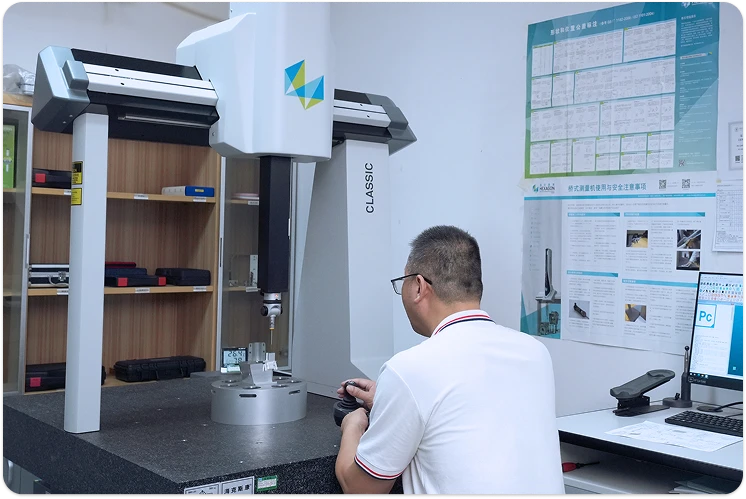
Specialized Surface Engineering

Every batch must pass our Critical-to-Quality (CTQ) checkpoints:

● X-Ray Porosity Detection: Ensuring internal air pockets are ≤3% (critical zones ≤1%).


● CMM Verification: Coordinate Measuring Machines verify complex 3D tolerances.

● Salt Spray Testing: Validating corrosion resistance for 48–96 hours to meet industrial-grade durability.
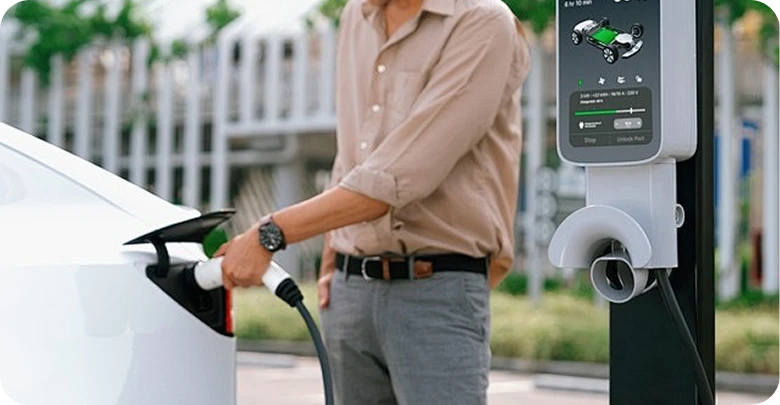

Industry-Leading Applications

Our die-casting expertise solves pain points across high-demand sectors

Automotive Electronics & E-Mobility

In modern vehicles, electronic components are subjected to extreme vibrations, thermal shock, and spatial limitations. Die casting is the industry standard for creating robust, integrated thermal solutions in this sector.

● Core Applications: Automotive electronic control units (ECUs), Advanced Driver Assistance Systems (ADAS) sensor housings, and battery management system (BMS) cooling plates.

● The jindu Advantage: Our die-cast components serve a dual purpose. They act as a crash-resistant, vibration-dampening protective housing for sensitive PCB boards, while simultaneously providing highly efficient, integrated cooling fins. The ability to cast complex mounting bosses directly into the frame eliminates the need for secondary brackets, ensuring long-term reliability in harsh under-hood environments.

Telecommunications & 5G Infrastructure

The rollout of 5G requires densely packed, high-power equipment deployed in remote and often extreme outdoor environments.

● Core Applications: Communication equipment heat sinks, including remote radio units (RRU), base station enclosures, and high-speed network routers.

● Telecommunications hardware demands strict weatherproofing and complex internal layouts to avoid RF interference. Die casting provides the design freedom to create intricate fin patterns and conformal shapes. Furthermore, our specialized surface treatments—like hard anodizing—ensure these outdoor enclosures survive years of UV exposure and salt spray without degrading thermal performance.

High-Power LED Lighting

Industrial and outdoor lighting systems require thermal management that is highly efficient, aesthetically pleasing, and completely sealed against the elements.

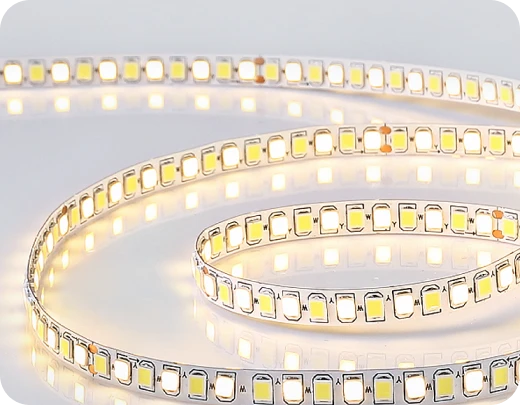
● Core Applications: High-power LED luminaire heat sinks, including street lights, high-bay factory lights, and stadium floodlights.


● We manufacture unified structures where the LED mounting board, the watertight driver compartment, and the external cooling fins are cast as a single, seamless piece. This integrated design approach drastically reduces assembly time and prevents moisture ingress, which is the leading cause of outdoor LED failure.

 Industrial Power Modules

Power conversion equipment generates massive amounts of heat and requires structural frames capable of supporting heavy electrical components.


● Core Applications: Power module heat sinks, industrial inverters, frequency converters, and uninterruptible power supplies (UPS).

Extruded fins often lack the mechanical strength to support heavy transformers or capacitors. jindu’s die-cast heat sinks provide exceptional rigidity. By optimizing the die-casting parameters, we ensure high material density with minimal porosity, maintaining excellent thermal conductivity to handle sudden high-power thermal loads.

High-End Consumer Electronics

As consumer electronics become smaller and more powerful, passive cooling must contour perfectly to the internal layout of the device.


● Core Applications: Consumer electronics cooling components, such as high-performance projectors, gaming console chassis, and compact set-top boxes.

Space is the ultimate premium in consumer devices. Utilizing our high-tonnage precision casting, jindu can achieve ultra-thin wall thicknesses down to 0.8mm–1.0mm. This allows engineers to design lightweight, space-saving cooling channels that snake precisely around batteries and circuit boards, maximizing heat dissipation in the smallest possible footprint.

FAQ: Expert Insights into Die Casting

Die casting typically utilizes aluminum-silicon-copper alloys (such as ADC12), which have slightly lower material thermal conductivity than pure aluminum (like 6063). However, jindu compensates for this by optimizing 3D turbulent fin structures and utilizing one-piece integrated molding. This eliminates interface thermal resistance common in multi-part assemblies, often resulting in superior overall system-level heat dissipation compared to complex assembled units.


Managing porosity is our core technical strength. jindu employs vacuum-assisted die casting and real-time pressure monitoring systems to ensure internal porosity is strictly controlled below 3% (and below 1% in critical functional zones). For components requiring high sealing performance, we conduct 100% air-tightness pressure testing to ensure zero leakage risk in complex operating environments.

While cold forging is excellent for high-density pin or plate fins, it struggles with parts requiring lateral holes, internal cavities, or complex housing structures. The greatest strength of die casting lies in its geometric complexity and high production rate. This makes it the most cost-effective and technically viable choice when you need to integrate the heat sink and the device enclosure into a single, multifunctional component.

We utilize high-performance H13 hot-work tool steel (hardened to HRC 44-48) and advanced spray-release technology. By using flow simulation software to optimize the gating system, we reduce the erosive wear of molten metal on the mould walls. This ensures that the tooling maintains extreme dimensional stability even during high-volume mass production.

Due to the high silicon content in die-casting alloys, standard anodizing often results in a darker finish. However, jindu has developed a specialized oxidation process tailored for die castings. We support Hard Anodizing (achieving hardness of HV 400-500), providing the finished product with exceptional wear resistance and superior corrosion protection for harsh industrial use.

Any Question?
Write Down And Send Us