Leak-Proof, High-Strength Friction Stri Welding Cold Plates
首页 » FSW Liquid Cold Plates
What is Friction Stir Welding (FSW) Technology?
Friction Stir Welding (FSW) represents an innovative solid-state joining technology, particularly suited for manufacturing highly reliable liquid cooling solutions. Unlike traditional methods, this process utilizes a specially designed rotating tool—consisting of a shoulder and a pin—that plunges into the joint interface.
By generating frictional heat, the material is plasticized without ever reaching its melting point. Through mechanical stirring and forging action, atomic bonding is achieved, effectively avoiding common fusion welding issues such as:
● Porosity
● Hot Cracking
● Distortion
The Four Key Stages of the FSW Working Principle

Plunge Phase
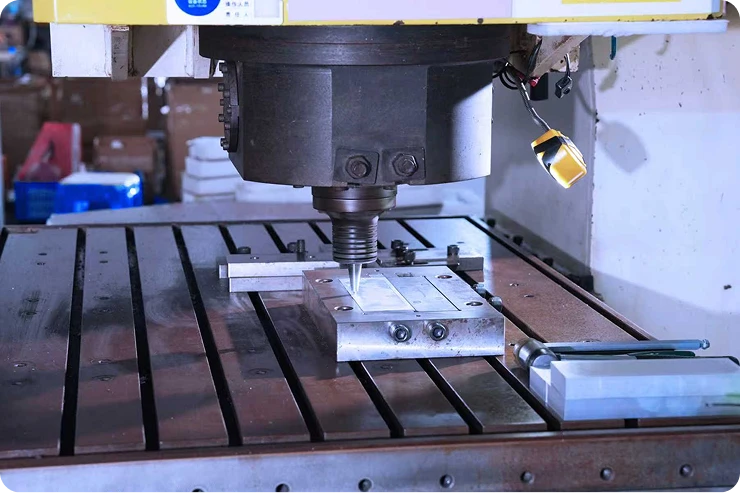
The tool rotates at high speed and is slowly inserted into the joint of the workpieces. Friction between the stirring pin and the base material generates initial heat, while the shoulder adheres to the surface to form a sealed area.
Dwell Phase
The tool continues rotating for a short period to fully soften the material in the joint area, laying the foundation for plastic flow.
Welding Phase
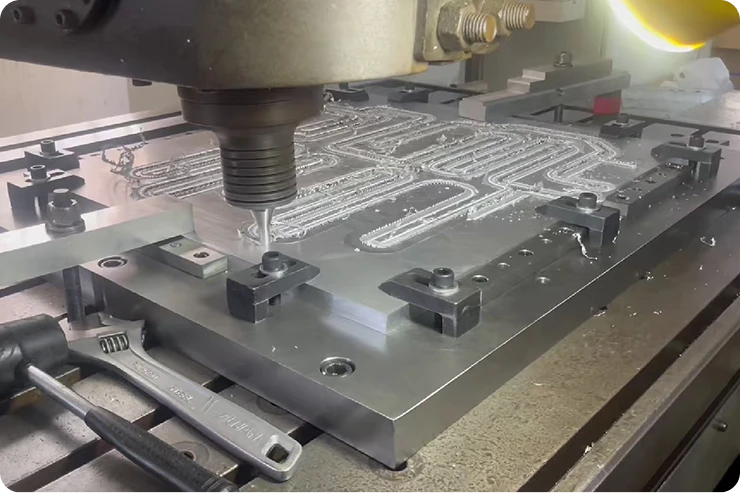
The tool moves uniformly along the joint. The stirring pin agitates the softened material while the shoulder supplements heat and prevents overflow. The material then deposits behind the tool to form a dense weld seam.
Withdrawal Phase
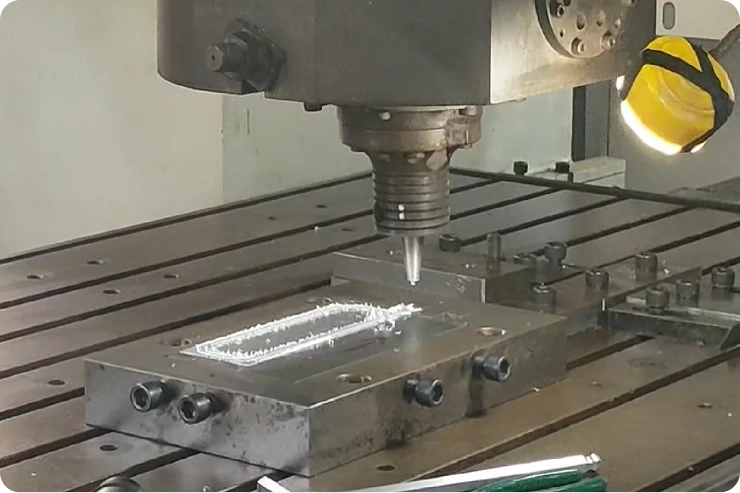
As the tool reaches the end of the joint, it is slowly lifted. The plastic material naturally fills the cavity left by the withdrawal, completing a full metallurgical bond.
Hot-selling products


Technical Optimization and Process Parameters
To manufacture high-performance cold plates, Jindu optimizes core process parameters based on the specific base materials used.
Key Parameters for Aluminum FSW
| Rotation Speed | 800-1600 RPM |
| Travel Speed | 200-800 mm/min |
| Plunge Depth | 0.1-0.3 mm |
| Pin Design | Threaded conical structure |
| Thermal Management | Water-cooled fixture temperature control |
Key Parameters for Copper FSW
| Rotation Speed | 1200-2000 RPM |
| Travel Speed | 50-200 mm/min |
| Axial Force | 8-15 kN |
| Tool Design | Polygonal tapered thread with wear-resistant coating |
| Preheat Requirement | 150-250°C preheating treatment |
Our proprietary multi-pass FSW technology ensures complete sealing of complex channel structures. The resulting weld strength reaches 85-95% of the base material, while thermal conductivity loss remains below 5%. Furthermore, we achieve leakage rates lower than 1×10⁻⁹ mbar·L/s.
Jindu’s FSW Manufacturing Process: Quality Controlled Steps
- Material Preparation & CNC Machining
- The Friction Stir Welding (FSW) Operation
- Rigorous Testing & Validation
- Post-Processing & Surface Finish

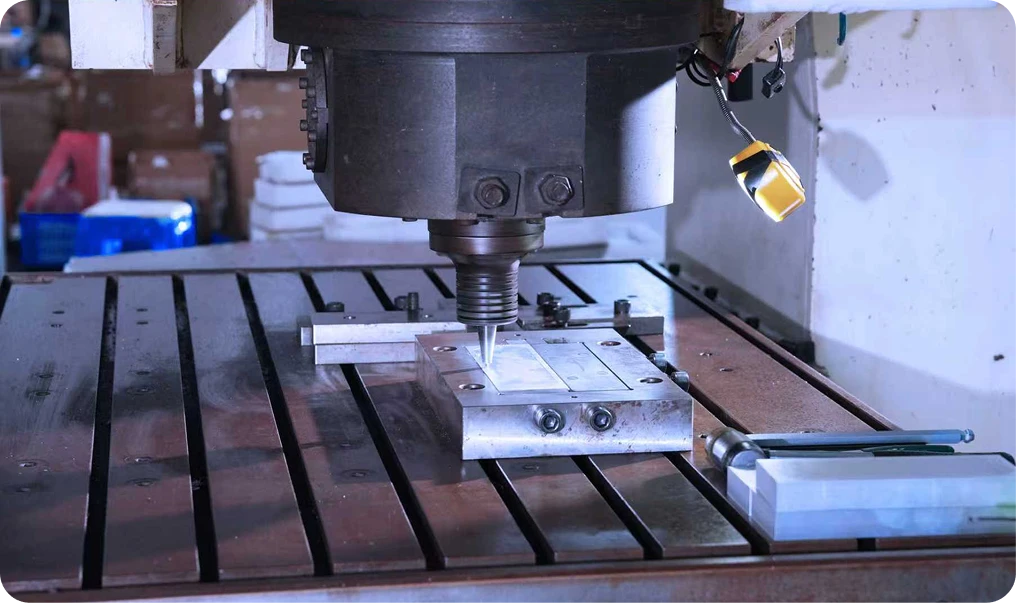
Material Preparation & CNC Machining
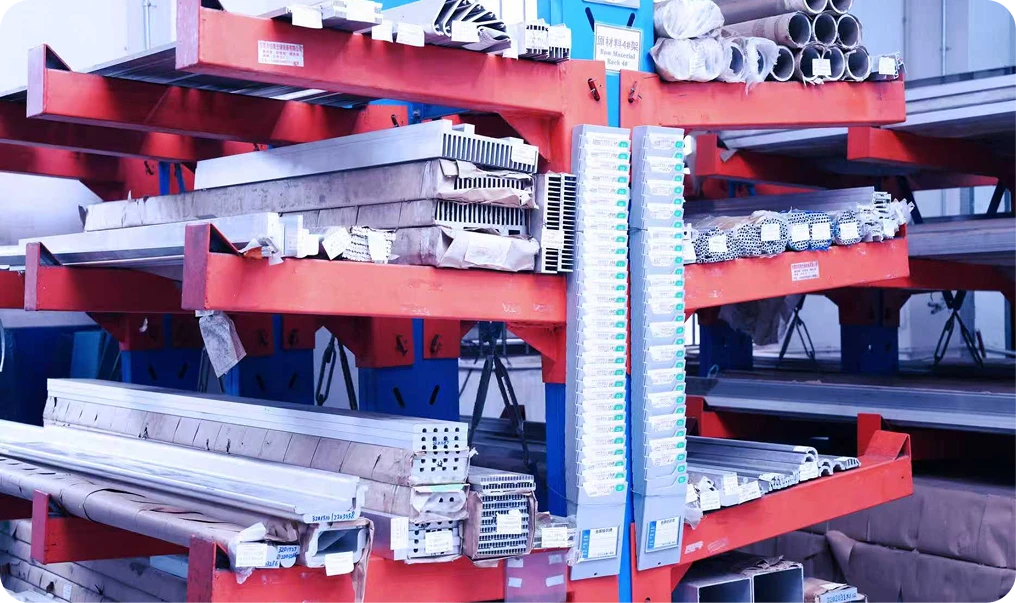
●Material Selection: We utilize high-grade aluminum or copper.
●Precision: Our 50+ CNC machines achieve tight tolerances of ±0.005mm.
●Pre-Processing: Raw materials undergo environmental testing and surface milling.
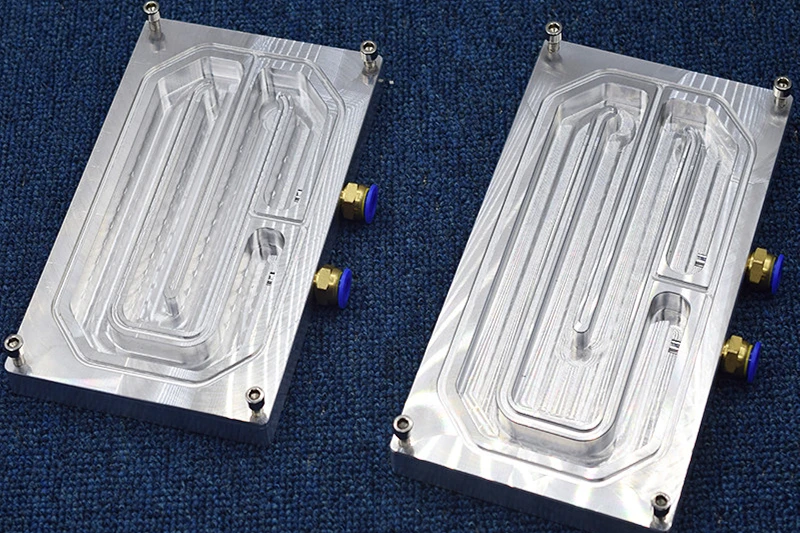
●Channel Machining: Precise milling of flow channels, interfaces, and assembly surfaces.
●Cleaning: Base and cover plates undergo ultrasonic cleaning to remove all contaminants before welding.
The Friction Stir Welding (FSW) Operation
- Fixturing: Parts are secured in specialized FSW fixtures for perfect alignment.
- Automated Welding: We utilize automated seam tracking to ensure a defect-free, solid-state bond.
- Zero Impurities: The process is flux-free, preventing any internal channel contamination.
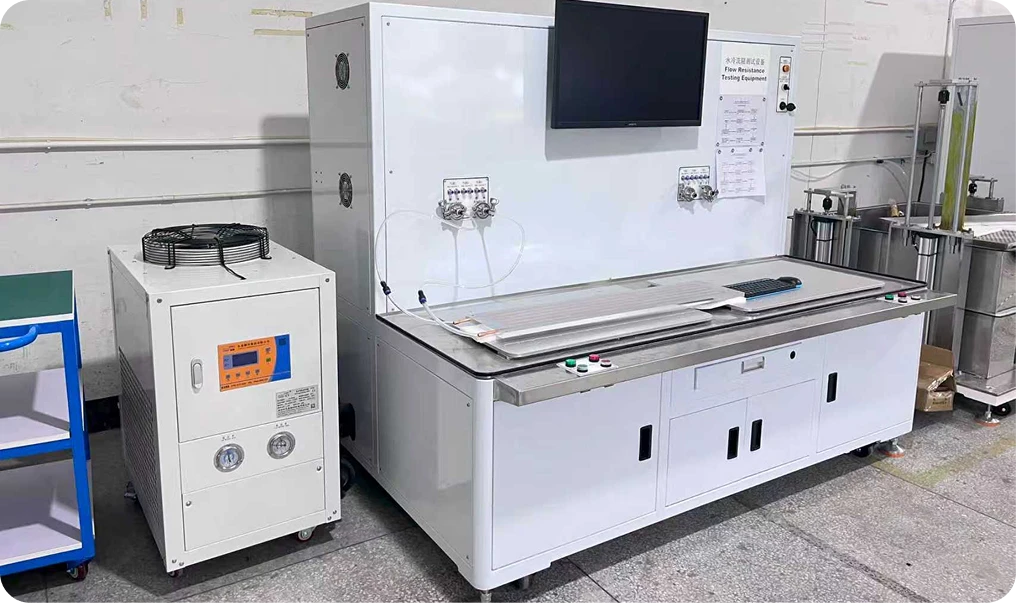
Rigorous Testing & Validation
We don’t just manufacture; we validate to ensure peak performance.
- Leak Testing: 100% of plates undergo gas tightness (air) and hydrostatic (water) pressure tests.
- Performance Testing: We conduct thermal resistance and flow resistance testing.
- Final Inspection: Full dimensional checks and visual inspections ensure compliance.

Post-Processing & Surface Finish
- Surface Treatment: Options include anodizing, sandblasting, or nickel plating.
- Final Cleanliness: Nitrogen purging and oven drying ensure the internal channels are dry and particle-free.
Why Choose Jindu for Your Tube epoxying Liquid Cold Plates
Professional Capabilities in FSW Cold Plate Manufacturing
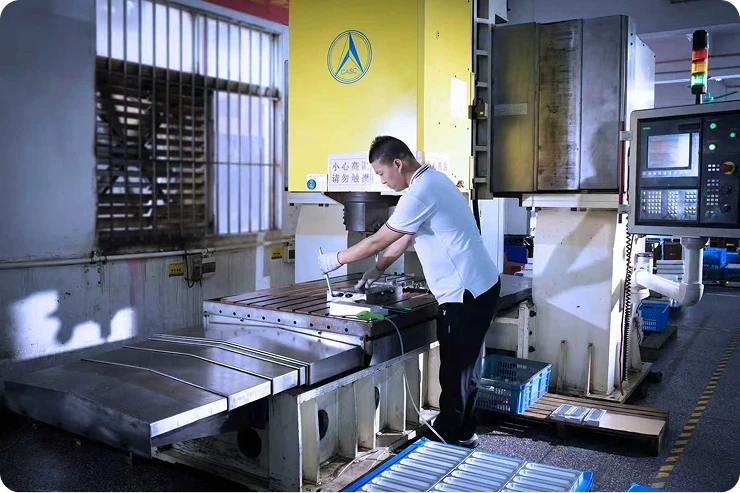
At Jindu, we are not just a supplier; we are a technical partner specializing in high-performance Friction Stir Welding. Our capabilities are built on a foundation of precision engineering and dedicated resources. We operate a dedicated, high-tonnage FSW machine, enabling us to process large and complex cold plate assemblies with leak-proof. Our team possesses deep metallurgical knowledge and process optimization skills, ensuring every weld meets the highest standards for leak-proof performance and long-term reliability in demanding thermal management applications.
When to Choose Friction Stir Welding
Select FSW when your application demands the highest levels of sealing, strength, and long-term value. It is the definitive process for critical thermal management solutions due to its core advantages:
The Jindu Commitment
We ensure excellence through full design support, in-process monitoring, and 100% non-destructive testing on every unit. For mission-critical applications in EV battery cooling, data centers, or aerospace—where failure is not an option—our FSW technology delivers unmatched reliability, performance, and lifecycle value.
Applications of FSW Liquid Cooling
Our Friction Stir Welded plates are the preferred choice for high-heat-flux applications:
New Energy Vehicles
Used in battery packs, On-board Chargers (OBC), and DC-DC converters.
Medical Devices
Ideal for IGBT modules, Thyristors, and Inverters.
Power Electronics
Utilized in MRI machines and laser cooling systems.
High-Performance Computing
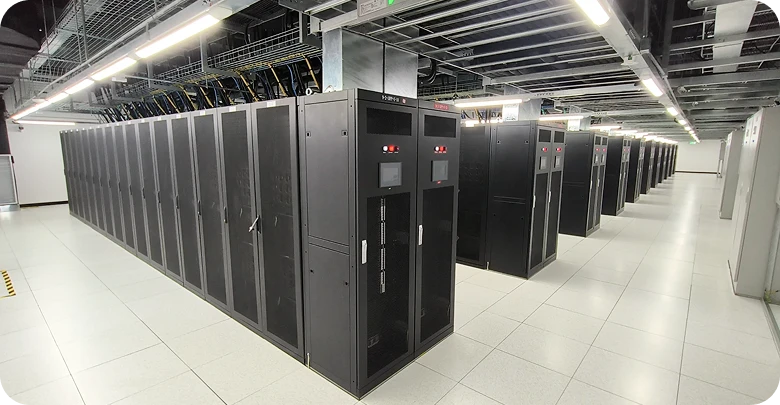
Essential for server CPUs and GPUs requiring liquid cooling.
Industry Application Case Comparison Table
While we offer 100% customization, the following “Standard Configurations” help customers select the most cost-effective options quickly.
| Application Field | Customer Pain Points | Base Material | Process Solution | Core Results |
| Industrial Lasers | Concentrated heat during high-power operation, requiring rapid heat dissipation | 6061 Aluminum Alloy | Aluminum FSW (Rotation speed 800r/min, Welding speed 200mm/min) | Heat dissipation efficiency increased by 40%, improved stability of continuous equipment operation |
| Data Center Server Cabinets | Heat dissipation of high-density server clusters, limited space | Pure Copper | Copper FSW (Rotation speed 500r/min, Welding speed 160mm/min) | Thermal conductivity per unit area up to 280W/(m·K), 30% space saving |
| Intelligent Driving Domain Controllers | High vibration in vehicle environment, heat dissipation components need shock resistance and sealing | 5052 Aluminum Alloy | Aluminum FSW + Integrated Sealing Design | Weld tensile strength up to 260MPa, sealing pressure resistance ≥1.2MPa |
| NEV Charging Piles | High-temperature outdoor environment, long-term stable heat dissipation | Copper-Aluminum Composite | Copper-Aluminum Dissimilar Metal FSW | Balances high thermal conductivity of copper and lightweight of aluminum, service life extended to 8 years |
(Note: Standard models reduce lead time by utilizing stocked copper coil sizes.)
Frequently Asked Questions about FSW Liquid Cold Plates
Technology & Performance
A: The primary advantage is reliability and joint strength. FSW is a solid-state process that creates a monolithic metallurgical bond without melting the base material. Unlike brazing, FSW requires no flux or filler metal, eliminating the risk of residue clogging channels or contaminating coolant.
A: Due to the high-strength nature of the FSW joint, our plates withstand significantly higher pressures than gasketed or soldered solutions. While specific ratings depend on design, we conduct rigorous gas tightness and hydrostatic testing to ensure zero leakage.
A: Yes. We utilize high-precision CNC machining (±0.005mm tolerance) to mill complex paths, pin fins, or spiral channels before welding, maximizing heat transfer surface area.
Manufacturing & Customization
A: We primarily use high-grade Aluminum alloys (6061, 6063). We also process Copper for extreme thermal performance requirements. All materials undergo strict composition testing.
A: We are equipped with large-format CNC centers and specialized FSW machines capable of handling large plates for EV battery packs and data center modules. Contact our engineering team for a specific feasibility review.
A: Cleanliness is ensured through a multi-stage process: ultrasonic cleaning before welding, the naturally clean flux-free FSW process, and post-weld nitrogen purging to dry channels thoroughly.
Technology & Performance
A: Yes. Our R&D team provides mechanical design suggestions, thermal simulation, and heat dissipation analysis to optimize flow paths before mass production.
A: Due to the high-strength nature of the FSW joint, our plates withstand significantly higher pressures than gasketed or soldered solutions. While specific ratings depend on design, we conduct rigorous gas tightness and hydrostatic testing to ensure zero leakage.
A: Prototypes are typically delivered in 2-3 weeks. Mass production timelines depend on volume, supported by our annual capacity of over 50,000 parts.