Bonded Fin Heat Sinks
首页 » Bonded Fin Heat Sinks
Jindu Bonded Fin Heat Sinks supplier
Effective thermal management is critical for high-performance electronics, where power densities continue to rise. Traditional methods like extrusion often struggle to provide the necessary surface area for optimal heat dissipation. Jindu’s Bonded Fin Heat Sinks are designed to overcome these challenges, offering superior air cooling performance for even the most demanding applications.
Our Bonded Fin Heat Sinks are made through a precision bonding process, where individual fins are securely attached to a base using advanced thermal bonding techniques. This process ensures maximum surface area for heat transfer, improving both thermal efficiency and component reliability. With over 15 years of expertise, JinDu continues to deliver cutting-edge thermal solutions trusted by industry leaders like NVIDIA and ABB.
The Engineering Behind Bonded Fin Heat Sinks
What Are Bonded Fin Heat Sinks?
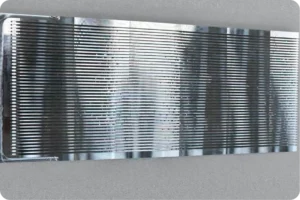
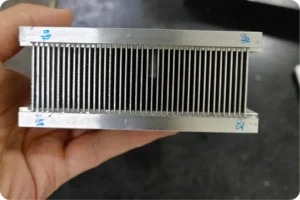
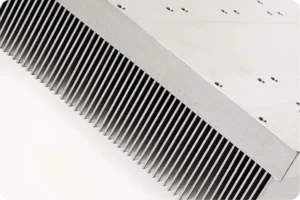
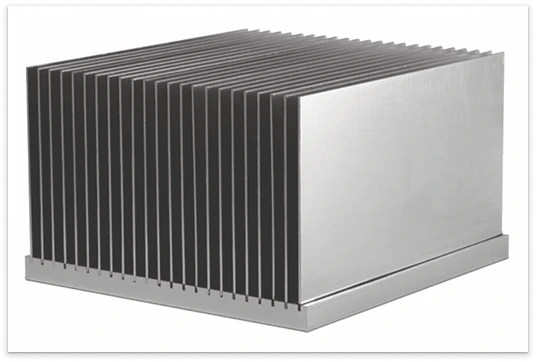
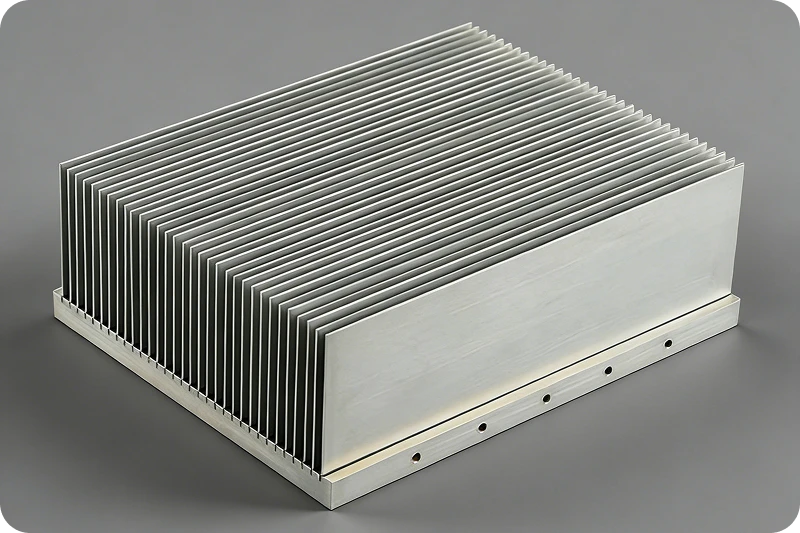
Bonded Fin Heat Sinks are a sophisticated thermal management technology where individual, high-density fins are precisely joined to a grooved base plate. This construction method allows for the creation of heat sinks with significantly greater surface area and higher fin aspect ratios compared to what is achievable with standard extrusion processes. They are designed to dissipate substantial thermal loads, making them ideal for high-power electronic components and systems.
How Are They Constructed?
The manufacturing process for Jindu’s Bonded Fin Heat Sinks involves several precision steps:
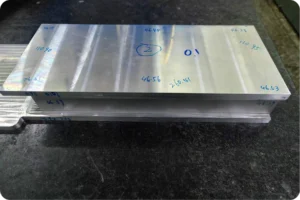
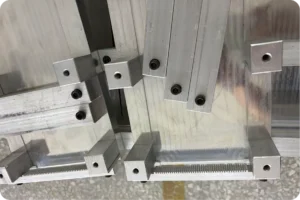
Base Preparation: A robust base plate, typically made from high thermal conductivity aluminum alloys (6061/6063) or copper, is precisely machined with grooves. Our CNC precision processing ensures a tolerance control of ±0.005mm for perfect flatness and optimal fin fit.
Fin Creation: Individual, thin fins are meticulously cut and formed from metal sheets, which can be aluminum (e.g., 1100-H14 alloy for 15% more conductivity) or copper. These fins are typically thicker than zipper/skived or folded fins, allowing for robust construction.
Precision Bonding: The prepared fins are inserted into the grooves of the base plate. A permanent, low-thermal-resistance bond is then created using advanced methods such as thermally conductive epoxy (e.g., G3-5W/m-k thermal conductivity), soldering, or brazing. Jindu’s investment in soldering and brazing capabilities ensures superior thermal joint integrity.
Finishing: After bonding, the assembly undergoes curing (for epoxy-bonded units), cleaning, and often further CNC processing for final dimensions and features. While anodizing is generally not recommended after epoxy bonding, other surface finishes are available for enhanced corrosion resistance.
Why Choose Jindu Bonded Fin Heat Sinks? Core Advantages
Jindu’s Bonded Fin Heat Sinks offer a powerful combination of design flexibility and thermal performance, providing significant benefits for challenging applications:
Overcoming Extrusion Limits:Unlike extruded heat sinks, bonded fins allow for much taller fin heights and tighter fin spacing, resulting in two to three times more cooling surface area within the same footprint. This allows for higher fin densities and aspect ratios over 50:1.
Enhanced Heat Dissipation:The vastly increased surface area directly translates to superior heat dissipation capabilities, preventing overheating and improving the overall stability of your system.
Efficiency at Tall Heights:Our thicker fins (typically 0.5-2.5mm) ensure greater efficiency, even at tall heights, leading to better thermal performance.
Large Footprints:Bonded fin technology overcomes the width limitations of traditional extrusions, making it ideal for large heat sinks required in high-power applications.
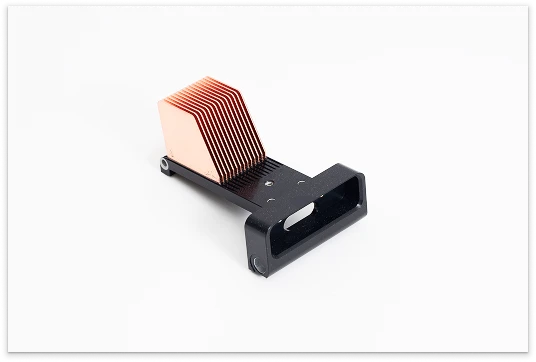
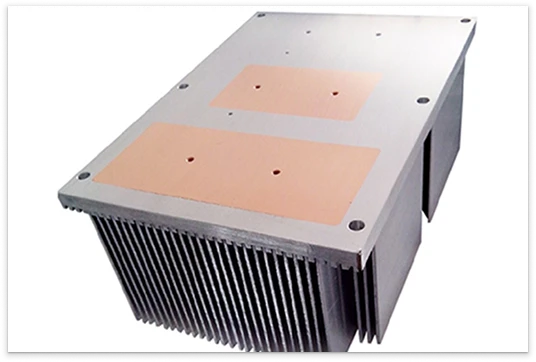
Mixed Material Construction:We can combine different materials for the base and fins to optimize performance and cost. For example, a copper base for superior heat spreading from the source can be bonded with aluminum fins for lighter weight and cost-effectiveness.
Customizable Geometries:Our design capabilities extend to custom fin spacing (e.g., >1.5mm gap), heights, and base designs, allowing for custom shapes and sizes to fit specific application requirements. We can produce custom grooves to match your needs.
Integration with Advanced Technologies:Bonded fin heat sinks can be seamlessly integrated with heat pipes or vapor chambers to further enhance thermal performance for extremely high heat loads.
Economical for High Performance: Bonded fin heat sinks offer a more cost-effective solution for achieving high aspect ratios and large surface areas compared to machining from solid blocks. They are also economical for custom designs and low-volume production.
Solid Mechanical Bond:The advanced bonding methods ensure a strong, solid mechanical bond between the base and fins, guaranteeing durability and efficient, long-term heat transfer.
Mass Production Capabilities:KINGKA supports mass production of up to 10,000+ pieces with an annual capacity of 50,000+ parts, ensuring scalability for your projects.
Ready to Elevate Your Thermal Management Strategy?
Don’t let thermal limitations constrain your innovation. Partner with Jindu, your trusted expert in high-performance Bonded Fin Heat Sink technology, and empower your systems to achieve their full potential.
Jindu's Comprehensive Bonded Fin Heat Sink Solutions
At Jindu, we provide a full spectrum of services to deliver optimized Bonded Fin Heat Sinks:
Material Selection
Base Materials: High-conductivity aluminum alloys (6061/6063) or copper, offering up to 200 W/mK thermal conductivity.
Fin Materials: Aluminum (1100-H14 alloy) or copper, chosen based on thermal requirements, weight considerations, and cost.
Manufacturing Capabilities
Precision CNC Machining: Our 50+ sets of high-end CNC machines ensure precise groove machining and final part dimensions with ±0.005mm tolerance.
Advanced Bonding Processes: Expertise in epoxy bonding, soldering, and brazing for robust and thermally efficient fin-to-base connections.
Surface Finishing: We offer anodizing and sandblasting for enhanced corrosion resistance and aesthetics (Note: Anodizing is typically applied before epoxy bonding).
Quality Assurance & Testing
Thermal Simulation: Utilizing ANSYS Fluent, we perform comprehensive thermal simulations to predict and optimize heat sink performance under various operating conditions.
Real-World Validation: We provide actual test reports confirming the thermal performance and reliability of our custom solutions. We also offer air tightness tests and heat dissipation analysis.
Strict Quality Control: Every Bonded Fin Heat Sink undergoes rigorous inspection to ensure dimensional accuracy and adherence to all specifications.
Technical Specifications & Performance Highlights
| Feature | Jindu Extruded Heat Sink Performance |
| Heat Dissipation Range | 10W to 500W |
| Base Material Thermal Conductivity | Up to 200 W/mK (for Al/Cu) |
| CNC Machining Tolerance | ±0.005mm |
| Typical Fin Thickness | 0.5-2.5mm |
| Typical Fin Gap | >1.5mm |
| Epoxy Thermal Conductivity | G3-5W/m-k |
| Typical Sample Cycle | 7 Days |
| Mass Production On-Time Delivery | 98% |
| Mass Production Volume Capacity | Up to 10,000+ pieces / 50,000+ annual parts |
Ready to Elevate Your Thermal Management Strategy?
Don’t let thermal limitations constrain your innovation. Partner with Jindu, your trusted expert in high-performance Bonded Fin Heat Sink technology, and empower your systems to achieve their full potential.
Surface Treatments for Bonded Fin Heat Sinks
Surface treatments are critical for optimizing the performance, durability, and appearance of bonded fin heat sinks. These processes enhance properties such as corrosion resistance, hardness, and thermal emissivity, which directly impact heat dissipation efficiency and product longevity. The selection of a surface treatment is dictated by the specific application, environmental conditions, and desired performance characteristics.
Common Surface Treatment Options for Bonded Fin Heat Sinks:
Anodizing: This electrochemical process forms a robust, protective oxide layer on metal surfaces, particularly aluminum, significantly improving corrosion resistance and durability. Anodizing can also provide aesthetic benefits, allowing for various colors, including natural (silver) and black. For bonded fin heat sinks, anodizing is typically applied to individual components before the bonding process, especially when epoxy bonding is used, as it is generally not recommended after epoxy application. While black anodizing may not significantly improve heat removal in forced convection, it can offer a 10% increase in heat dissipation in low airflow systems.
Sandblasting: This mechanical finishing process involves propelling abrasive materials against the surface, resulting in a matte, uniform finish that can enhance aesthetics and prepare the surface for subsequent treatments.
Nickel Plating: Applying a layer of nickel, often through electroless nickel plating, enhances corrosion resistance and hardness. Nickel plating is particularly beneficial for improving the wettability between aluminum and copper during welding processes, making it easier to join these dissimilar metals, and can also provide a waterproof surface when combined with oil or powder spraying.
The selection of the appropriate surface treatment is crucial for maximizing the performance and longevity of bonded fin heat sinks in diverse applications.
Passivation: A surface treatment mentioned for aluminum and copper heat sinks that helps to protect the material from corrosion.
Common Surface Treatment Options for Bonded Fin Heat Sinks:
Chromate Conversion Coating (Chem Film/Iridite/Alodyne): This type of conversion coating passivates aluminum and copper surfaces, offering corrosion protection and serving as an excellent primer for paint. It is available in clear and yellow/gold finishes.
Powder Coating: A durable and aesthetically versatile dry finish applied electrostatically, offering various color options. It provides a more durable finish than regular paint.
The selection of the appropriate surface treatment is crucial for maximizing the performance and longevity of bonded fin heat sinks in diverse applications.
Painting: Can be used for both aesthetic purposes and to provide a level of protection. For copper heat sinks, a thin black paint can help prevent corrosion and improve appearance, potentially enhancing performance in convection-cooled applications.
Polishing: Improves surface quality and can provide a bright, shiny finish.
Brushing: Creates a surface with parallel lines, providing a unidirectional satin finish.
Silver Plating: Offers suitable anti-fretting properties, enhances electrical conductivity, and improves corrosion resistance.
Diverse Applications
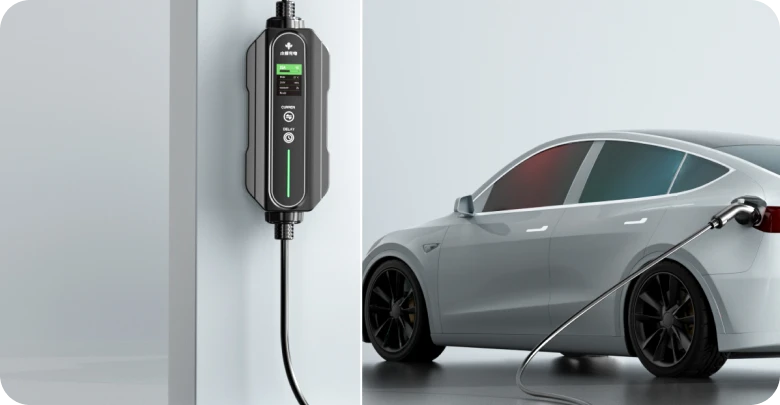
The superior performance and design flexibility of Jindu’s Bonded Fin Heat Sinks make them ideal for a wide range of high-power and space-constrained applications, especially those requiring forced convection cooling:
Why Partner with Jindu? Your Strategic Thermal Partner
Choosing Jindu for your Extruded Heat Sinks means selecting a partner committed to excellence, innovation, and your long-term success.

15 Years of Proven Expertise
With over a decade and a half of dedicated experience in advanced thermal management, we bring unparalleled industry knowledge and a proven track record, serving global leaders like NVIDIA and ABB.

Integrated One-Stop Service
From initial concept and customized design to advanced thermal simulation (ANSYS Fluent), precision manufacturing, rigorous testing, and efficient mass production, Jindu offers a seamless, end-to-end service.

Rapid & Reliable Delivery
We offer a swift 7-day sample cycle for rapid prototyping and validation, complemented by an impressive 98% on-time delivery rate for mass production.

Unwavering Commitment to Quality
Our dedication to the highest quality standards is underlined by our IATF16949 certification, with ISO14001 and ISO13485 certifications actively in progress.

Investing in the Future
We are continuously expanding our capabilities. Our planned relocation to a new, twice-expanded factory in 2026, equipped with state-of-the-art new production lines, will further enhance our capacity and technological leadership.

Customer-Centric Partnership
Beyond Bonded Fin Heat Sinks, Jindu specializes in a full spectrum of precision thermal solutions, including Extruded Heat Sinks and advanced Liquid Cold Plates (Brazed and Friction Stir Welded), ensuring we can address virtually any thermal challenge.
The Jindu Process: From Concept to Optimized Cooling
We streamline the journey to your ideal thermal solution

Discovery & Requirements Analysis
We begin by thoroughly understanding your project's specific thermal needs, power dissipation, space constraints, and environmental considerations.

Custom Design & Thermal Simulation
2.Our expert engineers develop a highly optimized Bonded Fin Heat Sink design, validated through advanced CAD modeling and comprehensive thermal simulations using ANSYS Fluent.

Prototyping & Validation
We rapidly produce high-quality prototypes for your evaluation, followed by rigorous in-house testing and the provision of actual test reports to confirm performance, reliability, and adherence to all specifications.

Precision Manufacturing & Quality Control
Leveraging our state-of-the-art CNC machining and advanced bonding capabilities, we proceed with efficient and precise manufacturing, with stringent quality checkpoints at every stage.

Delivery & Ongoing Support
We ensure on-time delivery of your optimized Bonded Fin Heat Sinks and provide continuous technical support for seamless integration and long-term performance.
Related Products