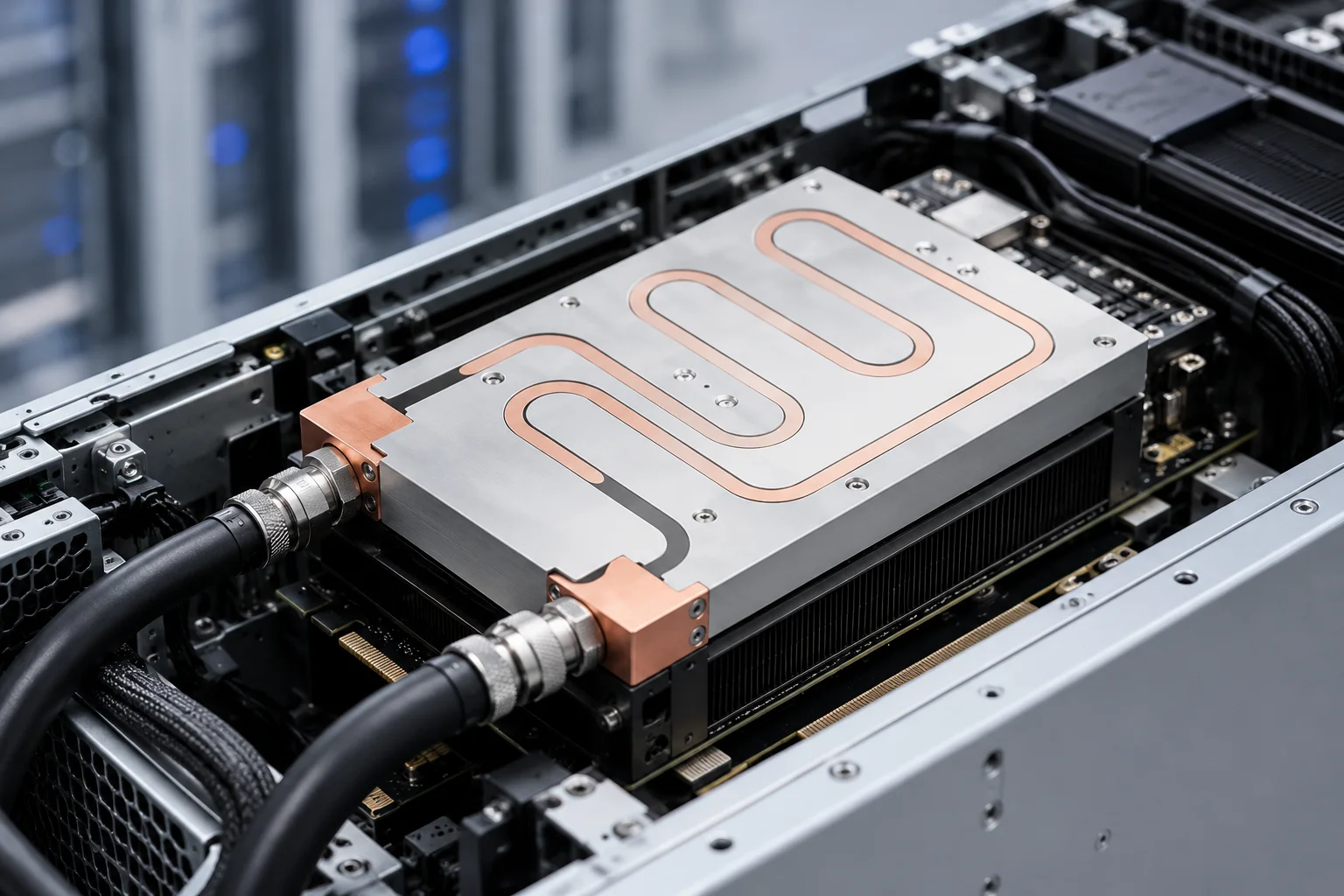
To choose the right heat sink for high power electronics, you need to evaluate heat load, available space, airflow condition, material, thermal resistance, manufacturing process, mounting method and cost target. A suitable heat sink should keep the component within its operating temperature range while remaining practical for assembly, production and long-term use.
High power electronics generate concentrated heat in compact spaces. IGBT modules, MOSFETs, inverters, converters, power supplies, LED systems, telecom equipment and industrial control devices often operate under demanding thermal conditions. If the heat is not removed effectively, the system may suffer from performance loss, reduced reliability or premature component degradation.
A heat sink increases the surface area available for heat dissipation. However, not every heat sink is suitable for every project. An extruded aluminum heat sink may be cost-effective for standard electronics cooling, while a skived fin heat sink may be better for compact high-density cooling. A bonded fin heat sink may be suitable for large power modules, while a cold forged or die cast heat sink may fit LED, enclosure or complex shape requirements.
This guide explains how engineers and buyers can evaluate and select the right custom heat sink for high power electronics applications.
What Is a Heat Sink?
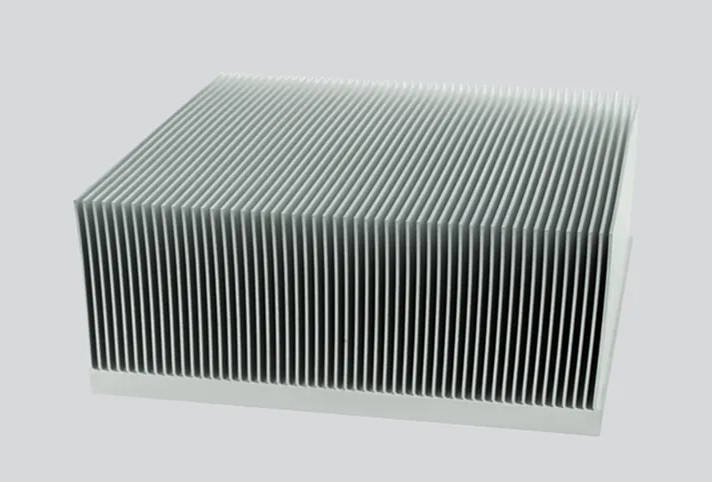
A heat sink is a thermal management component that transfers heat from a device into the surrounding air. Heat first moves from the component into the heat sink base, then spreads into the fins, and finally dissipates into the air through natural convection or forced airflow.
The core function of a heat sink is to reduce component temperature by increasing heat spreading area and improving heat transfer to the surrounding environment.
Heat sinks are commonly used in:
- Power electronics
- IGBT modules
- Inverters and converters
- LED lighting
- Telecom equipment
- Industrial control systems
- Servers and data center equipment
- Automotive electronics
- Medical devices
- Battery and energy storage systems
- Consumer electronics
A heat sink may be simple or highly customized. It can be extruded, skived, cold forged, die cast, CNC machined or assembled with bonded fins. The right choice depends on the thermal requirement and the complete product structure.
Why Heat Sink Selection Matters for High Power Electronics
High power electronics usually face three thermal challenges: high heat generation, limited installation space and strict reliability requirements. If the heat sink is undersized or poorly designed, the component may operate at a higher temperature than expected.
Poor heat sink selection can lead to:
- Excessive temperature rise
- Local hot spots
- Reduced component efficiency
- Shorter service life
- Fan noise increase due to higher airflow demand
- Larger product size
- Higher manufacturing cost
- Difficult assembly
- Unstable performance in continuous operation
A heat sink should not be selected only by appearance or size. Its real performance depends on heat load, airflow, fin geometry, material, surface contact and manufacturing process.
For B2B projects, the heat sink is often part of a larger system. It must fit the product housing, mounting points, airflow path, electrical layout and production process. That is why heat sink selection should begin early in the product design stage.
Key Factors When Choosing a Heat Sink
Before choosing a heat sink, engineers should define the actual operating conditions. The following factors directly affect heat sink performance and cost.
| Selection Factor | Why It Matters | What to Check |
| Heat load | Determines how much heat must be dissipated | Power loss in watts, duty cycle, heat source location |
| Maximum temperature | Defines the thermal target | Component case temperature or allowable surface temperature |
| Available space | Limits heat sink size | Length, width, height, mounting envelope |
| Airflow condition | Affects fin spacing and orientation | Natural convection, forced air, airflow direction |
| Material | Impacts thermal conductivity, weight and cost | Aluminum, copper or hybrid design |
| Base thickness | Affects heat spreading and mechanical strength | Heat source area and mounting pressure |
| Fin geometry | Determines surface area and airflow resistance | Fin height, pitch, thickness and direction |
| Manufacturing process | Affects cost, geometry and production feasibility | Extrusion, skiving, forging, die casting, bonded fin |
| Surface treatment | Affects corrosion resistance and appearance | Anodizing, plating, coating or passivation |
| Production volume | Influences process choice and tooling cost | Prototype, small batch or mass production |
A heat sink should be selected based on system-level requirements rather than one isolated parameter.
Step 1: Define the Heat Load
The first step is to estimate how much heat the component generates. In electronics cooling, the heat sink usually needs to dissipate the power loss, not necessarily the total electrical power of the device.
For example, an inverter, LED driver or IGBT module may have a defined power loss during operation. That heat must be transferred away from the component and dissipated into air.
Important questions include:
- How many watts must be dissipated?
- Is the heat source continuous or intermittent?
- Is the heat concentrated in one small area or spread across multiple components?
- What is the maximum allowable component temperature?
- What is the expected ambient temperature?
- Is the product installed in an enclosed space?
Heat sink selection should start with the heat source and temperature target, not with a standard catalog size.
If the heat load is low, a simple extruded aluminum heat sink may be enough. If the heat load is high and concentrated, a skived fin, bonded fin, copper base or heat pipe assisted design may be more suitable.
Step 2: Evaluate Airflow Conditions
Airflow is one of the most important factors in heat sink performance. The same heat sink can perform very differently under natural convection and forced airflow.
Natural Convection
Natural convection means heat is dissipated into still air without a fan. The airflow is created by the temperature difference between the heat sink and the surrounding air.
Natural convection designs usually need:
- Wider fin spacing
- Lower airflow resistance
- Larger surface area
- Vertical fin orientation where possible
- More conservative temperature planning
Very dense fins may not perform well under natural convection because air cannot move through the fin gaps effectively.
Forced Air Cooling
Forced air cooling uses a fan or blower to move air through the heat sink. This allows higher fin density and stronger heat dissipation in a smaller volume.
Forced air designs may use:
- Higher fin density
- Taller fins
- Narrower fin pitch
- Ducted airflow
- Directional fin alignment
- Skived or bonded fin structures
However, forced air systems must consider fan life, noise, dust accumulation and airflow blockage.
Airflow and Fin Design Comparison
| Airflow Condition | Suitable Fin Design | Common Heat Sink Type |
| Natural convection | Wider fin spacing, vertical orientation | Extruded, forged pin fin, die cast |
| Low forced airflow | Moderate fin density | Extruded, skived, bonded fin |
| High forced airflow | Dense fins and larger surface area | Skived, bonded fin, heat pipe heat sink |
| Multidirectional airflow | Pin fins or radial fins | Cold forged, die cast |
| Enclosed system | Custom airflow path required | Custom aluminum heat sink |
Step 3: Choose the Right Heat Sink Material
Material selection affects thermal performance, weight, cost and manufacturability. Aluminum and copper are the two most common materials for heat sink manufacturing.
Aluminum Heat Sinks
Aluminum heat sinks are widely used because they provide a good balance of thermal conductivity, low weight, cost efficiency and manufacturing flexibility.
Aluminum is suitable when:
- Weight matters
- The heat sink is large
- Cost control is important
- The project needs extrusion, die casting, forging or skiving
- Production volume is medium to high
- The thermal requirement can be met with optimized fin design
Aluminum heat sinks are commonly used in LED lighting, power supplies, telecom devices, industrial electronics, automotive electronics and general electronics cooling.
Copper Heat Sinks
Copper has higher thermal conductivity than aluminum and is often used when heat is highly concentrated or when the available space is limited.
Copper is suitable when:
- The heat source is compact and intense
- Higher heat spreading is required
- Weight is less critical
- The project can support higher material cost
- A copper base or copper fins are needed for thermal performance
Copper heat sinks may be used in high heat flux electronics, laser systems, compact power modules and specialized cooling designs.
Aluminum vs Copper Heat Sink Comparison
| Factor | Aluminum Heat Sink | Copper Heat Sink |
| Thermal conductivity | Good for many applications | Higher |
| Weight | Lighter | Heavier |
| Cost | Usually lower | Usually higher |
| Manufacturing options | Broad process compatibility | More selective |
| Common processes | Extrusion, skiving, forging, die casting, bonded fin | Skiving, CNC machining, bonded fin, hybrid structures |
| Suitable applications | General electronics, large parts, volume production | Compact high heat flux cooling |
| Design priority | Balance of cost, weight and performance | Thermal conductivity and heat spreading |
Copper is not automatically the right choice for every high power application. An optimized aluminum heat sink can often provide a better balance of performance, weight and cost.
Step 4: Select the Right Manufacturing Process
The manufacturing process determines what fin geometry is possible, how much the heat sink costs and how suitable it is for production.
Common Heat Sink Manufacturing Processes
| Process | Suitable For | Main Advantage | Key Consideration |
| Extruded heat sink | Standard profiles and cost-effective production | Economical and repeatable | Limited complex geometry |
| Skived heat sink | High fin density and compact cooling | Thin fins from one metal piece | Geometry and size limitations |
| Cold forged heat sink | Pin fin and multidirectional airflow | Strong structure and compact design | Tooling required |
| Die cast heat sink | Complex shapes and integrated housings | Good for volume production | Thermal performance depends on alloy and design |
| Bonded fin heat sink | Large high power cooling | Tall fins and large surface area | Joint quality is important |
| CNC machined heat sink | Prototypes and precision features | Flexible customization | Higher cost for complex parts |
| Heat pipe heat sink | Remote or concentrated heat transfer | Improved heat spreading | More complex assembly |
Extruded Heat Sink
Extruded heat sinks are suitable for standard aluminum profiles and cost-sensitive projects. They are commonly used in power supplies, telecom equipment, industrial electronics and enclosures.
Choose extrusion when:
- The fin design is relatively straight
- Production volume supports tooling
- Cost control is important
- Standard aluminum cooling performance is enough
- The heat sink length may vary based on product design
Skived Fin Heat Sink
Skived heat sinks are made by cutting thin fins from a solid block of aluminum or copper. The fins remain connected to the base, creating a continuous thermal path.
Choose skiving when:
- High fin density is needed
- Space is limited
- The heat source is compact
- Better base-to-fin conduction is required
- Thermal performance is more important than lowest cost
Cold Forged Heat Sink
Cold forged heat sinks are often used for pin fin or radial fin structures. They are useful when airflow comes from multiple directions or when compact natural convection cooling is needed.
Choose cold forging when:
- Pin fin geometry is preferred
- Airflow direction is not fixed
- The application is LED, power module or compact electronics
- Production volume supports tooling
Die Cast Heat Sink
Die casting is useful when the heat sink is part of a complex housing or enclosure. It can integrate mounting features, ribs and external shapes.
Choose die casting when:
- The heat sink is also the product housing
- Complex 3D geometry is required
- Production volume is high
- Assembly steps need to be reduced
- The thermal target can be met with the selected casting alloy and design
Bonded Fin Heat Sink
Bonded fin heat sinks use individual fins attached to a base plate. This process is useful for large heat sinks or high fin aspect ratios that may exceed extrusion limits.
Choose bonded fin when:
- The heat sink is large
- Tall fins are required
- High surface area is needed
- Forced airflow is available
- The application involves large power modules or industrial electronics
For buyers comparing multiple processes, working with a heat sink manufacturer early can help avoid selecting a process that looks economical but cannot meet the final thermal or mechanical requirement.
Step 5: Evaluate Thermal Resistance
Thermal resistance describes how much temperature rise occurs for a given heat load. In simple terms, lower thermal resistance means better heat transfer, but it must be evaluated under real airflow and mounting conditions.
Thermal resistance is affected by:
- Heat source contact area
- Thermal interface material
- Base thickness
- Material conductivity
- Fin surface area
- Fin efficiency
- Airflow speed
- Air temperature
- Mounting pressure
- Surface flatness
A heat sink with a large size does not always have lower thermal resistance if airflow, fin spacing or contact design is poor.
For high power electronics, thermal resistance should be evaluated together with airflow. Dense fins may reduce thermal resistance under strong fan airflow, but they may restrict air movement in natural convection.
Step 6: Check Mechanical Design and Mounting
Heat sink performance also depends on mechanical integration. The heat sink must contact the component properly and maintain stable mounting pressure over time.
Important mechanical factors include:
| Mechanical Factor | Why It Matters |
| Base flatness | Affects thermal contact with the component |
| Mounting holes | Must match PCB, module or enclosure design |
| Mounting pressure | Influences thermal interface performance |
| Vibration resistance | Important for automotive and industrial equipment |
| Weight | Affects structural support and assembly |
| Clearance | Prevents interference with nearby components |
| Surface finish | Affects contact, coating and appearance |
| Electrical insulation | May be required in some power electronics assemblies |
In many projects, a custom heat sink requires CNC machining after extrusion, skiving, forging or casting. Secondary operations may include drilling, tapping, milling, deburring, surface treatment and inspection.
Step 7: Consider Surface Treatment
Surface treatment can improve corrosion resistance, appearance, durability or radiation performance. Common surface treatments include anodizing, nickel plating, passivation, powder coating and chemical conversion coating.
Common Heat Sink Surface Treatments
| Surface Treatment | Common Purpose |
| Anodizing | Corrosion resistance and appearance for aluminum heat sinks |
| Black anodizing | Appearance and radiation-related surface properties |
| Nickel plating | Corrosion protection and solderability in some designs |
| Powder coating | Appearance and environmental protection |
| Chemical conversion coating | Corrosion resistance and electrical conductivity needs |
Surface treatment should be selected based on environment, electrical requirements, appearance needs and assembly method. It should not be added only for appearance if it affects thermal contact or dimensional requirements.
Application-Based Heat Sink Selection Guide
Different high power electronics applications require different heat sink priorities.
| Application | Main Challenge | Suitable Heat Sink Direction |
| IGBT module | Concentrated heat and reliability | Skived, bonded fin, copper base or custom machined heat sink |
| Inverter or converter | High load and limited enclosure space | Extruded, skived, bonded fin or heat pipe heat sink |
| LED lighting | Cost, appearance and housing integration | Die cast, cold forged or extruded aluminum heat sink |
| Telecom equipment | Continuous operation and airflow control | Extruded or skived aluminum heat sink |
| Server and data center hardware | High power density | Skived, bonded fin or heat pipe assisted heat sink |
| Industrial power supply | Large heat load and forced airflow | Extruded or bonded fin heat sink |
| Automotive electronics | Vibration, weight and reliability | Die cast, forged or custom aluminum heat sink |
| Laser equipment | Compact high heat flux | Copper, skived or heat pipe heat sink |
This table provides a selection starting point. Final selection should be based on thermal simulation, mechanical structure, airflow testing and production requirements.
Procurement Checklist for Custom Heat Sinks
For a custom heat sink project, buyers should prepare technical information before requesting a quote. This helps the supplier recommend the right material, manufacturing process and structure.
| Information to Provide | Why It Helps |
| Heat load | Defines cooling capacity |
| Component size | Determines contact area |
| Available space | Defines heat sink envelope |
| Target temperature | Sets thermal performance requirement |
| Ambient temperature | Affects temperature rise calculation |
| Airflow condition | Determines fin design |
| Material preference | Helps compare aluminum and copper |
| Mounting method | Affects base design and machining |
| Production volume | Supports process and tooling selection |
| Surface treatment | Defines corrosion and appearance needs |
| Drawing or 3D model | Improves manufacturing evaluation |
| Application environment | Helps evaluate vibration, dust and humidity requirements |
A detailed RFQ helps reduce redesign, quotation uncertainty and communication time.
Common Mistakes When Choosing a Heat Sink
Mistake 1: Choosing Only by Size
A larger heat sink may not perform well if fin spacing, airflow direction or contact design is poor. Geometry matters as much as size.
Mistake 2: Ignoring Airflow
Heat sink performance changes significantly under natural convection and forced airflow. Fin pitch should match the actual airflow condition.
Mistake 3: Selecting Copper Too Quickly
Copper offers higher thermal conductivity, but it is heavier and usually more expensive. Aluminum may be more practical for many large or cost-sensitive designs.
Mistake 4: Treating Catalog Heat Sinks as Final Solutions
Standard heat sinks are useful for evaluation, but high power electronics often require customized mounting, size, airflow and surface treatment.
Mistake 5: Forgetting Assembly Requirements
Mounting holes, flatness, clearance, insulation and thermal interface material can all affect final performance.
Mistake 6: Choosing the Manufacturing Process Too Late
The process should be considered during design. Some fin structures are suitable for extrusion, while others require skiving, forging, die casting or bonded fin assembly.
How to Choose a Reliable Heat Sink Supplier
A reliable supplier should understand both manufacturing and thermal design. For high power electronics, the supplier should be able to evaluate drawings, heat load, airflow, material, process and secondary machining needs.
When selecting a supplier, check whether they can support:
- Custom heat sink design review
- Aluminum and copper material options
- Multiple manufacturing processes
- CNC machining and secondary processing
- Surface treatment
- Thermal design recommendations
- Prototype and batch production
- Quality inspection
- Stable communication for engineering changes
Jindu Tech provides custom heat sink solutions for electronics cooling applications. For project evaluation, engineers can share drawings, heat load data, airflow conditions and installation requirements.
FAQ
How do I choose a heat sink for high power electronics?
Start by defining heat load, maximum temperature, available space, airflow condition, material preference, mounting method and production volume. Then compare heat sink type, fin geometry and manufacturing process based on those requirements.
What is the best material for a high power heat sink?
Aluminum is commonly used because it is lightweight, cost-effective and easy to manufacture. Copper may be selected when the heat source is compact and higher thermal conductivity is needed. The right material depends on the full system design.
What type of heat sink is suitable for natural convection?
Natural convection usually needs wider fin spacing and lower airflow resistance. Extruded heat sinks, cold forged pin fin heat sinks and some die cast designs can be suitable depending on orientation, size and heat load.
When should I use a skived fin heat sink?
A skived fin heat sink is suitable when the design requires high fin density, compact size and improved thermal conduction between the base and fins. It is often used for power electronics, telecom modules and high-performance electronics.
What is the difference between an extruded heat sink and a bonded fin heat sink?
An extruded heat sink is made from a continuous aluminum profile, while a bonded fin heat sink uses individual fins attached to a base plate. Bonded fin designs can support larger sizes and taller fins, while extrusion is often more economical for standard profiles.
Is a custom heat sink better than a standard heat sink?
A custom heat sink is often more suitable when the project has special size, mounting, airflow, thermal load or appearance requirements. A standard heat sink may be enough for simpler or lower-power applications.
Why is airflow important in heat sink design?
Airflow determines how effectively heat is removed from the fins. Dense fins may work well with forced airflow but may restrict air movement under natural convection. Fin spacing should match the real airflow condition.
What information is needed for a custom heat sink quote?
A custom quote usually requires heat load, component size, space limit, target temperature, airflow condition, material preference, mounting method, production volume, surface treatment requirement and drawings or 3D files.
Conclusion
Choosing the right heat sink for high power electronics requires a complete evaluation of heat load, temperature target, airflow, material, fin geometry, manufacturing process, mounting method and cost. A suitable heat sink should not only dissipate heat, but also fit the product structure, production plan and long-term reliability requirements.
The right heat sink is not simply the largest or most expensive option. It is the design that meets the thermal target while matching airflow, space, material, manufacturing process and budget.
For IGBT modules, inverters, converters, LED systems, telecom equipment, servers and industrial electronics, custom heat sink design can help improve thermal stability and product integration.
Jindu Tech supports custom heat sink manufacturing for aluminum and copper cooling solutions. If you are developing a high power electronics project, send your drawings and thermal requirements for engineering review.