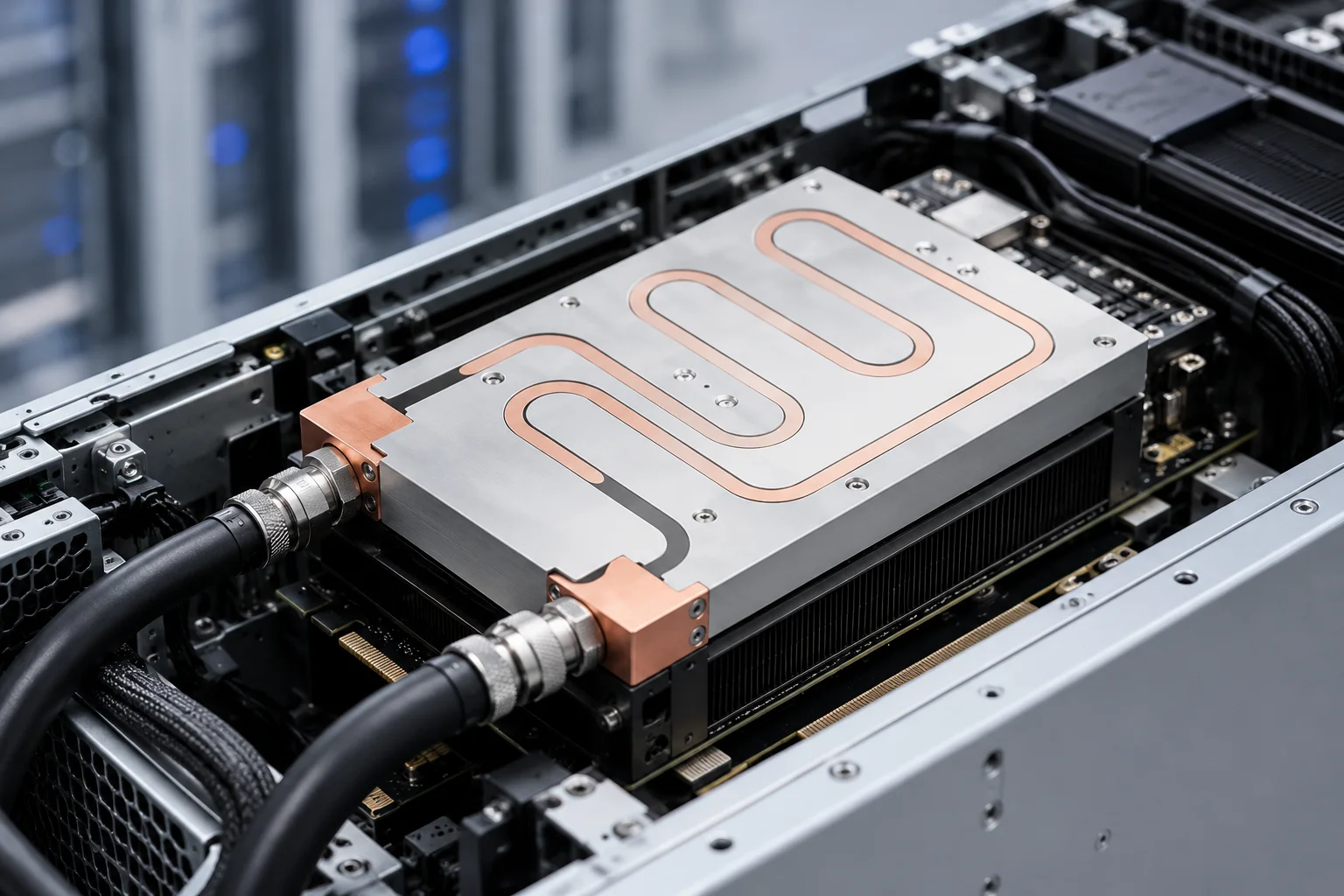
The right heat sink manufacturing process depends on thermal performance, fin geometry, material, production volume, cost target, airflow condition and mechanical design requirements. Common heat sink processes include extrusion, skiving, cold forging, die casting and bonded fin assembly. Each method has different advantages in fin density, design flexibility, tooling cost, production efficiency and thermal performance.
For electronics cooling, a heat sink is not just a block of aluminum with fins. Its manufacturing process determines how thin the fins can be, how large the heat sink can be, how much airflow it needs, how expensive it is to produce and how well it can remove heat from the component.
A compact power module may need a skived fin or bonded fin heat sink. A high-volume LED lighting project may use die casting or cold forging. A standard electronics enclosure may use an extruded aluminum heat sink. A large industrial power system may require a bonded fin or heat pipe assisted heat sink.
This guide explains the major heat sink manufacturing processes and helps engineers and buyers choose the right process for a custom heat sink project.
What Is a Heat Sink?
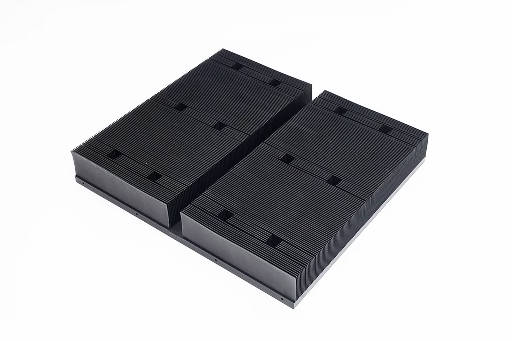
A heat sink is a passive thermal management component that transfers heat away from a heat-generating device into the surrounding air or another cooling medium. Heat moves from the component into the heat sink base, then spreads into the fins, and finally dissipates into the air through natural convection or forced airflow.
Heat sinks are widely used in:
- Power electronics
- LED lighting
- Telecom equipment
- Servers and data centers
- Inverters and converters
- Industrial control systems
- Medical devices
- Automotive electronics
- Consumer electronics
- Battery and energy storage systems
The purpose of a heat sink is to reduce component temperature by increasing heat spreading area and improving heat transfer to the surrounding environment.
A heat sink may look simple, but its performance depends on several design factors:
- Material thermal conductivity
- Base thickness
- Fin height
- Fin pitch
- Fin thickness
- Airflow direction
- Surface area
- Surface treatment
- Contact flatness
- Manufacturing process
- Mounting structure
- Thermal interface material
The manufacturing method directly affects many of these factors.
Why the Heat Sink Manufacturing Process Matters
Different heat sink processes create different fin shapes, material structures and cost profiles. A process that works well for one application may be inefficient or expensive for another.
For example, extrusion is often cost-effective for long profiles and standard fin designs, but it may not support very high fin density. Skiving can produce thin fins from a single piece of material, but it is usually better suited for specific high-performance geometries. Die casting can create complex shapes and integrated housings, but thermal performance may differ from wrought aluminum designs.
Choosing the wrong heat sink process can lead to unnecessary cost, poor thermal performance, oversized parts or production limitations.
Before selecting a process, engineers should evaluate:
| Factor | Why It Matters |
| Heat load | Determines required dissipation capacity |
| Available space | Limits heat sink size and fin height |
| Airflow condition | Affects fin pitch and fin orientation |
| Material | Impacts thermal conductivity, weight and cost |
| Fin density | Affects heat transfer area and airflow resistance |
| Production volume | Influences tooling and unit cost |
| Mechanical structure | Determines mounting, housing and assembly needs |
| Surface treatment | Affects corrosion resistance and appearance |
| Thermal target | Defines allowable temperature rise |
| Budget | Determines practical process options |
A well-selected process improves not only heat dissipation, but also manufacturability and cost control.
Overview of Common Heat Sink Manufacturing Processes
The table below gives a quick comparison of major heat sink manufacturing methods.
| Process | Main Advantage | Common Material | Suitable For | Key Limitation |
| Extrusion | Cost-effective for standard profiles | Aluminum | Electronics, power supplies, enclosures, telecom | Limited fin geometry compared with skiving or bonded fin |
| Skiving | High fin density from one piece of metal | Aluminum or copper | High performance electronics, compact cooling | Process-dependent size and fin design limits |
| Cold forging | Good for pin fin and radial designs | Aluminum or copper | LED, power modules, natural convection | Tooling required; geometry must fit forging process |
| Die casting | Complex shapes and integrated housings | Aluminum alloys | LED housings, enclosures, automotive parts | Thermal conductivity may be lower than some wrought materials |
| Bonded fin | Large size and high fin aspect ratio | Aluminum or copper | Large power modules, industrial equipment | Assembly process and joint quality are important |
This comparison shows why there is no single process suitable for all heat sinks. The best choice depends on the thermal and mechanical requirements of the product.
Extruded Heat Sink Manufacturing
Extrusion is one of the most widely used heat sink manufacturing processes. In this process, heated aluminum is pushed through a die to form a continuous profile with fins and a base. The profile is then cut to length and further processed with machining, drilling, tapping, surface treatment or assembly.
Extruded aluminum heat sinks are popular because they are cost-effective, repeatable and suitable for many standard cooling applications.
Advantages of Extruded Heat Sinks
- Cost-effective for medium to high production volumes
- Good dimensional consistency
- Suitable for long profiles
- Efficient for standard straight fin designs
- Supports secondary machining
- Works well with aluminum alloys
- Suitable for anodizing and surface treatment
Limitations of Extruded Heat Sinks
- Fin thickness and fin height are limited by extrusion feasibility
- Very high fin density may be difficult
- Complex 3D shapes are not practical
- Tooling is needed for custom profiles
- Airflow direction must match fin orientation
When to Choose an Extruded Heat Sink
Extruded heat sinks are suitable when:
- The heat sink has a straight fin structure
- The product requires repeatable production
- Cost control is important
- The design has enough space for standard fins
- The application uses forced air or natural convection
- The heat load is moderate to high but not extremely concentrated
Typical applications include power supplies, telecom equipment, control cabinets, LED systems, industrial electronics and general aluminum cooling modules.
For buyers seeking a reliable and economical custom solution, an extruded aluminum design is often a practical starting point for a custom heat sink project.
Skived Fin Heat Sink Manufacturing
Skiving is a precision cutting process that forms fins directly from a solid block of aluminum or copper. A sharp tool slices the material and lifts thin fins from the base without separating them from the original block.
This creates a one-piece heat sink structure with no thermal interface between the fins and the base. Because the fins are formed from the same piece of material, skived heat sinks can provide good thermal conduction from the base to the fin area.
Advantages of Skived Heat Sinks
- High fin density
- Thin fins are possible
- One-piece structure
- Good thermal path from base to fins
- Suitable for aluminum and copper
- Useful for high performance cooling
- No bonded joint between fins and base
Limitations of Skived Heat Sinks
- Geometry is more process-specific
- Fin direction is limited by cutting direction
- Very large designs may be less practical
- Cost may be higher than standard extrusion
- Fins may be more delicate depending on design
When to Choose a Skived Heat Sink
Skived fin heat sinks are suitable when:
- High fin density is needed
- Space is limited
- The heat source is compact
- Thermal performance is more important than lowest cost
- The design needs better conduction between base and fins
- Copper heat sink performance is required for high heat flux areas
Skived heat sinks are commonly used in power electronics, telecom modules, high power LEDs, compact cooling systems, laser equipment and high-performance electronics.
Cold Forged Heat Sink Manufacturing
Cold forging is a process that forms metal under high pressure at or near room temperature. In heat sink manufacturing, cold forging is often used to create pin fin, round fin or radial fin structures.
Unlike extrusion, which is usually suitable for straight profiles, cold forging can produce fin structures that support airflow from multiple directions. This is useful in natural convection or complex airflow environments.
Advantages of Cold Forged Heat Sinks
- Good for pin fin structures
- Suitable for multidirectional airflow
- Good mechanical strength
- Material grain flow may improve structural properties
- Can create compact heat sinks for electronics
- Suitable for aluminum and copper materials
Limitations of Cold Forged Heat Sinks
- Tooling is required
- Geometry must be suitable for forging
- Design changes may affect tooling cost
- Very complex or extremely thin features may be difficult
- Process selection depends strongly on part size and shape
When to Choose a Cold Forged Heat Sink
Cold forged heat sinks are suitable when:
- The design needs pin fins or radial fins
- Airflow direction is not fixed
- Natural convection is important
- The part needs compact size
- Production volume supports tooling investment
- Mechanical strength and repeatability matter
Common applications include LED lighting, automotive electronics, power modules, small cooling components and electronics with airflow from multiple directions.
Die Casting Heat Sink Manufacturing
Die casting is a manufacturing process where molten metal is injected into a mold cavity under pressure. For heat sinks, die casting is commonly used when the part requires complex shapes, integrated housings, mounting features or high production volume.
Die cast heat sinks are frequently used in LED lighting housings, automotive components, electronics enclosures and industrial devices where the heat sink is also part of the product structure.
Advantages of Die Casting Heat Sinks
- Supports complex shapes
- Good for integrated housing designs
- Suitable for high-volume production
- Can include mounting bosses, ribs and enclosure features
- Reduces assembly steps
- Good repeatability after tooling is completed
Limitations of Die Casting Heat Sinks
- Tooling cost can be significant
- Thermal conductivity depends on alloy and casting quality
- Porosity control is important
- Thin, high aspect ratio fins may be limited
- Design changes after tooling can be costly
When to Choose a Die Cast Heat Sink
Die casting is suitable when:
- The heat sink also works as a housing
- The part requires complex geometry
- Production volume is high
- The design includes mounting structures
- Aesthetics and enclosure integration matter
- The thermal requirement can be met by the selected casting alloy and design
Die casting is often selected for LED lighting, power enclosures, automotive electronics and outdoor industrial equipment.
Bonded Fin Heat Sink Manufacturing
Bonded fin heat sinks are made by attaching individual fins to a base plate. The fins may be bonded using epoxy, soldering, brazing or other joining methods depending on material, operating conditions and thermal requirements.
This process is useful when the design requires a large heat sink, tall fins or high fin aspect ratio that may not be possible with extrusion.
Advantages of Bonded Fin Heat Sinks
- Allows large heat sink sizes
- Supports tall fins
- Can achieve high surface area
- Suitable for high power applications
- Flexible fin spacing and fin height
- Can use aluminum or copper materials
- Useful when extrusion limits are exceeded
Limitations of Bonded Fin Heat Sinks
- Joint quality is critical
- Thermal resistance at the fin-base connection must be controlled
- Assembly process affects reliability
- Cost may be higher than simple extrusion
- Not always suitable for harsh vibration unless designed properly
When to Choose a Bonded Fin Heat Sink
Bonded fin heat sinks are suitable when:
- The heat sink is large
- High thermal dissipation is required
- Tall fins are needed
- The design exceeds extrusion limits
- Forced air cooling is available
- Industrial power modules need high cooling capacity
Bonded fin designs are often used in industrial power supplies, high power converters, large inverters, rail transit systems, telecom equipment and power electronics cabinets.
For larger cooling projects, buyers may need to compare bonded fin, skived fin and heat pipe assisted designs with a heat sink manufacturer before finalizing the structure.
Extruded vs Skived vs Forged vs Die Cast vs Bonded Fin Heat Sinks
The following table summarizes the practical differences between the main processes.
| Process | Thermal Performance | Design Flexibility | Cost Efficiency | Production Volume | Best Use Case |
| Extrusion | Good for standard designs | Medium | High after tooling | Medium to high | Standard aluminum profiles and electronics cooling |
| Skiving | High for dense fins | Medium | Medium | Low to medium | Compact high-performance cooling |
| Cold forging | Good for pin fin designs | Medium | Good for suitable volumes | Medium to high | LED, natural convection and multidirectional airflow |
| Die casting | Moderate to good depending on alloy and design | High for 3D shapes | High for large volume | High | Integrated housing and complex parts |
| Bonded fin | High for large heat sinks | High | Medium | Low to medium | Large power electronics and industrial cooling |
Extrusion is usually practical for standard cost-efficient cooling, skiving is suitable for high fin density, forging is useful for pin fin airflow, die casting supports complex integrated shapes, and bonded fin designs are strong for large high-power heat sinks.
This process comparison helps buyers avoid choosing a process only because it is familiar. The correct process depends on the design goal.
Material Selection for Heat Sink Manufacturing
Most heat sinks are made from aluminum or copper. Each material has different strengths.
Aluminum Heat Sinks
Aluminum is widely used because it provides a good balance of thermal conductivity, weight, cost and manufacturability. It is suitable for extrusion, die casting, cold forging, skiving and bonded fin designs.
Aluminum is often preferred when:
- Weight matters
- Cost control is important
- The heat sink is large
- Production volume is medium to high
- Surface treatment such as anodizing is required
- The thermal load can be managed through optimized fin design
Copper Heat Sinks
Copper has higher thermal conductivity than aluminum and is used when heat transfer performance is the main priority. It is common in compact high heat flux designs or where a copper base is needed.
Copper is often preferred when:
- The heat source is compact and intense
- Space is limited
- Higher conductivity is needed
- Weight is less critical
- Cost is less sensitive
- The application requires a copper base or copper skived fins
Aluminum vs Copper Heat Sink Material
| Factor | Aluminum Heat Sink | Copper Heat Sink |
| Thermal conductivity | Good | Higher |
| Weight | Lighter | Heavier |
| Cost | Usually lower | Usually higher |
| Manufacturing options | Very broad | More selective |
| Surface treatment | Commonly anodized | May need plating or surface protection |
| Best use | General electronics, large parts, volume production | Compact high heat flux cooling |
A practical design may also combine materials, such as a copper base with aluminum fins, depending on thermal and cost requirements.
How to Choose the Right Heat Sink Manufacturing Process
The selection process should start from the application requirements, not from the manufacturing method.
Step 1: Define the Heat Load
Estimate or calculate the power that must be dissipated. A low-power device may only need a simple extruded heat sink, while a high-power module may require skived, bonded fin or heat pipe assisted cooling.
Step 2: Understand the Airflow Condition
Natural convection and forced air cooling require different fin designs. Dense fins may perform well with strong airflow but may restrict air movement under natural convection.
Step 3: Check Space and Mounting Limits
Available length, width, height and mounting points will affect process selection. For example, very tall fins may push the design toward bonded fin manufacturing.
Step 4: Compare Material Options
Aluminum is suitable for most cost-sensitive and weight-sensitive designs. Copper may be selected when thermal conductivity is critical.
Step 5: Evaluate Production Volume
For large quantities, tooling-based processes such as extrusion, die casting or forging may be cost-effective. For lower volume or specialized parts, CNC machining, skiving or bonded fin structures may be more practical.
Step 6: Review Surface Treatment Needs
Anodizing, nickel plating, passivation, powder coating or other treatments may be needed for corrosion resistance, electrical insulation, appearance or environmental durability.
Step 7: Validate with Thermal Testing
Thermal simulation can help in early design, but prototype testing is important before mass production. Testing should confirm temperature rise, contact resistance, airflow performance and mechanical fit.
Common Mistakes in Heat Sink Process Selection
Mistake 1: Choosing the Cheapest Process First
The cheapest process may not meet the thermal requirement. If the heat sink fails to control temperature, redesign and delayed production can cost more than selecting the right process early.
Mistake 2: Ignoring Airflow
Fin density must match airflow. Very dense fins may perform poorly in natural convection if air cannot move through the fin gaps effectively.
Mistake 3: Overusing Copper
Copper has higher thermal conductivity, but it is heavier and more expensive. In many applications, aluminum with a better fin design can be more practical.
Mistake 4: Treating All Aluminum Heat Sinks as the Same
Extruded, die cast, skived and forged aluminum heat sinks can perform differently because the process affects geometry, material structure and fin design.
Mistake 5: Forgetting Mounting and Flatness
Good thermal performance also depends on contact quality between the heat source and the heat sink base. Surface flatness, mounting pressure and thermal interface material should be considered.
Mistake 6: Selecting the Process Before Finalizing Product Design
Heat sink design should be integrated with the product structure early. Waiting until the end may limit available process options.
How to Work with a Custom Heat Sink Manufacturer
A capable supplier should help evaluate the heat load, airflow condition, material, process, surface treatment and production method. This is especially important for B2B projects where the heat sink must fit into a larger product system.
When working with Jindu Tech, buyers can provide the following project information for engineering review:
| Information | Why It Helps |
| Heat source power | Determines required cooling capacity |
| Component size | Helps design the contact area |
| Available space | Defines heat sink envelope |
| Airflow condition | Determines fin pitch and fin orientation |
| Target temperature | Defines performance requirement |
| Material preference | Helps compare aluminum and copper |
| Production volume | Supports process and tooling selection |
| Mounting method | Affects base design and machining |
| Surface treatment | Affects appearance, corrosion and durability |
| Environmental conditions | Helps evaluate coating and material choice |
| Drawing or 3D model | Improves design accuracy |
A custom heat sink manufacturing project should consider both thermal performance and production feasibility. Early communication helps reduce redesign risk and improves the chance of selecting the right process from the start.
FAQ
What is the most common heat sink manufacturing process?
Extrusion is one of the most common heat sink manufacturing processes because it is cost-effective, repeatable and suitable for many aluminum heat sink profiles. It is widely used in electronics, power supplies, telecom equipment and industrial devices.
What is the difference between extruded and skived heat sinks?
Extruded heat sinks are formed by pushing aluminum through a die to create a continuous profile. Skived heat sinks are made by cutting thin fins directly from a solid block of aluminum or copper. Skiving can support higher fin density, while extrusion is often more economical for standard profiles.
When should I choose a bonded fin heat sink?
A bonded fin heat sink is suitable when the design requires a large heat sink, tall fins, high surface area or performance beyond extrusion limits. It is commonly used for large power modules, industrial power electronics and forced-air cooling systems.
Is a die cast heat sink good for electronics cooling?
A die cast heat sink can be suitable for electronics cooling when the design requires complex shapes, integrated housings or high-volume production. However, alloy selection, porosity control and thermal requirements must be evaluated carefully.
What is a cold forged heat sink used for?
A cold forged heat sink is often used for pin fin or radial fin designs. It is suitable for LED lighting, compact power modules and applications where airflow may come from multiple directions.
Which heat sink process is best for high power electronics?
High power electronics may use skived fin, bonded fin, heat pipe assisted or custom machined heat sinks depending on heat load, airflow and space limits. There is no single process suitable for all high power applications.
How do I choose between aluminum and copper heat sinks?
Choose aluminum when weight, cost and manufacturability are important. Choose copper when the heat source is compact, heat flux is high and higher thermal conductivity is needed. The final decision should also consider airflow, size and budget.
What information is needed for a custom heat sink quote?
A custom heat sink quote usually requires heat load, component size, available space, target temperature, airflow condition, material preference, production volume, surface treatment needs and drawings or 3D models.
Conclusion
Heat sink manufacturing process selection has a direct impact on thermal performance, cost, size, weight and production feasibility. Extrusion is suitable for standard and cost-effective aluminum profiles. Skiving provides high fin density for compact high-performance cooling. Cold forging is useful for pin fin structures and multidirectional airflow. Die casting supports complex integrated shapes and high-volume production. Bonded fin manufacturing is suitable for large heat sinks and high-power applications.
The right heat sink process is the one that meets the thermal target while matching airflow, material, production volume, mechanical structure and cost requirements.
For B2B cooling projects, engineers should avoid selecting a process based only on familiarity or unit price. A more reliable approach is to start from heat load, airflow, space constraints, material needs and production plans.
Jindu Tech provides custom heat sink solutions for electronics, power modules, LED lighting, telecom equipment, industrial systems and other thermal management applications. If you are evaluating extrusion, skiving, forging, die casting or bonded fin manufacturing, share your drawings and thermal requirements for engineering review.