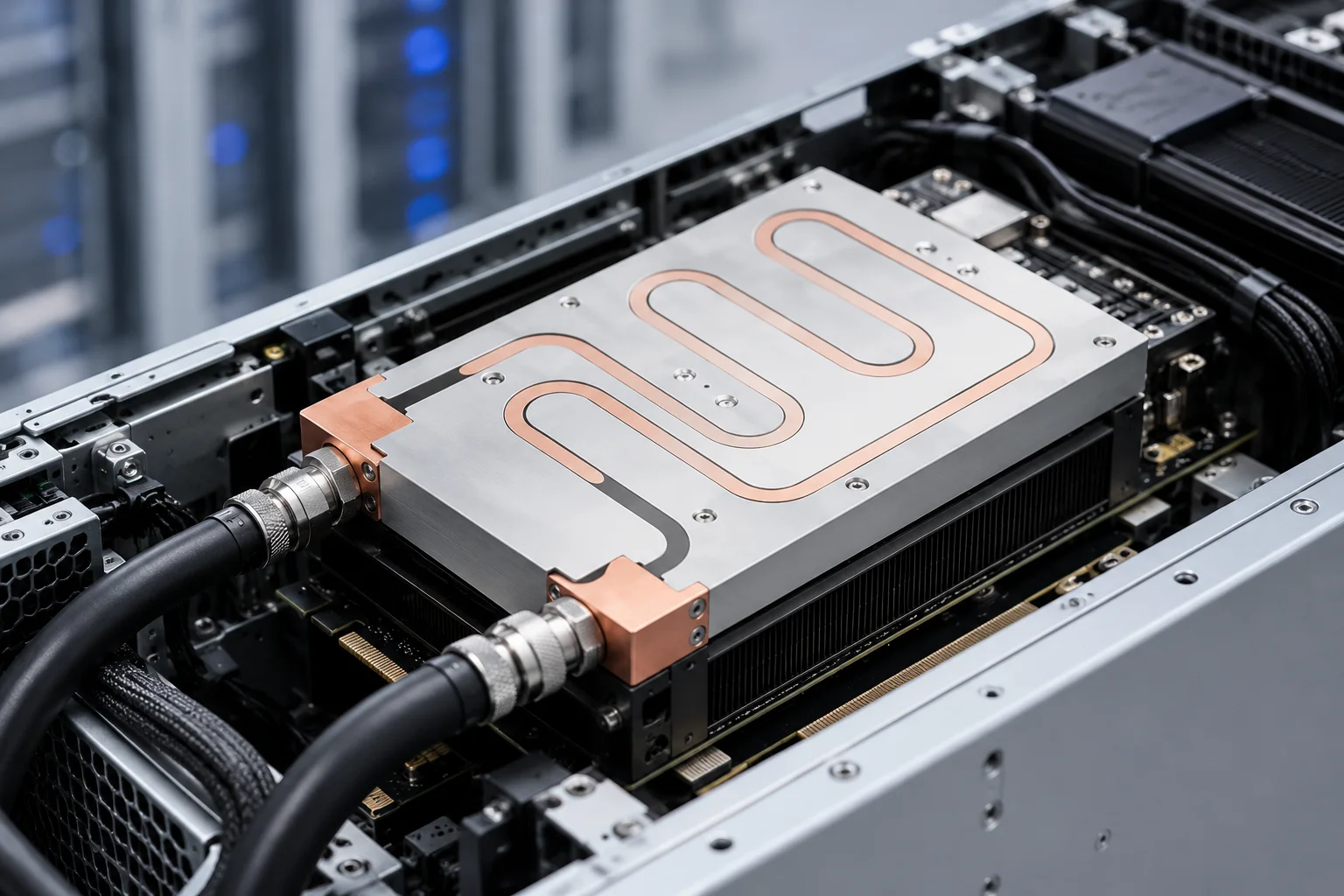
A die casting heat sink is usually better than extrusion or forging when the part needs a complex 3D shape, integrated housing features, mounting bosses, thin walls, or high-volume production with repeatable geometry. It is not always the first choice for maximum thermal conductivity, but it can be a practical solution when thermal management must be combined with structural design.
For many electronics projects, the heat sink is no longer just a separate metal block attached to a hot component. It may also work as an enclosure, bracket, cover, LED housing, power supply shell, or mechanical support. In these cases, the manufacturing process matters as much as the thermal design.
Extrusion is often efficient for straight fin profiles. Cold forging is useful for dense pin fin structures and compact heat spreading. Die casting becomes attractive when the heat sink needs complex geometry, integrated assembly features, and production consistency after tooling is confirmed.
This article compares die casting heat sinks with extruded and cold forged heat sinks from a buyer’s perspective. It focuses on when die casting makes engineering and purchasing sense, when it may not be the right route, and what information should be prepared before requesting a custom design.
For projects involving complex heat sink housings or custom aluminum cooling structures, Jindu Tech provides die casting heat sink solutions based on application requirements, product structure, and cooling needs.
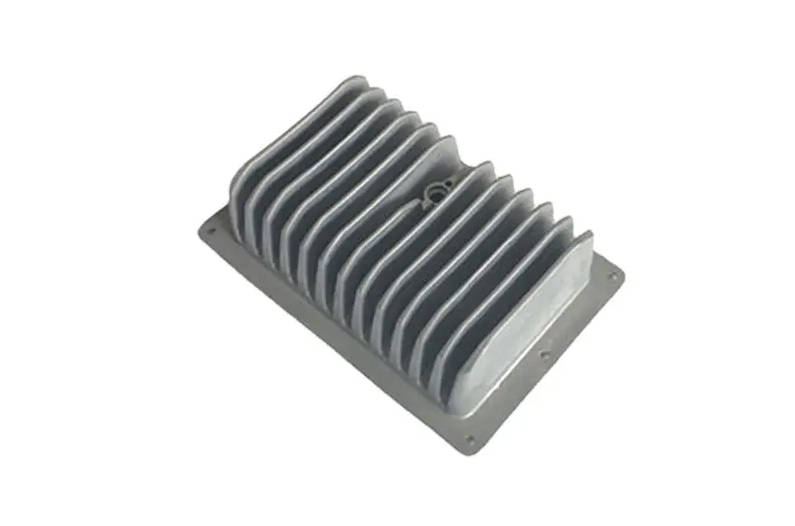
The Fast Decision Rule: Choose the Process by Geometry First
Before comparing cost or thermal performance, engineers should first look at geometry. Heat sink manufacturing processes are strongly shaped by what form the part needs to take.
If the heat sink is a long straight profile with parallel fins, extrusion may be more practical. If the heat sink needs dense pin fins in a compact area, cold forging may be more suitable. If the heat sink must combine fins, walls, bosses, holes, ribs, brackets, covers, and enclosure features, die casting often becomes the more practical direction.
The strongest reason to choose a die casting heat sink is not simply heat dissipation; it is the ability to combine cooling and mechanical structure in one formed part.
| Product Requirement | Process That Often Fits Better | Reason |
| Long straight fins | Extrusion | Efficient for continuous profiles |
| Dense pin fins | Cold forging | Good for compact pin fin geometry |
| Complex 3D housing | Die casting | Can form walls, ribs, bosses, and covers |
| Integrated mounting features | Die casting | Reduces separate brackets or assembled parts |
| Low-volume prototype | CNC machining | Avoids tooling before design is stable |
| High-volume complex part | Die casting | Tooling cost can be spread over production quantity |
| Multi-directional airflow | Cold forging or die casting | Depends on pin layout and housing design |
| Simple low-cost profile | Extrusion | Lower complexity and mature supply chain |
This is why buyers should avoid asking only, “Which heat sink has better cooling?” The better question is: “Which process can produce the required thermal path, mechanical structure, and production quantity at acceptable cost?”
Extrusion, Forging and Die Casting: The Real Comparison
Each process has its own logic. A fair comparison should look at part shape, thermal behavior, cost model, secondary machining, and production volume.
| Comparison Item | Die Casting Heat Sink | Extruded Heat Sink | Cold Forged Heat Sink |
| Shape complexity | Strong for complex 3D parts | Best for straight profiles | Good for compact pin fin structures |
| Integrated housing | Very suitable | Limited | Limited to certain shapes |
| Fin geometry | Flexible but tooling-dependent | Mostly linear fins | Dense pin fins are common |
| Thermal conductivity | Depends on alloy and casting quality | Often strong with wrought aluminum profiles | Often strong for aluminum pin fin parts |
| Tooling requirement | Usually required | Die required, but profile-based | Tooling required |
| Secondary machining | Often needed for precision faces and holes | Often needed for cut length and holes | Often needed for mounting details |
| Production quantity | Better for medium to high volume | Flexible for many quantities | Better when design and quantity justify tooling |
| Design flexibility after tooling | Limited | Profile changes require die changes | Geometry changes may require tooling changes |
| Typical use | Heat sink housing, LED housing, power supply shell, electronics enclosure | Standard heat sinks, linear airflow systems | LED modules, compact electronics, pin fin cooling |
A die cast aluminum heat sink may not always have the same thermal conductivity as an extruded aluminum profile or a forged aluminum part. However, that does not automatically make it worse. If die casting allows the heat sink to be placed closer to the heat source, integrated into the enclosure, or designed with better airflow access, the system-level result may still be effective.
Thermal performance should be evaluated at the assembly level, not only by comparing raw material conductivity.
When Die Casting Is the Better Choice
Die casting is often selected when the heat sink is part of the product structure. It can form complex shapes that would be costly or inefficient to create through extrusion or cold forging alone.
1. The Heat Sink Also Works as a Housing
Many electronic products use the metal housing as part of the thermal path. This is common in power supplies, LED drivers, outdoor electronics, communication devices, industrial controllers, and compact equipment.
A die cast heat sink housing can include:
- Cooling fins
- Mounting bosses
- Screw holes
- Cable openings
- Reinforcing ribs
- Sealing grooves
- PCB support areas
- External enclosure features
- Internal component clearance
If these features were made separately, the product may require more parts, more assembly steps, and more tolerance control. Die casting can reduce part count by forming many features into one aluminum structure.
2. The Design Requires Complex 3D Geometry
Extrusion is strong for straight profiles, but it is less suitable for parts with irregular shapes, enclosed walls, side features, or multi-level structures. Cold forging can form certain compact shapes, but it is not always suitable for large housing-like structures.
Die casting is useful when the heat sink needs to follow the shape of the product instead of forcing the product to follow the shape of the heat sink.
Examples include:
- LED lamp housings with curved or circular forms
- Power supply enclosures with integrated fins
- Electronics covers with internal bosses
- Outdoor device housings with sealing features
- Control box shells with heat dissipation areas
- Communication equipment enclosures with mounting ribs
In these cases, the cooling function and structural function are designed together.
3. The Project Needs Repeatability in Medium or High Volume
Die casting requires tooling, so it is usually not the most economical option for very small batches or unstable designs. But once the design is confirmed, die casting can support repeatable production of complex parts.
For buyers, this means die casting is often worth considering when:
- The product design is already mature.
- The expected quantity can justify tooling.
- The heat sink includes multiple structural features.
- Assembly simplification has value.
- The same housing will be used across a product series.
- The part shape is too complex for simple extrusion.
Die casting becomes more attractive when tooling cost is balanced by part integration, repeatable production, and reduced assembly complexity.
When Extrusion Is Still the More Practical Option
An extruded heat sink should not be dismissed. In many electronics cooling projects, extrusion remains practical, economical, and thermally effective.
Extrusion may be better when:
- The heat sink has a straight, constant cross-section.
- Airflow moves in a clear linear direction.
- The design uses standard fin profiles.
- The part can be cut to length from an existing extrusion.
- Tooling budget is limited.
- The product does not need integrated housing features.
- The design may need length changes across different models.
Extruded heat sinks are common in power electronics, control cabinets, LED strips, power supplies, and general electronics. They are especially useful when the required shape can be produced as a continuous profile and then cut, drilled, tapped, or finished.
| Situation | Why Extrusion May Be Better |
| Straight fin channel | Efficient airflow through parallel fins |
| Long heat sink length | Extrusion can be cut to different sizes |
| Lower geometry complexity | No need for die casting tooling complexity |
| Standard thermal requirement | Existing profiles may already meet the need |
| Early-stage design | Easier to test different lengths or profiles |
If the heat sink is mainly a finned block with simple mounting holes, extrusion may offer a cleaner and more cost-effective route than die casting.
For general cooling structures beyond die casting, buyers can review Jindu Tech’s broader custom heat sink options to compare suitable manufacturing methods.
When Cold Forging May Beat Die Casting
Cold forging is often considered when the part needs high-density pin fins, compact thermal spreading, or a one-piece aluminum structure. It is especially relevant for LED cooling, compact power electronics, and applications where air may approach the fins from different directions.
Cold forged heat sinks may be more suitable than die casting when:
- The main geometry is a pin fin structure.
- The part does not need complex enclosure walls.
- The base and pin fins are relatively compact.
- The application requires strong thermal conduction from base to fins.
- The quantity supports tooling.
- The design does not require many housing-like features.
| Situation | Why Cold Forging May Be Better |
| Compact LED module | Dense pin fins can support natural convection |
| Round or square pin fin array | Cold forging can form one-piece pin structures |
| Heat source close to base center | Direct base-to-fin path can be efficient |
| No complex enclosure required | Forging focuses on thermal geometry rather than housing complexity |
However, cold forging is not always ideal for large enclosure shapes or complex side-wall features. If the part must also function as a shell, bracket, or cover, die casting may still be more appropriate.
The Die Casting Suitability Scorecard
The following scorecard can help buyers quickly judge whether a die casting heat sink is worth evaluating.
| Question | If Yes, Die Casting May Be Suitable |
| Does the heat sink also need to work as a housing or cover? | Strong fit |
| Are there mounting bosses, ribs, walls, or sealing areas? | Strong fit |
| Is the geometry difficult to make by extrusion? | Strong fit |
| Is the design already stable enough for tooling? | Important condition |
| Is the expected quantity enough to justify tooling? | Important condition |
| Are secondary machining steps acceptable? | Often required |
| Is maximum material conductivity the only priority? | Die casting may not be first choice |
| Does the part need a long constant profile? | Extrusion may be better |
| Is the main need dense pin fins without housing features? | Cold forging may be better |
| Is the project still changing frequently? | Prototype machining may be safer first |
This kind of scorecard helps avoid process mismatch. A die cast aluminum heat sink is not automatically the answer for every custom part. It becomes the right choice when the design benefits from cast geometry and integrated structure.
Thermal Design Reality: Casting Shape Can Help, But Interfaces Still Matter
Die casting can create complex shapes, but thermal design still depends on the heat path. Heat must travel from the component to the base, then through the aluminum structure, then into fins or outer surfaces, and finally into surrounding air.
Important thermal design points include:
| Thermal Point | Practical Meaning |
| Heat source contact area | The base must match the component or thermal pad area |
| Base thickness | Too thin may limit spreading; too thick may add weight and cost |
| Fin position | Fins should be located where heat can reach them effectively |
| Air path | Hot air needs enough clearance to leave the fin area |
| Surface area | More area can help, but only if airflow reaches it |
| Interface quality | Poor contact can reduce real cooling performance |
| Secondary machining | Precision surfaces may need machining after casting |
A common mistake is to design a die cast part with attractive external fins but poor internal heat transfer from the component to the fin area. If the hot component sits far from the thickest thermal path, or if the contact surface is uneven, the final result may underperform.
A die cast heat sink should be designed around the component location, not only around the outer enclosure shape.
For power electronics, the mounting face may require machining to improve contact flatness. For LED applications, the LED board area must be planned carefully. For sealed electronics, internal heat sources and external fin placement should be coordinated from the beginning.
Cost Logic: Tooling Cost vs Part Integration
Die casting cost is often misunderstood. Buyers may compare only the unit price of a die cast part against an extruded part and overlook tooling, machining, assembly reduction, and part integration.
The cost structure usually includes:
- Tooling cost
- Raw material
- Casting process
- Trimming and deburring
- CNC machining if required
- Drilling and tapping
- Surface treatment
- Inspection
- Packaging
- Assembly savings if multiple parts are replaced
Die casting may not be economical for a small batch of simple heat sinks. But it may become cost-effective when one die cast part replaces several machined, extruded, or assembled components.
| Cost Factor | Die Casting Impact |
| Tooling | Higher upfront investment |
| Unit consistency | Good after tooling and process stabilization |
| Secondary machining | May add cost for precision features |
| Assembly reduction | Can reduce brackets, screws, or separate housings |
| Design changes | Expensive after tooling is finalized |
| Production volume | Higher volume helps justify tooling |
For procurement teams, the correct comparison is not only “die cast heat sink vs extruded heat sink price.” The better comparison is total product cost, including assembly time, part count, machining, and long-term production repeatability.
Design Details to Confirm Before Opening a Die Casting Tool
Before tooling begins, several details should be reviewed carefully. Changes after tooling can be costly, so the design should be checked from both thermal and manufacturing perspectives.
| Design Area | What to Confirm |
| Wall thickness | Avoid unnecessary thick or thin sections where possible |
| Draft angle | Needed for part release from the die |
| Rib design | Helps strength but should not create casting defects |
| Boss design | Must support screws without excessive local thickness |
| Fin geometry | Should balance surface area, airflow, and casting feasibility |
| Machining allowance | Needed for precision surfaces or holes |
| Parting line | Affects appearance, assembly, and finishing |
| Surface treatment | Should match environment and appearance requirements |
| Thermal contact face | May need post-machining for better flatness |
| Assembly tolerance | Must fit PCB, components, sealing parts, and screws |
Die casting design is a collaboration between thermal engineering, mechanical design, and manufacturing feasibility. A part that looks good in CAD may still need adjustment for mold release, filling, shrinkage, machining, and inspection.
This is why early supplier communication is valuable before the design becomes fixed.
RFQ Readiness Checklist for Die Casting Heat Sink Projects
A clear RFQ helps the supplier judge whether die casting is appropriate and how the design should be reviewed. The more complete the information, the more practical the feedback and quotation will be.
Prepare the following information before sending an inquiry:
| RFQ Item | What to Provide |
| Application | LED housing, power supply enclosure, electronics cover, communication device, or other use |
| Heat source location | Component position, PCB area, LED board, or power module mounting face |
| Heat load | Estimated power loss or thermal requirement |
| Target temperature | Maximum case temperature or allowable temperature rise if available |
| 3D model | STEP or other mechanical file if available |
| 2D drawing | Critical dimensions, tolerances, and machining notes |
| Quantity estimate | Prototype, pilot run, or production volume |
| Surface treatment | Anodizing, coating, painting, plating, or other finish if required |
| Machining requirements | Holes, threads, flat surfaces, sealing grooves, or precision areas |
| Environment | Indoor, outdoor, vibration, humidity, dust, or corrosion exposure |
| Assembly method | Screws, clips, thermal pads, gaskets, PCB mounting, or enclosure assembly |
A good die casting heat sink RFQ should describe both the thermal function and the mechanical function of the part. If the part is also a housing, the supplier needs to understand sealing, mounting, surface finish, and assembly requirements, not only heat dissipation.
For complex projects, buyers can contact Jindu Tech through the main Jindu Tech website with drawings, application details, and estimated production requirements.
Practical Conclusion: Die Casting Wins When Cooling and Structure Must Be Combined
A die casting heat sink is better than extrusion or forging when the project needs more than a simple finned metal part. It is especially useful for heat sink housings, enclosure cooling, integrated mounting features, complex shapes, and medium-to-high-volume production after design validation.
Extrusion remains practical for straight fin profiles, standard heat sinks, and linear airflow systems. Cold forging is strong for compact pin fin heat sinks and applications where dense fins are needed in a smaller area. Die casting stands out when the heat sink also needs to serve as a structural part of the product.
The best process depends on the full application: heat source position, airflow, mechanical design, production quantity, surface requirements, and cost target. If your project involves a complex aluminum cooling structure or integrated housing, a custom die cast aluminum heat sink may be worth evaluating before finalizing the product design.
FAQ
Is a die casting heat sink good for electronics cooling?
Yes, a die casting heat sink can be suitable for electronics cooling when the part needs complex geometry, housing integration, mounting features, or repeatable production. Its thermal performance depends on alloy selection, wall design, contact surface quality, fin layout, airflow, and whether heat can move efficiently from the component to the cooling area.
When should I choose a die cast aluminum heat sink instead of an extruded heat sink?
Choose a die cast aluminum heat sink when the design requires enclosure features, bosses, ribs, covers, curved surfaces, or non-linear geometry. An extruded heat sink is often better for straight profiles, simple fin channels, and applications where airflow moves in one clear direction.
Is die casting better than cold forging for heat sinks?
Die casting is better when the heat sink also needs to be a housing or complex structural part. Cold forging may be better for compact pin fin designs with strong base-to-fin heat transfer. The right choice depends on geometry, heat source position, airflow, production quantity, and tooling budget.
Can a die casting heat sink be used as an enclosure?
Yes, die casting is commonly considered when the heat sink also functions as an enclosure, shell, cover, or structural housing. This can reduce part count and simplify assembly, but the design must account for thermal paths, sealing areas, screw bosses, wall thickness, and required machining surfaces.
What are the limitations of die casting heat sinks?
Die casting heat sinks usually require tooling, so they may not suit very low-volume or frequently changing designs. Material thermal conductivity may also differ from extruded or forged aluminum. Precision contact surfaces, threaded holes, or sealing areas may require secondary machining after casting.
What information is needed for a custom die casting heat sink quote?
A useful RFQ should include application type, heat source location, heat load, target temperature, 3D model, 2D drawing, quantity estimate, surface treatment, machining requirements, operating environment, and assembly method. This helps the supplier evaluate both thermal and manufacturing feasibility.
Are die cast heat sinks suitable for high-volume production?
Die cast heat sinks can be suitable for medium or high-volume production when the design is stable and tooling cost can be justified. They are especially useful when one casting can integrate heat dissipation, mounting, enclosure, and structural features into a repeatable part.