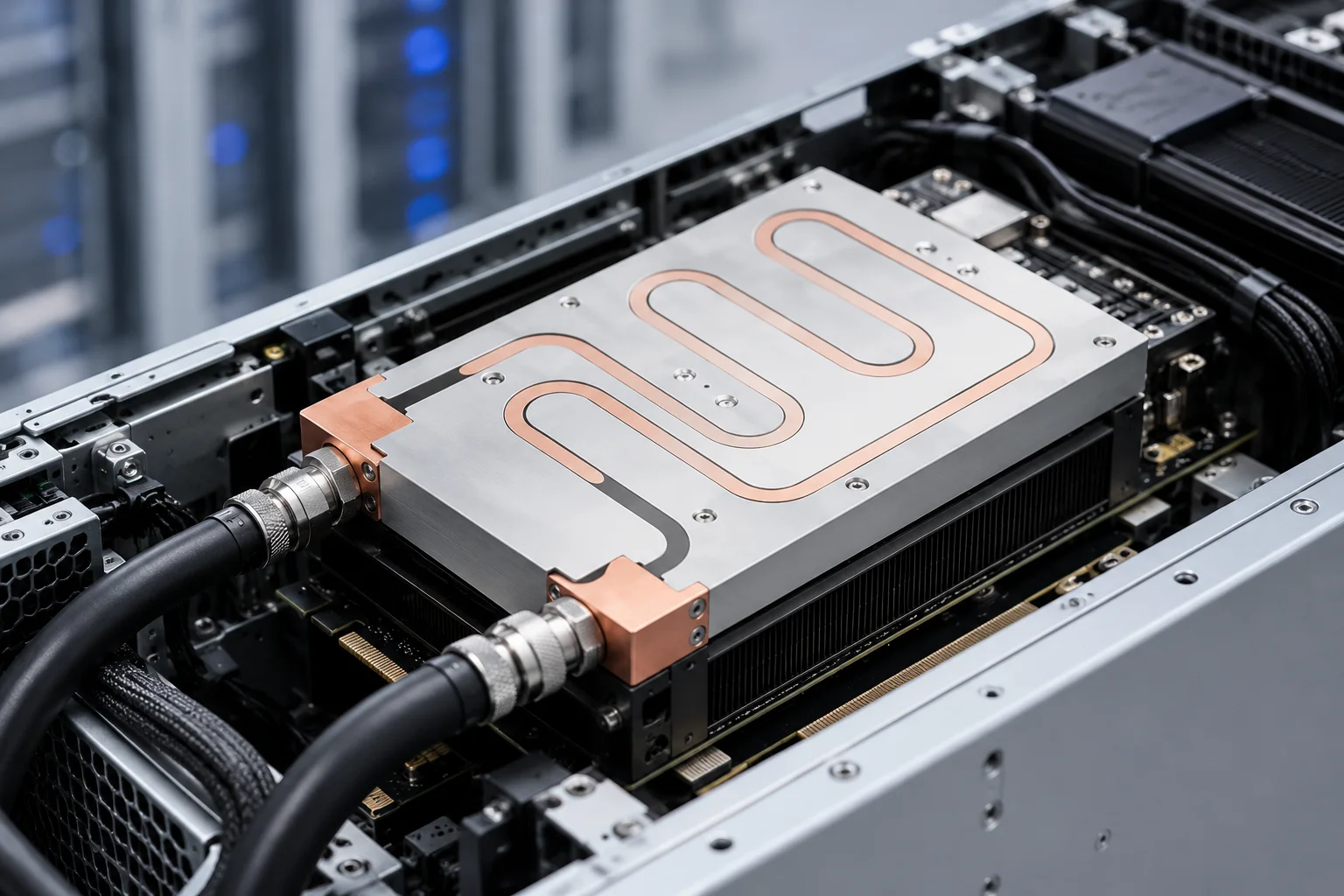
An extruded heat sink is usually better for linear aluminum profiles, higher thermal conductivity and cost-effective production after extrusion tooling, while a die cast heat sink is often better for complex 3D shapes, integrated housings and high-volume parts with structural features. The right choice depends on thermal load, airflow, geometry, tooling budget, production volume and assembly requirements.
For electronics cooling, both extrusion and die casting are widely used aluminum heat sink manufacturing processes. They can both produce functional cooling components, but they are designed for different engineering priorities.
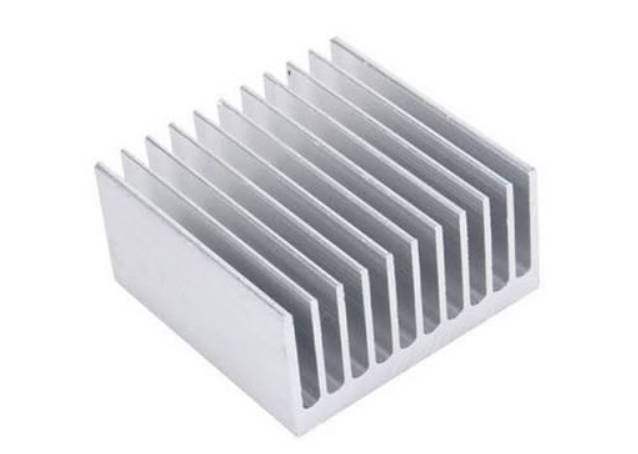
An extruded aluminum heat sink is made by forcing heated aluminum through a die to form a constant cross-sectional profile with fins and a base. It is commonly used for power electronics, telecom equipment, LED lighting, industrial controls, inverters, converters and other products where the heat sink has a linear profile and needs stable thermal performance.
A die cast aluminum heat sink is made by injecting molten aluminum alloy into a mold cavity. It is often used when the heat sink needs complex shapes, integrated mounting features, housings, bosses, ribs, covers or enclosure functions that are difficult to create through extrusion alone.
This article compares extruded vs die cast heat sinks by cost, thermal performance, structural complexity, production volume and application fit, helping engineers and buyers decide which process is more suitable for their project.
For projects that require customized aluminum extrusion profiles, Jindu Tech provides extruded heat sinks for electronics cooling and thermal management applications.
Quick Comparison: Extruded vs Die Cast Heat Sink
| Comparison Point | Extruded Heat Sink | Die Cast Heat Sink |
| Manufacturing method | Aluminum billet is pushed through an extrusion die | Molten aluminum alloy is injected into a mold |
| Geometry type | Constant cross-sectional profile | Complex 3D shape |
| Thermal conductivity | Often higher because extrusion alloys commonly offer better conductivity | Usually lower depending on die casting alloy |
| Fin design | Straight fins, linear profiles, cut-to-length flexibility | Complex ribs, pins, housings and integrated structures |
| Tooling cost | Custom die required, usually lower than complex die casting mold | Mold cost can be higher, especially for complex parts |
| Unit cost | Cost-effective for repeatable profiles and medium-to-high volume | Cost-effective for high-volume complex shapes |
| Post-processing | Cutting, CNC machining, drilling, tapping, anodizing | Trimming, deburring, machining, coating, surface finishing |
| Best fit | Linear heat sinks, high power profiles, airflow-based cooling | Integrated housings, LED bodies, enclosure-style heat sinks |
| Main limitation | Limited to profile-based geometry | Material conductivity and porosity control must be considered |
Extrusion is usually stronger when thermal performance and linear fin geometry matter. Die casting is usually stronger when structural integration and complex shape matter.
The choice should not be based only on unit price. A lower-cost process can become expensive if it creates thermal problems, requires extra machining, or fails to fit the final assembly.
Manufacturing Logic: Profile-Based Cooling vs Molded Structure
The core difference between extrusion and die casting is how the shape is created.
Extruded Heat Sink Manufacturing Logic
Extrusion creates a continuous profile. Once the die is made, the same cross-section can be produced in long lengths and cut to different sizes. This makes extrusion practical for products that use similar fin geometry across multiple models or lengths.
Typical extruded heat sink features include:
- Straight fins
- Flat base
- Long linear profile
- Cut-to-length flexibility
- CNC machined holes and threads
- Anodized surface treatment
- Consistent airflow channel direction
Extrusion is useful when the product needs a heat sink profile that can be repeated, scaled and modified in length.
Die Cast Heat Sink Manufacturing Logic
Die casting creates a near-net-shape part from a mold. This allows more complex geometry than extrusion, especially for parts that combine cooling and mechanical structure.
Typical die cast heat sink features include:
- Integrated housing shape
- Mounting bosses
- Ribs and brackets
- Curved outer surfaces
- Pin fin structures
- Complex enclosure geometry
- Built-in structural features
- Reduced assembly components
Die casting is useful when the heat sink is not only a cooling component but also a housing, cover, bracket or structural part.
The process decision often starts with geometry: choose extrusion for profile-based heat sinks and die casting for integrated 3D structures.
Thermal Performance: Why Extrusion Often Has an Advantage
Thermal performance depends on material conductivity, fin design, airflow and contact quality. In many applications, extruded aluminum heat sinks have an advantage because extrusion alloys commonly used for heat sinks can provide better thermal conductivity than many die casting alloys.
Extruded heat sinks also allow tall, straight fins that can be aligned with airflow. For forced-air cooling or natural convection with vertical fins, this can provide strong surface area and predictable air movement.
Die cast heat sinks can still perform well, especially when the design uses pin fins, radial fins or integrated housing structures. However, die casting alloys and internal porosity may affect thermal conductivity and consistency, depending on the alloy and process control.
Thermal Performance Comparison
| Thermal Factor | Extruded Heat Sink | Die Cast Heat Sink |
| Material conductivity | Often stronger for common extrusion alloys | Usually lower depending on casting alloy |
| Fin height | Can support tall linear fins within extrusion limits | Limited by casting flow, mold design and ejection needs |
| Fin thickness | Can be optimized for extrusion profile | Usually thicker than very thin extruded fins |
| Airflow direction | Strong for linear airflow paths | Flexible for multidirectional airflow |
| Natural convection | Strong when fins are vertical and spaced properly | Good for housing-style or radial structures |
| Forced airflow | Strong with aligned channels | Can work well with pin or rib structures |
| Hot spot spreading | Depends on base thickness and material | Depends on alloy, wall thickness and geometry |
| Surface consistency | Profile-based repeatability | Depends on mold filling and casting quality |
If the main priority is thermal conductivity and airflow through long straight fins, an extruded aluminum heat sink is often the better starting point.
For high power electronics, telecom equipment and industrial modules, this can make extrusion attractive when the heat sink does not need complex 3D housing features.
Cost Comparison: Tooling, Unit Price and Total Project Cost
Cost comparison between extruded and die cast heat sinks should include tooling, material, post-processing, production volume, inspection and redesign risk.
Tooling Cost
Extrusion requires an extrusion die. Die casting requires a mold, which can be more expensive, especially if the part has complex geometry, sliders, inserts or tight tolerances.
For simple or medium-complexity profiles, extrusion tooling is often easier to justify. For complex parts that would require multiple extruded pieces and assembly, die casting may become more economical at high volume.
Unit Cost
After tooling, extruded heat sinks can be cost-effective because long profiles can be produced, cut and machined. Die casting can also achieve low unit cost in high-volume production, especially when it reduces assembly steps.
Total Cost
Total project cost includes more than the part price.
| Cost Factor | Extruded Heat Sink | Die Cast Heat Sink |
| Initial tooling | Usually moderate for custom profiles | Often higher for complex molds |
| Material cost | Depends on profile size and alloy | Depends on casting alloy and part weight |
| Unit production cost | Strong for repeatable profiles | Strong for high-volume molded parts |
| Machining cost | Holes, threads and flatness may require CNC | Critical surfaces often require machining |
| Surface treatment | Anodizing, coating or finishing | Coating, painting or plating may be needed |
| Assembly cost | May require additional brackets or parts | Can reduce assembly by integrating features |
| Design change cost | Die modification may be needed | Mold changes can be expensive |
| Quality control cost | Dimension and flatness checks | Porosity, surface and dimensional checks |
The lower-cost process is the one that reduces total system cost, not only the one with the lowest unit price.
If a die cast heat sink replaces several machined parts and a housing, it may reduce total cost. If the design is mainly a linear cooling profile, extrusion is often more economical and thermally efficient.
Structural Complexity: Where Die Casting Wins
Die casting becomes attractive when the heat sink needs more than straight fins. It can integrate mechanical features that may require additional parts or machining in an extruded design.
Features That Favor Die Casting
| Required Feature | Why Die Casting May Help |
| Complex housing shape | Mold can form 3D enclosure geometry |
| Mounting bosses | Can be formed directly into the part |
| Curved surfaces | Easier than extrusion for non-linear shapes |
| Pin fins | Suitable for multidirectional airflow |
| Integrated brackets | Reduces secondary assembly |
| Thin-wall enclosure | Useful for LED housings or electronic casings |
| Multi-functional part | Cooling + structure + appearance in one component |
For LED lighting housings, electronic enclosures, compact devices and parts with many mounting features, die casting can reduce the number of components and simplify assembly.
However, structural complexity must be balanced with thermal performance. A die cast part may look efficient from an assembly perspective but still require thermal validation.
Linear Scalability: Where Extrusion Wins
Extrusion is strong when the same profile can be used in different lengths or product versions. A long aluminum profile can be cut to size, then machined for specific mounting patterns.
Features That Favor Extrusion
| Required Feature | Why Extrusion May Help |
| Long heat sink profiles | Extrusion produces continuous lengths |
| Different product lengths | Same profile can be cut to different sizes |
| Straight fin airflow | Fins can be aligned with air direction |
| High thermal conductivity | Common extrusion alloys support good heat transfer |
| Cost-effective profile production | Strong for repeatable cross-sections |
| CNC post-processing | Holes, slots and threads can be added after extrusion |
| Large high power heat sinks | Profiles can support broad cooling surfaces |
For power electronics, telecom equipment, industrial drives and inverter systems, extrusion is often practical because the heat sink can use a large base with aligned fins.
Jindu Tech provides custom extruded heat sinks for projects where profile design, CNC machining and application-specific cooling requirements need to be reviewed together.
Performance and Cost Decision Matrix
The following matrix helps buyers make a practical decision based on project priorities.
| Project Requirement | Better Starting Point |
| High thermal conductivity is important | Extruded heat sink |
| Straight fin airflow is available | Extruded heat sink |
| Long profile or cut-to-length flexibility is needed | Extruded heat sink |
| Medium-volume custom cooling profile | Extruded heat sink |
| Large high power aluminum heat sink | Extruded heat sink |
| Complex housing shape is required | Die cast heat sink |
| Integrated mounting bosses and brackets are needed | Die cast heat sink |
| Pin fin geometry for multidirectional airflow is needed | Die cast heat sink |
| Very high-volume production with complex shape | Die cast heat sink |
| The heat sink also acts as enclosure | Die cast heat sink |
| Design is still changing frequently | Use caution with both tooling processes |
| Thermal requirement is uncertain | Prototype and test before committing to tooling |
Choose extrusion when the heat sink is mainly a thermal profile. Choose die casting when the heat sink is also a complex structural part.
This rule is simple, but it helps avoid many wrong early decisions.
Application Matching: Which Process Fits Which Product?
Different industries prioritize different combinations of thermal performance, cost and structure.
| Application | Common Requirement | Process Direction |
| Power electronics module | High heat load and airflow cooling | Extruded heat sink often fits |
| Telecom equipment | Long profiles, passive or forced convection | Extruded heat sink often fits |
| LED housing | Cooling + enclosure + appearance | Die cast heat sink often fits |
| Industrial inverter | High power and stable mounting surface | Extruded heat sink or machined extrusion |
| Consumer electronics enclosure | Complex shape and compact structure | Die cast heat sink may fit |
| Renewable energy equipment | Large heat dissipation and outdoor reliability | Extruded heat sink often fits |
| Automotive electronics | Vibration, shape integration and volume | Die cast or extruded depending on geometry |
| Server and data center hardware | Directed airflow and tight thermal limits | Extruded heat sink often fits |
| Small motor controller | Compact housing with mounting features | Die cast may fit if structure is complex |
| Medical device electronics | Quiet cooling and clean assembly | Extruded or die cast depending on enclosure design |
Application fit should always be validated with thermal design, airflow path and mechanical packaging.
Quality Risks Buyers Should Compare
Both extrusion and die casting can produce reliable heat sinks, but the quality risks are different.
Extruded Heat Sink Quality Notes
| Quality Point | Why It Matters |
| Profile dimensions | Ensures fit and assembly compatibility |
| Fin straightness | Affects airflow and appearance |
| Base flatness | Affects thermal contact |
| Cut length accuracy | Supports assembly consistency |
| CNC hole and thread accuracy | Ensures mounting reliability |
| Surface treatment consistency | Supports corrosion resistance and appearance |
| Packaging protection | Prevents fin deformation during shipment |
Die Cast Heat Sink Quality Notes
| Quality Point | Why It Matters |
| Porosity control | Affects strength, machining and thermal consistency |
| Mold filling quality | Prevents incomplete features |
| Dimensional stability | Ensures fit with housings and modules |
| Flash and burr removal | Improves assembly and appearance |
| Machined contact surfaces | Needed for thermal interface quality |
| Coating adhesion | Supports appearance and corrosion protection |
| Ejector mark and surface defects | Affects appearance and assembly |
Extruded heat sinks should be checked for profile accuracy and base flatness. Die cast heat sinks should be checked for porosity, dimensional stability and machined contact surfaces.
The required inspection scope should be defined before production, especially for power electronics, telecom, LED and outdoor equipment.
Cost Drivers Buyers Should Clarify Before Quotation
A meaningful heat sink quotation should include design, tooling, processing and inspection details.
Extruded Heat Sink Cost Drivers
| Cost Driver | Impact |
| Extrusion die | Adds upfront tooling cost |
| Profile size | Affects aluminum usage |
| Fin density | Affects extrusion difficulty |
| Base thickness | Affects material weight and thermal spreading |
| Cut length | Affects production planning |
| CNC machining | Adds cost for holes, threads and flatness |
| Surface treatment | Adds finishing cost and lead time |
| Production volume | Spreads tooling cost across parts |
Die Cast Heat Sink Cost Drivers
| Cost Driver | Impact |
| Die casting mold | Often significant upfront cost |
| Part complexity | Affects mold design and casting process |
| Wall thickness | Affects filling, cooling and strength |
| Machining needs | Contact surfaces and holes may need CNC |
| Surface finishing | Coating or painting adds process cost |
| Scrap and quality control | Porosity or defects may affect yield |
| Production volume | High volume helps justify mold cost |
| Assembly savings | Integrated features may reduce total system cost |
Buyers should compare total cost, not just part cost. A die cast heat sink may have higher tooling cost but reduce assembly. An extruded heat sink may have stronger thermal performance but require additional brackets or machining.
RFQ Specification Checklist for Process Comparison
Before asking whether extrusion or die casting is cheaper, buyers should prepare enough information for engineering review.
| Information to Provide | Why It Helps |
| Heat load | Defines cooling requirement |
| Heat source size and location | Helps evaluate base and fin design |
| Maximum temperature target | Sets thermal performance goal |
| Available space | Determines heat sink envelope |
| Airflow condition | Affects fin design and process selection |
| Product geometry | Shows whether linear profile or 3D shape is needed |
| Mounting method | Affects base, bosses, holes and machining |
| Surface treatment | Defines appearance and corrosion requirement |
| Material preference | Supports alloy selection |
| Production volume | Determines tooling economics |
| Tolerance requirements | Affects machining and inspection |
| Drawing or 3D model | Supports manufacturability review |
| Application environment | Helps evaluate vibration, humidity, dust and outdoor exposure |
| Assembly requirements | Clarifies whether integrated features reduce cost |
Jindu Tech provides custom extruded heat sink solutions for projects where aluminum profile design, CNC post-processing and thermal requirements need to be evaluated together.
For buyers comparing broader thermal management product options, Jindu Tech’s thermal solutions overview can help review related heat sink and liquid cold plate directions.
When to Choose an Extruded Heat Sink
Choose an extruded heat sink when:
- The design can use a constant cross-sectional profile
- Thermal performance is a major priority
- Airflow can pass along straight fins
- The product needs cut-to-length flexibility
- The heat sink is large or linear
- The project uses medium or high production volume
- CNC post-processing can create mounting features
- The application is power electronics, telecom, industrial or renewable energy equipment
- The design does not require a complex housing shape
Extrusion is often the practical choice for large aluminum heat sinks in high power electronics because it combines thermal performance, profile repeatability and cost control.
When to Choose a Die Cast Heat Sink
Choose a die cast heat sink when:
- The heat sink must also function as a housing
- The part needs complex 3D geometry
- Integrated bosses, ribs or brackets are required
- Pin fin or radial geometry is needed
- Assembly reduction is more important than maximum material conductivity
- Production volume can justify the mold
- Appearance and enclosure integration matter
- The application involves LED housings, compact enclosures or molded electronic structures
Die casting is often practical when a simple extruded profile would require too many additional parts or machining steps to achieve the final structure.
FAQ
What is the main difference between an extruded heat sink and a die cast heat sink?
An extruded heat sink is made by pushing aluminum through a die to create a continuous profile with fins. A die cast heat sink is made by injecting molten aluminum alloy into a mold. Extrusion is stronger for linear profiles, while die casting is stronger for complex 3D shapes.
Which has better thermal performance, extruded or die cast heat sinks?
Extruded heat sinks often provide better thermal performance because common extrusion alloys usually have higher thermal conductivity than many die casting alloys. However, die cast heat sinks can perform well when their geometry, airflow and contact surfaces are properly designed.
Is a die cast heat sink cheaper than an extruded heat sink?
A die cast heat sink can be cost-effective for high-volume complex parts, especially when it reduces assembly. An extruded heat sink is often more cost-effective for linear aluminum profiles. The cheaper option depends on tooling, production volume, machining and final assembly cost.
When should I choose an extruded aluminum heat sink?
Choose an extruded aluminum heat sink when your design needs straight fins, high thermal conductivity, cut-to-length flexibility and cost-effective production for a repeatable profile. It is commonly used in power electronics, telecom equipment, inverters and industrial devices.
When should I choose a die cast aluminum heat sink?
Choose a die cast aluminum heat sink when the part needs complex housing geometry, mounting bosses, ribs, pin fins or integrated structural features. It is often suitable for LED housings, electronic enclosures and high-volume molded parts.
Can die cast heat sinks be used for high power electronics?
Yes, die cast heat sinks can be used for some high power electronics, especially when the structure requires complex shapes or integrated features. However, material conductivity, porosity, contact surface machining and airflow design should be reviewed carefully.
What affects heat sink cost the most?
Heat sink cost is affected by tooling, material, part size, geometry complexity, CNC machining, surface treatment, tolerance requirements, inspection scope and production volume. Buyers should compare total project cost rather than only unit price.
What should I provide to compare extrusion and die casting?
Provide heat load, heat source layout, available space, airflow condition, product geometry, mounting method, surface treatment, production volume, tolerance requirements and drawings or 3D files. This helps the supplier recommend a suitable manufacturing process.
Conclusion
Extruded and die cast heat sinks are both useful aluminum cooling solutions, but they serve different design priorities. Extruded heat sinks are often stronger for thermal performance, linear profiles, cut-to-length flexibility and high power electronics cooling. Die cast heat sinks are often stronger for complex shapes, integrated housings, mounting features and high-volume molded parts.
Extrusion is usually the better starting point for large, linear, high-performance heat sinks. Die casting is usually the better starting point for complex structural heat sinks that combine cooling and housing functions.
For B2B projects, the right decision should be based on heat load, airflow, geometry, material, tooling cost, production volume, machining requirements and total system cost.
If your project requires a custom aluminum extrusion heat sink, Jindu Tech can review your drawing, thermal requirement, airflow condition and production volume to evaluate a suitable extruded heat sink design.