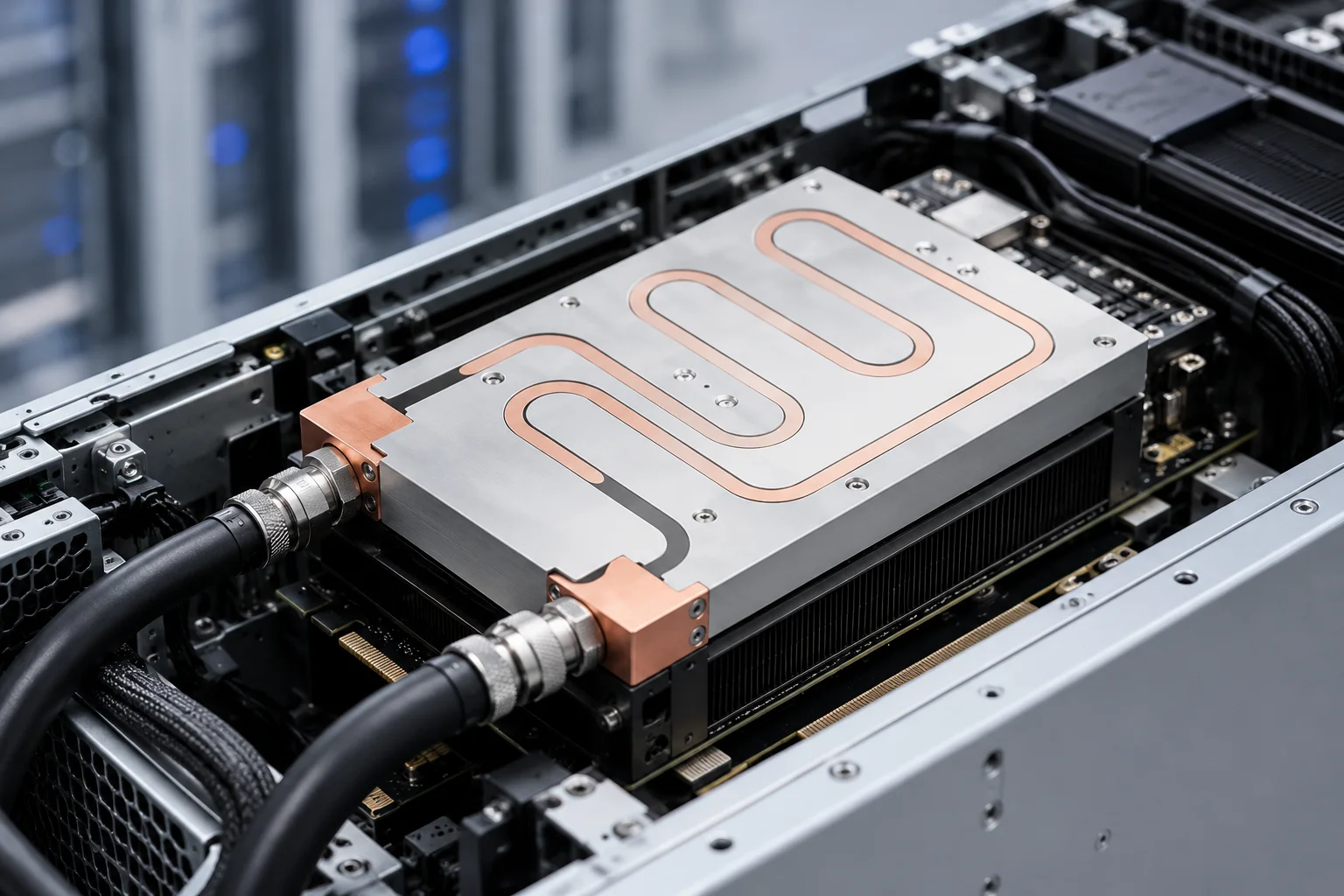
Extruded cold plates are usually better for cost-effective liquid cooling, repeatable channel geometry and scalable production, while machined cold plates are usually better for complex flow paths, localized hot spot cooling and high design flexibility. The right choice depends on heat load, channel complexity, production volume, pressure drop, material requirements and how closely the coolant path must follow the heat source.
For many power electronics, renewable energy systems, industrial equipment, telecom modules and data center hardware, liquid cold plates are used when air cooling cannot remove heat efficiently enough. But selecting the cold plate process is just as important as selecting the material. A design that is easy to machine may not be cost-effective for production. A design that is economical to extrude may not provide enough channel freedom for complex hot spots.
An extruded liquid cold plate uses an aluminum extrusion profile where internal coolant channels are formed as part of the profile geometry. The profile is then cut, machined, sealed and fitted with inlet and outlet connections. A machined liquid cold plate uses CNC machining to create channels directly in a solid plate, usually followed by a cover plate, sealing process and final machining.
This guide compares extruded vs machined cold plates by cost, thermal performance, flow channel flexibility, manufacturing risk and application fit, helping engineers and buyers select a practical process before requesting a quote.
For projects requiring repeatable aluminum liquid cooling structures, Jindu Tech provides extruded liquid cold plates for custom thermal management applications.
Fast Decision: Which Cold Plate Should You Start With?
The following table gives a quick engineering reference before going into detailed comparison.
| Project Requirement | Better Starting Point | Reason |
| Cost-effective batch production | Extruded cold plate | Repeatable extrusion profile can support volume production |
| Straight or parallel channels | Extruded cold plate | Channel geometry can be formed in the extrusion profile |
| Standardized aluminum liquid cooling platform | Extruded cold plate | One profile may support multiple lengths or product versions |
| Complex internal channel network | Machined cold plate | CNC machining allows greater channel freedom |
| Localized hot spot cooling | Machined cold plate | Channels can be placed closer to specific heat zones |
| Prototype with frequent design changes | Machined cold plate | CNC path changes may be easier than changing extrusion tooling |
| High internal surface area requirement | Machined or brazed cold plate | More channel features can be added depending on design |
| Strong cost control after design validation | Extruded cold plate | Tooling can be justified when production repeats |
| Tight packaging with irregular heat sources | Machined cold plate | Channel route can be adapted to the thermal map |
| Simple industrial liquid cooling | Extruded cold plate | Avoids unnecessary machining complexity |
Extrusion should be evaluated first when the cooling path can be standardized. Machining should be evaluated first when the coolant path must be shaped around complex heat sources.
This is the simplest way to avoid overdesign. Not every cold plate needs a complex CNC-machined channel system. Not every high-power project can be solved by a simple extruded channel.
Manufacturing Logic: Fixed Profile vs Cut Channels
The most important difference is how the coolant channels are created.
Extruded Cold Plate Manufacturing Logic
In an extruded cold plate, the channel structure is formed during the aluminum extrusion process. The aluminum is pushed through a die, creating a fixed cross-sectional profile. After extrusion, the profile may be cut to length, CNC machined, sealed with end caps or manifolds, and fitted with ports.
Typical features include:
- Fixed cross-sectional channels
- Straight or parallel flow paths
- Aluminum profile body
- Cut-to-length flexibility
- Machined ports and mounting features
- End cap or manifold sealing
- Repeatable internal geometry
The process is strongest when the same profile can be used repeatedly.
Machined Cold Plate Manufacturing Logic
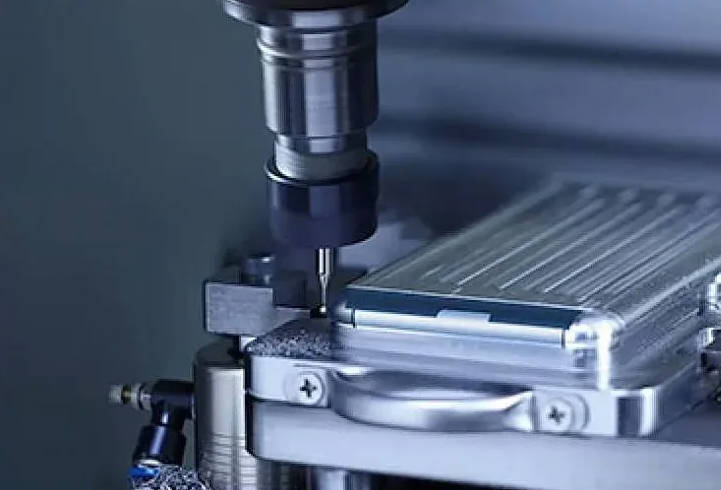
In a machined cold plate, channels are CNC machined directly into a solid metal plate. A cover plate or sealing structure is then used to close the channels. Depending on the application, the plate may be welded, brazed, mechanically sealed or joined through another method.
Typical features include:
- CNC-cut internal flow channels
- Serpentine, parallel, manifold or custom flow paths
- Local cooling zones
- Cover plate sealing
- Flexible hot spot targeting
- More machining time
- Greater design freedom
The process is strongest when channel geometry must be customized for the thermal layout.
The core trade-off is simple: extrusion reduces manufacturing complexity when the channel can be standardized, while CNC machining increases design freedom when the channel must be customized.
Cost Comparison: Tooling, Machining Time and Production Volume
Cost is often the main reason buyers compare extruded and machined liquid cold plates. But the lower-cost option depends heavily on production volume and design maturity.
Extruded Cold Plate Cost Structure
An extruded cold plate usually has an upfront tooling cost if a custom profile is required. Once the profile is confirmed, production can become more efficient because the internal channels are created by the extrusion profile rather than being machined individually into every part.
Extrusion may reduce cost when:
- The design will be produced repeatedly
- The channel cross-section can remain consistent
- The same profile can be cut into different lengths
- Post-machining requirements are limited
- Port and manifold structures can be standardized
- The project has a stable thermal layout
Machined Cold Plate Cost Structure
A machined cold plate may avoid extrusion die cost, especially for prototypes or low-volume parts. However, each plate requires CNC machining time for the internal channels, and more complex channels usually increase processing cost.
Machining may be economical when:
- Quantity is low
- Design changes are expected
- The channel layout is complex
- Tooling investment is not justified
- Prototype validation is still ongoing
- The project needs custom hot spot targeting
Cost Driver Table
| Cost Driver | Extruded Cold Plate | Machined Cold Plate |
| Initial tooling | Custom extrusion die may be needed | Usually no extrusion die required |
| Channel creation | Formed during extrusion | CNC machined into each plate |
| Design change cost | Tooling changes can be costly | CNC program changes may be easier |
| Unit cost at volume | Often lower when profile repeats | Depends on machining time |
| Prototype cost | May be less attractive if tooling is required | Often practical for early prototypes |
| Secondary machining | Ports, holes, flatness and sealing features | Channels, cover, ports and flatness |
| Material usage | Efficient for profile-based designs | More material removal may be required |
| Sealing cost | End caps, manifolds or cover joining | Cover plate and sealing process |
| Inspection cost | Channel, sealing, pressure and flow checks | Channel dimensions, sealing, pressure and flow checks |
Extruded cold plates are usually more cost-effective after the design is stable. Machined cold plates are usually more flexible during development and prototype validation.
For buyers, this means the project stage matters. Early engineering samples may benefit from machining. Mature production designs may benefit from extrusion.
Thermal Performance: Which One Cools Better?
Thermal performance is not determined only by the manufacturing process. It depends on channel location, channel size, coolant flow, pressure drop, material, contact surface and heat source layout.
When Extruded Cold Plates Perform Well
Extruded cold plates can perform well when the heat source is distributed and the channel profile aligns with the cooling area. Their consistent channels can provide stable performance across repeated parts.
They are often suitable for:
- Large-area heat sources
- Distributed power modules
- Battery-related cooling structures
- Industrial cooling plates
- Renewable energy equipment
- Standardized liquid cooling platforms
The channels are typically straight or regular. This can support predictable flow and relatively simple hydraulic design.
When Machined Cold Plates Perform Better
Machined cold plates are often better when the heat source is localized, irregular or difficult to cool with straight channels. CNC machining allows the coolant path to be placed closer to the heat source and shaped around the component layout.
They are often suitable for:
- Multiple hot spots
- Compact high heat flux devices
- IGBT modules
- Laser systems
- High-density electronics
- Custom power electronics layouts
- Thermal designs requiring local flow control
Thermal Performance Comparison
| Thermal Factor | Extruded Cold Plate | Machined Cold Plate |
| Distributed heat source | Strong fit | Also possible |
| Localized hot spot | Limited unless channel aligns well | Stronger fit |
| Channel-to-heat-source distance | Limited by profile geometry | More flexible |
| Flow path complexity | Lower to moderate | High |
| Temperature uniformity | Good for regular layouts | Strong for complex layouts if designed well |
| Coolant-side surface area | Limited by extrusion geometry | More customizable |
| Thermal repeatability | Strong when profile is stable | Strong with controlled machining and sealing |
| Optimization freedom | Moderate | High |
A machined cold plate does not automatically cool better. It only has more freedom to place coolant where the heat is generated.
If an extruded channel is already well aligned with the heat source, extrusion may deliver enough performance at lower cost.
Design Flexibility: The Strongest Advantage of Machining
Design flexibility is where machined cold plates have a clear advantage. CNC machining allows engineers to create channel paths that are difficult or impossible to produce through extrusion.
Machined Cold Plate Design Options
| Design Feature | Why It Matters |
| Serpentine channels | Increases coolant exposure across a target area |
| Parallel channels | Supports lower pressure drop and flow distribution |
| Manifold structures | Helps distribute coolant to multiple zones |
| Local channel widening | Targets specific heat zones |
| Variable channel depth | Allows local thermal tuning |
| Complex port placement | Helps fit system packaging |
| Irregular channel routing | Matches non-linear component layouts |
| Multi-zone cooling | Supports separate thermal areas in one plate |
This flexibility is valuable when the cold plate must be designed around a real electronic layout rather than a simple rectangular heat source.
Extruded Cold Plate Design Options
Extrusion also offers customization, but within the limits of a fixed cross-section.
| Design Feature | Extrusion Capability |
| Channel size | Can be defined in the extrusion profile |
| Channel count | Can be designed into the profile |
| Channel spacing | Can be customized within extrusion feasibility |
| Plate width | Defined by profile design |
| Plate length | Flexible through cutting |
| Port machining | Added after extrusion |
| Surface machining | Added after extrusion |
| End caps or manifolds | Used to direct flow |
Extrusion is flexible in profile design and length, but less flexible in 3D internal channel routing.
Flow Path and Pressure Drop
Pressure drop affects pump size, flow rate and system efficiency. A cold plate with excellent thermal performance may create problems if it requires too much pumping power.
Extruded Cold Plate Flow Behavior
Extruded cold plates often use straight, parallel or regular channels. This can make pressure drop easier to predict and manage. The flow path may be simpler, but flow distribution still depends on inlet, outlet, manifold and channel design.
Machined Cold Plate Flow Behavior
Machined cold plates can use complex channels to improve heat transfer, but narrow turns, long serpentine paths or uneven manifold design may increase pressure drop.
Pressure Drop Comparison
| Flow Factor | Extruded Cold Plate | Machined Cold Plate |
| Channel shape | Regular and profile-based | Custom and variable |
| Flow predictability | Often easier with simple channels | Depends on channel design |
| Pressure drop risk | Moderate when channels are well sized | Higher if paths are narrow or long |
| Manifold complexity | Often lower | May be higher |
| Flow balancing | Needed for multiple channels | Critical for parallel or multi-zone designs |
| Pump requirement | Often easier to control | Must be checked carefully |
More complex channels can improve heat transfer, but they can also increase pressure drop and pump requirements.
This is why thermal performance and hydraulic performance should be evaluated together.
Sealing and Reliability Considerations
Both extruded and machined cold plates require reliable sealing. The difference is where the sealing risk is located.
Extruded Cold Plate Sealing
Extruded cold plates may use end caps, manifolds, cover plates or joining methods to direct and seal the coolant path. The extrusion profile itself provides the channel geometry, but the ends and ports must be sealed properly.
Key risk points include:
- End cap sealing
- Manifold sealing
- Port machining
- Cover joining if used
- Channel cleanliness
- Pressure testing
Machined Cold Plate Sealing
Machined cold plates usually require a cover or sealing layer over the machined channels. The sealing method may involve welding, brazing, gasket design, screws or other joining processes.
Key risk points include:
- Cover plate sealing
- Channel burrs
- Surface flatness
- Joint quality
- Port sealing
- Pressure and leak testing
Reliability Comparison
| Reliability Point | Extruded Cold Plate | Machined Cold Plate |
| Internal channel consistency | Strong with stable profile | Strong with controlled machining |
| Sealing complexity | Often focused on ends/manifolds | Often focused on cover/joint area |
| Leak testing | Required | Required |
| Pressure testing | Required | Required |
| Channel cleanliness | Important | Important |
| Assembly sensitivity | Port and end sealing | Cover sealing and channel finish |
Neither design should be considered reliable without leak testing, pressure testing and process control.
Application Matching Table
| Application | Common Cooling Requirement | Better Starting Point |
| Renewable energy inverter | Large-area cooling, cost control | Extruded cold plate |
| Industrial power supply | Repeatable heat load and scalable production | Extruded cold plate |
| Battery-related module | Distributed cooling path | Extruded cold plate |
| Telecom power equipment | Standardized thermal platform | Extruded cold plate |
| IGBT module | Local hot spot and uniformity control | Machined cold plate |
| Laser equipment | Precise cooling near heat source | Machined cold plate |
| High-density electronics | Compact hot spots and custom layout | Machined cold plate |
| Data center power module | Depends on layout and airflow/coolant path | Extruded or machined |
| Medical equipment | Reliability and stable thermal control | Depends on heat source geometry |
| Prototype development | Frequent channel revisions | Machined cold plate |
Extrusion is stronger when the layout is repeatable. Machining is stronger when the thermal map is complex.
Process Selection Scorecard
Use the following scorecard during early design review.
| Question | If Yes, Consider Extrusion | If Yes, Consider Machining |
| Is the heat source distributed across a broad area? | Yes | Maybe |
| Can the flow path be straight or parallel? | Yes | Maybe |
| Is production volume meaningful? | Yes | Maybe |
| Is unit cost a major concern? | Yes | Maybe |
| Is the channel layout still changing often? | Maybe | Yes |
| Are there multiple localized hot spots? | Maybe | Yes |
| Does the coolant path need complex routing? | No | Yes |
| Does the project require fast prototype iteration? | Maybe | Yes |
| Is the cold plate part of a standardized product family? | Yes | Maybe |
| Is very high design flexibility required? | No | Yes |
If most answers point to repeatability and cost control, extrusion is worth evaluating. If most answers point to complex channel routing and thermal targeting, machining is likely the better starting point.
Manufacturing Risk Checklist
Before selecting a process, buyers should discuss the following risks with the supplier.
| Risk Area | Extruded Cold Plate | Machined Cold Plate |
| Design maturity | Tooling changes can be costly | Easier to revise in early stages |
| Channel complexity | Limited by extrusion feasibility | Limited by CNC access and sealing |
| Sealing | End cap/manifold design is critical | Cover plate sealing is critical |
| Flatness | May need post-machining | May need post-machining |
| Burr and cleanliness | Internal channel cleaning is important | Channel burr removal is critical |
| Pressure testing | Required before shipment | Required before shipment |
| Flow balance | Important for multi-channel profiles | Important for parallel channels |
| Cost growth | Excess post-machining can reduce advantage | Complex channels increase CNC time |
A process that looks economical during concept design may become expensive if quality control or post-processing is underestimated.
RFQ Specification Checklist
To receive a useful recommendation, buyers should prepare the following information before asking a cold plate supplier to compare extrusion and machining.
| Information to Provide | Why It Helps |
| Heat load | Defines cooling capacity requirement |
| Heat source size and location | Determines channel placement needs |
| Maximum allowable temperature | Sets thermal target |
| Coolant type | Affects material and corrosion considerations |
| Flow rate | Supports heat transfer and pressure drop review |
| Pressure drop limit | Helps match pump capability |
| Operating pressure | Defines sealing and pressure testing requirements |
| Plate size and thickness | Affects process feasibility |
| Port location and fitting type | Supports system assembly planning |
| Material preference | Helps evaluate aluminum or copper options |
| Surface treatment requirement | Supports corrosion and durability planning |
| Production volume | Determines tooling and cost strategy |
| Design stage | Helps choose prototype or production process |
| Drawing or 3D model | Supports manufacturability review |
| Testing requirements | Defines leak, pressure, flow and thermal validation scope |
Jindu Tech provides extruded liquid cold plates for projects where aluminum profile design, scalable production and cost-effective liquid cooling need to be evaluated.
For broader process comparison, Jindu Tech’s liquid cold plate solutions can help buyers review extrusion, FSW, brazing, deep drilling and tube embedded cold plate options.
Jindu Tech’s thermal solutions overview can also support buyers who are comparing heat sinks, liquid cold plates and other thermal management directions.
When to Choose an Extruded Cold Plate
Choose an extruded cold plate when:
- The channel layout can be straight, parallel or standardized
- Production volume supports extrusion tooling
- Unit cost and repeatability are important
- The heat source is distributed rather than highly localized
- Aluminum material is suitable
- The same profile may be used across multiple product lengths
- Pressure drop can be controlled through profile design
- The project needs scalable manufacturing
- Post-machining requirements are manageable
Extrusion is usually a practical choice for industrial liquid cooling, renewable energy systems, power electronics cabinets, battery-related modules and other products where the design is stable and repeatable.
When to Choose a Machined Cold Plate
Choose a machined cold plate when:
- The heat source has complex hot spots
- Channels must be placed close to specific heat zones
- The project needs serpentine, manifold or multi-zone flow paths
- Prototype changes are expected
- The design is not ready for extrusion tooling
- Local temperature uniformity is critical
- Internal channel geometry requires high flexibility
- The budget can support more CNC machining and sealing work
Machined cold plates are often used for IGBT modules, laser equipment, high-density electronics, compact power devices and custom thermal layouts that cannot be handled by regular extruded channels.
FAQ
What is the difference between an extruded cold plate and a machined cold plate?
An extruded cold plate uses an aluminum extrusion profile with channels formed during extrusion. A machined cold plate uses CNC-machined channels cut into a solid plate. Extrusion is stronger for repeatable profiles, while machining offers more channel design flexibility.
Which is cheaper, extruded or machined liquid cold plates?
Extruded cold plates are often more cost-effective for stable, repeatable designs and meaningful production volume. Machined cold plates may be more economical for prototypes, low-volume projects or designs with frequent channel changes because they avoid extrusion tooling.
Which cold plate has better thermal performance?
A machined cold plate can provide better local hot spot cooling because channels can be placed closer to heat sources. An extruded cold plate can perform well when the heat source is distributed and the channel profile matches the thermal layout.
When should I choose an extruded aluminum cold plate?
Choose an extruded aluminum cold plate when the project needs cost-effective liquid cooling, repeatable channel geometry, scalable production and a relatively simple flow path. It is suitable for many industrial, renewable energy and power electronics applications.
When should I choose a CNC machined cold plate?
Choose a CNC machined cold plate when the project requires complex internal channels, localized cooling, fast prototype iteration or custom routing around multiple hot spots. It is useful when thermal design flexibility is more important than minimum unit cost.
Are extruded cold plates suitable for high power electronics?
Yes, extruded cold plates can be suitable for high power electronics when the heat source is distributed and the channels are designed for the required flow rate and pressure drop. For compact high heat flux areas, machined, FSW or brazed designs may need comparison.
Do extruded cold plates require leak testing?
Yes. Extruded cold plates still require leak testing and pressure testing because end caps, manifolds, ports or cover structures must be sealed. Testing requirements should be defined before production.
What information is needed for a custom cold plate quote?
Buyers should provide heat load, heat source layout, coolant type, flow rate, pressure drop limit, operating pressure, plate size, port location, material preference, surface treatment, production volume, drawings and testing requirements.
Conclusion
Extruded and machined liquid cold plates solve different engineering problems. Extruded cold plates are often the better choice for cost-effective production, repeatable aluminum profiles and standardized cooling platforms. Machined cold plates are often the better choice for complex channel routing, localized hot spot cooling and prototype flexibility.
The right cold plate process depends on whether the project needs repeatable manufacturing efficiency or maximum channel design freedom.
For distributed heat sources, stable production designs and cost-sensitive liquid cooling projects, extrusion is often worth evaluating first. For irregular heat maps, multiple hot spots and high customization needs, machining may provide the necessary flexibility.
If your project requires a custom aluminum liquid cooling plate, Jindu Tech can review your drawing, heat load, coolant conditions, pressure drop target and production volume to evaluate whether extruded liquid cold plates are suitable for your application.