Why the Right Manufacturing Partner Matters as Much as the Part
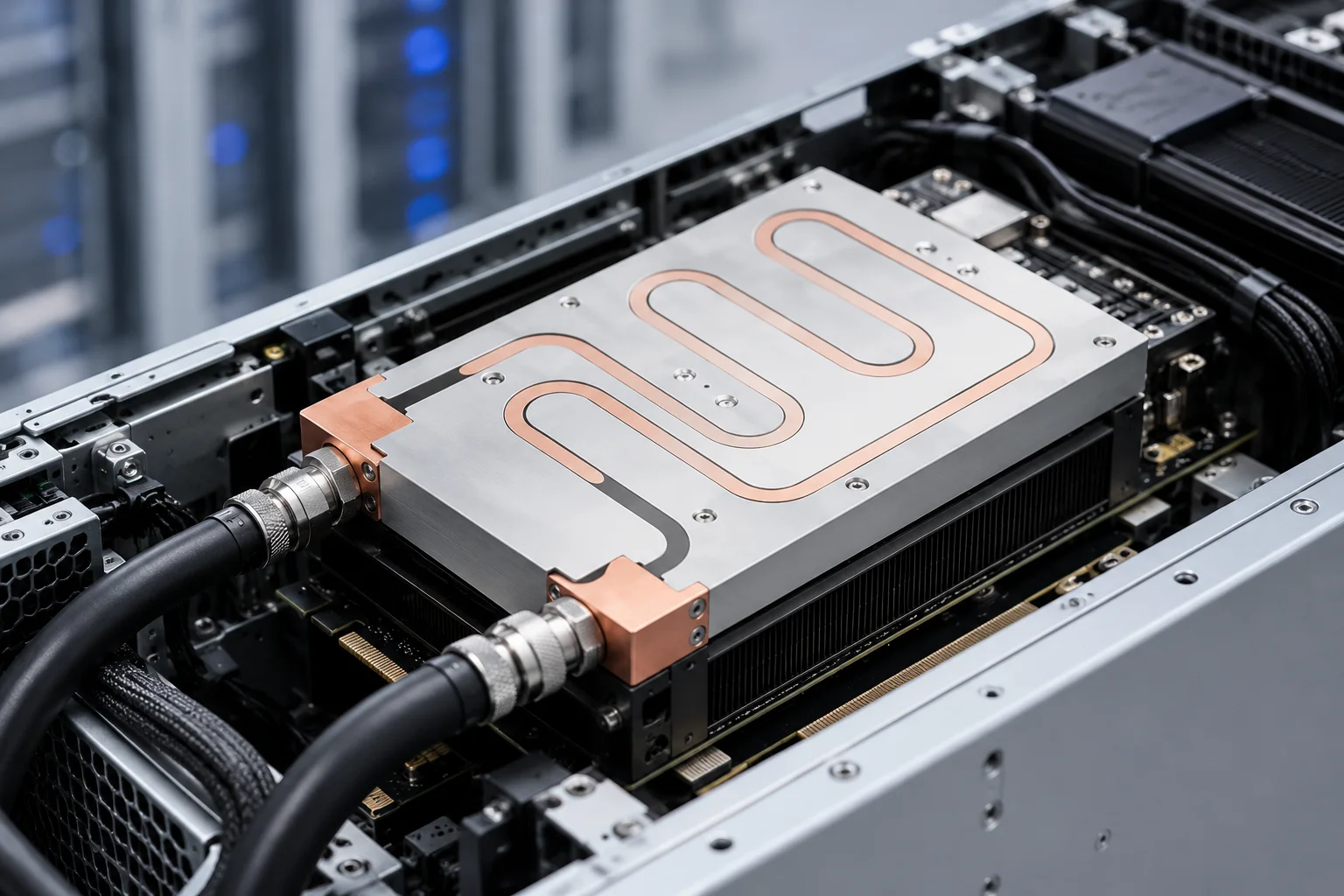
Choosing a custom liquid cold plate manufacturer is not the same as picking a catalog component. A cold plate sits directly against your most expensive and heat-dense devices—an IGBT power module, a battery cell stack, or an AI accelerator—so a weak bond line or a poorly optimized flow path can translate into thermal runaway once the product ships. The manufacturer you choose determines not only the thermal performance of the first unit, but also whether the 50,000th unit performs the same way. That is why procurement and engineering teams should evaluate the supplier’s process portfolio, simulation capability, and test discipline before they start comparing unit prices.
A field failure is expensive in more than the replacement part. It can trigger a recall, damage the module it was meant to protect, and consume engineering time that should go into your next program. Selecting on capability and test discipline—rather than the lowest bid—is usually the cheaper path once the full product lifecycle is counted.
This guide focuses on how to evaluate and shortlist a custom liquid cold plate supplier—not on how to size a plate for a given heat load (that is a separate engineering step). If you first need help defining the thermal requirement itself, work through your heat flux, coolant, and envelope before you approach vendors.
Start From Your Own Thermal and Mechanical Spec
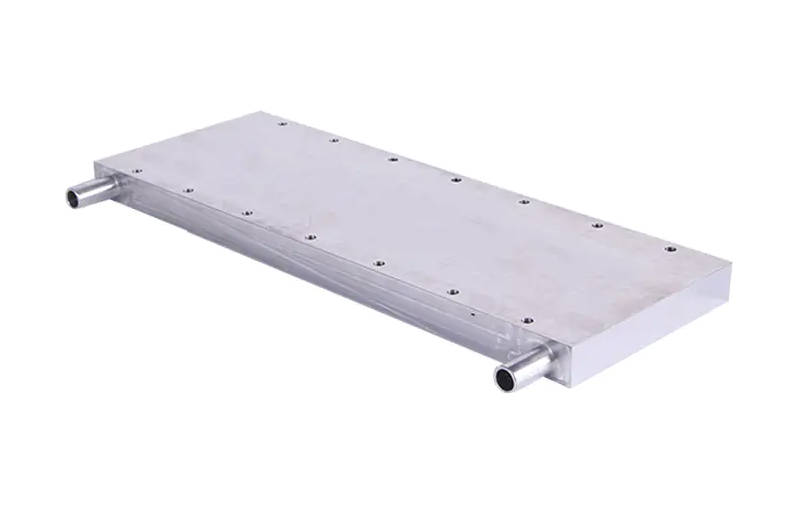
A capable manufacturer can only quote accurately if you hand them a clear specification. Gather the following before you request a quote, because suppliers differ in which parameters they can comfortably meet.
Heat Load, Coolant, and Flow
Document the total heat dissipation (watts), the hotspot map, the coolant type (water, water-glycol, dielectric fluid), the available flow rate, and the maximum allowable pressure drop. These numbers decide whether a simple drilled channel is enough or whether you need folded fins inside a vacuum-brazed cavity.
Envelope, Pressure, and Mounting
Note the available footprint, height budget, mounting surface flatness requirement, and the system operating pressure. Large-format plates for battery packs and inverters demand different joining methods than compact high-flux plates for compute modules. Sharing the mechanical envelope early prevents a supplier from designing a plate that cannot be manufactured or assembled in your housing.
Match the Joining Process to the Application
The single most important differentiator between cold plate suppliers is the range of joining processes they actually run in-house. Each process trades cost, geometry freedom, and mechanical strength differently.
| Process | Best for | Key advantage | Watch-outs |
|---|---|---|---|
| Deep drilling | Simple, straight flow paths; high-reliability blocks | Seamless structure, no bond line along the flow path, low leak risk | Limited to straight channels; less surface area per volume |
| Vacuum brazing | High-flux, compact plates with internal fins | Complex internal geometry and maximum heat-transfer surface area | Higher tooling and process cost; sensitive to cleaning |
| Extrusion | Cost-sensitive, high-volume standard cooling | Very cost-effective at scale with consistent quality | Fixed channel shapes; limited complexity |
| Friction stir welding (FSW) | EV battery packs, large power electronics | Forged-quality solid-state joint; excellent strength and seal integrity | Best on compatible aluminum alloys; dedicated equipment needed |
| Copper tube embedded | Power cabinets, rectifiers, lasers | Copper fluid path avoids aluminum corrosion; robust mechanical solution | Lower surface area than brazed fins; heavier assembly |
A supplier that runs only one process will tend to recommend that process for every job. A partner with deep drilling, vacuum brazing, extrusion, and FSW under one roof can propose the process that fits your thermal, pressure, and budget targets instead of forcing your design into their single capability. You can review a typical liquid cold plate process portfolio to see how these methods are applied across applications.
Verify Engineering and Simulation Capability
Custom cooling is an engineering service, not just metal fabrication. Ask whether the supplier performs computational fluid dynamics (CFD) simulation before cutting metal.
A manufacturer that validates flow path and hotspot distribution in simulation—rather than guessing—will usually deliver a plate that meets the target thermal resistance on the first prototype. Look for evidence of three engineering steps: flow-path optimization for uniform temperature distribution, thermal and hydraulic simulation to find dead zones and hot spots, and structural-integrity design for high internal pressure (especially on FSW plates). Design-for-manufacture (DFM) feedback at the quotation stage is a strong positive signal: it shows the supplier is thinking about yield and cost, not just the drawing. It is reasonable to ask a shortlisted supplier for a sample simulation report from a comparable past project; the ability to share one demonstrates mature engineering practice rather than a generic promise.
Audit the Leak-Test and Quality Discipline
For liquid cooling, leakage is not an option. The discipline of the test program is where many suppliers diverge, and it is the area most worth probing during a factory audit or quotation review.
Every production cold plate should undergo 100% air-tightness testing, not a sampled inspection, before it leaves the building. Beyond air testing, ask what proof-pressure and burst-pressure verification the supplier runs, and whether they use helium detection for critical applications. Reputable programs also include hydrostatic proof-pressure checks (commonly around 1.5 MPa in many specifications), final flow-resistance measurement, and internal particle cleaning so the plate does not contaminate your loop. If a supplier cannot describe their test pressures and acceptance criteria, treat that as a risk.
Confirm Certifications and Scalable Capacity
For automotive and regulated programs, certification is a gate, not a nice-to-have. IATF 16949 is the automotive quality management standard many EV and power-electronics buyers require; confirm the supplier actually holds it and can show it applies to the cold plate line.
Capacity matters for two reasons. First, prototype-to-mass-production continuity: a partner that takes you from DFM and prototyping through volume production reduces supply-chain handoff risk. Second, throughput: high-precision CNC machining centers and disciplined process control determine whether tolerances hold at scale. Ask for the supplier’s typical annual part capacity and repeatability figures so you can judge whether they can absorb your volume without subcontracting the critical steps. Ask to see documented quality controls spanning incoming material inspection, in-process checks, and final outgoing inspection, so you know the certificate reflects daily practice rather than a one-time audit.
Surface Treatment, Finishing, and Assembly
Cold plates rarely ship as bare machined parts. Corrosion resistance and surface hardness often come from anodizing, electroless nickel plating, or chromate passivation. Clarify which treatments the supplier offers and whether they are done in-house or outsourced.
Also confirm assembly scope. Many buyers prefer a supplier that installs connectors, fittings, and thermal interface material (TIM) so the delivered module is tested as a system. A partner that assembles and then performs a final comprehensive inspection reduces your incoming-quality burden.
Cost vs Total Value: Reading Beyond the Unit Price
The lowest quoted unit price is rarely the lowest total cost. A plate that needs rework, fails in the field, or forces a redesign late in your program can erase any saving many times over. When you compare suppliers, weigh total value: does the quote include simulation and DFM, or are those chargeable extras? Does the supplier stand behind leak performance, and what traceability do they keep if a batch issue appears? A manufacturer that invests in 100% testing and documented process control is reducing your downstream risk, which is part of the true price you pay. For volume programs, also model the cost of a qualification redo if you must switch suppliers mid-production—continuity from prototype to mass production is itself a form of cost protection, because re-qualifying a new vendor resets your timeline and your risk profile.
Red Flags to Avoid When Shortlisting Suppliers
| Red flag | Why it matters |
|---|---|
| Only one joining process available | Limits the design to that process; you may overpay or underperform versus the optimal method |
| No CFD or simulation offered | Higher risk of a plate that misses thermal targets after tooling is cut |
| Sampled, not 100%, leak testing | A single leaking unit in the field can damage an expensive module |
| Vague or missing test pressures | No objective acceptance criteria means inconsistent quality |
| No clear prototype-to-production path | Risk of re-qualification and delays when you scale |
A Practical RFQ Checklist for Custom Cold Plates
Use this list when you approach suppliers so quotes are comparable:
- Total heat load (W) and hotspot locations
- Coolant type and available flow rate / pressure drop budget
- Mechanical envelope, mounting flatness, and surface finish
- Target thermal resistance and operating pressure
- Preferred or required joining process (or ask for a recommendation)
- Required certifications (e.g., IATF 16949)
- Surface treatment and assembly scope (connectors, fittings, TIM)
- Prototype quantity, annual volume, and target lead time
- Test and inspection plan (air-tightness, proof pressure, particle)
What a Capable Custom Cold Plate Partner Looks Like
Putting the criteria together, a strong partner typically combines multiple in-house joining processes, CFD-driven design, 100% leak testing, relevant certification, and a clear path from prototype to mass production. JinduTech’s thermal management solutions cover friction stir welding, vacuum brazing, extrusion, deep drilling, and copper-tube embedding, backed by thermal simulation and full-cycle production for industries such as EV, power electronics, telecom, medical, and data centers.
Frequently Asked Questions
What should I look for in a custom liquid cold plate manufacturer?
Prioritize process breadth (FSW, vacuum brazing, extrusion, deep drilling), engineering simulation capability, a 100% leak-test program, relevant certification such as IATF 16949, and a proven prototype-to-mass-production workflow.
Which cold plate manufacturing process is best for EV battery packs?
Friction stir welding (FSW) is commonly chosen for EV battery packs and large inverters because it creates a solid-state, high-strength joint with strong seal integrity. Vacuum brazing is often preferred when compact plates need internal fins for maximum heat transfer.
How do I verify a supplier’s leak-testing quality?
Ask for the test method and acceptance criteria: 100% air-tightness testing, proof-pressure and burst-pressure values, and whether helium detection is used for critical applications. A supplier that cannot state pressures and criteria is a risk.
Should I choose a manufacturer that only does vacuum brazing?
Not necessarily. A single-process shop will tend to fit your design to that method. A multi-process manufacturer can recommend the most cost- and performance-appropriate process for your specific heat load, pressure, and volume.
What certifications matter for liquid cold plate suppliers in automotive?
IATF 16949 is the key automotive quality standard for many EV and power-electronics programs. Confirm the certification applies to the cold plate production line and ask for documented quality controls from incoming material to final inspection.
Can a custom cold plate manufacturer also assemble connectors and fittings?
Many capable suppliers offer complete assembly—installing connectors, fittings, and thermal interface material—then perform a final inspection so the delivered module is tested as a system, reducing your incoming-quality workload.
Conclusion
Choosing a custom liquid cold plate manufacturer is a supplier-qualification exercise, not a price-only decision. Score each candidate on process breadth, simulation capability, leak-test discipline, certification, and scalable production—then validate with a prototype before committing to volume. If you are defining a new liquid-cooled module, share your thermal and mechanical spec with an engineering-led supplier early so the plate is designed right the first time. Explore JinduTech’s custom liquid cold plate capabilities or contact the engineering team to discuss your application.