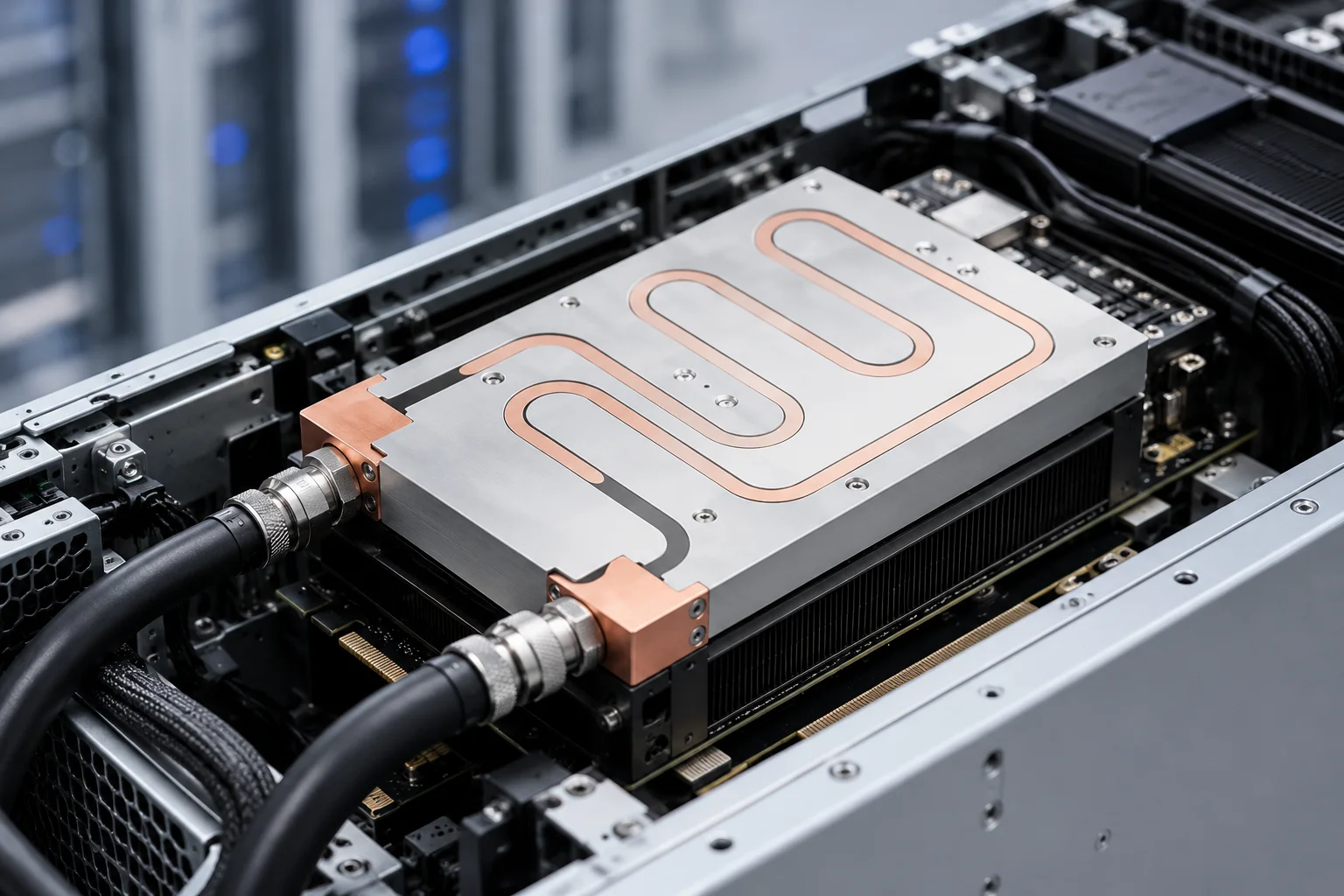
A liquid cold plate’s price is rarely set by a single number. It is driven by a combination of base material, manufacturing process, design complexity, plate size and tolerances, surface finishing, tooling or NRE, and order volume. For a simple extruded aluminum plate in volume production, unit cost can fall into the low tens of dollars; for a complex vacuum-brazed or friction-stir-welded copper plate built for high-power-density applications, unit cost often reaches into the hundreds of dollars. Because every project has different thermal and mechanical requirements, most suppliers quote per design rather than publishing a fixed price list.
A liquid cold plate is typically quoted by design, not by catalog price, because material grade, process route, and tolerance requirements can change the cost by several multiples. If you are budgeting a new thermal program, the practical question is not “what is the price of a liquid cold plate” but “which combination of material, process, and specification matches my heat load at the lowest total cost.”
For buyers comparing options, reviewing JinduTech’s liquid cold plate solutions alongside the cost factors below is a useful starting point before requesting a quote.
Why Liquid Cold Plate Pricing Varies So Much
Unlike commodities such as fasteners or standard heat sinks, a liquid cold plate is a engineered thermal interface. Two plates that look similar from the outside can differ by 5x or more in cost because the internal flow path, the bond between the fluid cavity and the mounting surface, and the material beneath the heat source are all different. Procurement teams that treat cold plates as a standard part often underestimate both cost and lead time. Understanding the levers below helps you scope a design that meets the thermal target without paying for capability you do not need.
Key Factors That Affect Liquid Cold Plate Cost
Base Material: Aluminum vs Copper
Aluminum (commonly 6061 or 6063) is lighter and less expensive, and it is adequate for the majority of liquid cooling loops. Copper offers roughly 1.8 to 2 times the thermal conductivity of aluminum, which matters when the heat source is small, dense, or temperature-sensitive. Copper is also easier to braze and machine to fine features, but it is heavier and more costly.
Copper can cost roughly two to three times more per kilogram than aluminum and adds machining time, which is why material choice is usually the first cost lever a buyer reviews. A common cost-saving move is to use aluminum for the plate body and place a thin copper insert only under the hottest component.
Manufacturing Process
The route used to form the fluid channel is the largest structural cost driver. The main processes are:
- Extruded: lowest cost, but channels are limited to simple straight shapes.
- CNC machined: highly flexible for prototypes and low volumes; higher labor and scrap.
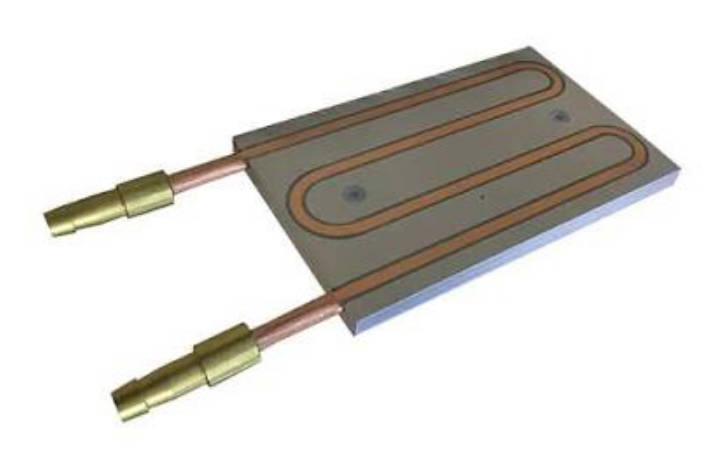
- Vacuum brazed: enables complex serpentine or engineered paths in aluminum; medium-to-high cost.
- Friction stir welded (FSW): produces leak-tight joints with excellent thermal continuity; high equipment cost, strong for production.
- Embedded tube: a tube pressed into an aluminum base; cost-effective for moderate performance.
The manufacturing route alone can change unit cost by 3x to 10x, which is why process selection is the single biggest driver after material. A design that can be extruded or embedded-tube will almost always beat a machined or brazed equivalent on price if the thermal requirement allows it.
Design Complexity and Flow Channel Geometry
Serpentine, parallel, pin-fin, or microchannel layouts each change how much metal must be removed or joined. Microchannels and fine pin fins improve performance but multiply machining and cleaning steps. A flow path that is easy to manufacture yet still meets the pressure-drop budget is usually the cheapest route to the thermal target.
Plate Size, Thickness and Tolerances
Larger plates use more material and take longer on the machine. Tighter flatness, surface-finish, and hole-position tolerances add machining passes and inspection. Specifying tolerances tighter than the application needs is one of the most common ways to inflate cost without improving the result.
Surface Treatment and Finishing
Anodizing, nickel plating, passivation, or specialty coatings protect the plate and improve compatibility with the coolant. Each finishing step adds a process and handling cost. The right finish depends on the fluid chemistry and the operating environment rather than on appearance.
Tooling, NRE and Prototyping
Custom tooling, fixtures, and first-article validation are non-recurring engineering (NRE) costs. On low volumes they are a large share of total cost; on production volumes they are amortized across the run. Early prototyping is cheaper than late redesign, so validating the thermal model before tooling pays back quickly.
Order Volume and Lead Time
Unit cost drops sharply as volume rises because setup, programming, and NRE spread across more pieces. Rush or expedited orders typically carry a premium for queue jumping and overtime. A realistic annual volume estimate is one of the most useful inputs you can give a supplier.
Material and Process Cost at a Glance
| Cost factor | Lower-cost choice | Higher-cost choice | Why it matters |
|---|---|---|---|
| Base material | Aluminum 6061/6063 | Copper or copper inserts | Copper costs more per kg and machines slower |
| Process | Extruded or embedded tube | Machined, brazed, or FSW | Complex joining and machining add steps |
| Geometry | Straight or simple channels | Microchannel or fine pin fin | Fine features multiply machining and cleaning |
| Tolerances | Standard commercial | Tight flatness/finish | Extra passes and inspection add cost |
| Volume | Production run | Prototype or small batch | NRE spreads over more units |
How Manufacturing Process Drives Price
| Process | Typical use | Relative unit cost | Notes |
|---|---|---|---|
| Extruded | Simple straight-channel plates, high volume | Low | Lowest tooling, limited geometry |
| Embedded tube | Moderate-performance cooling | Low–Medium | Cost-effective, less design freedom |
| CNC machined | Prototypes, low volume, complex paths | Medium–High | Flexible, labor and scrap intensive |
| Vacuum brazed | Complex aluminum flow paths | Medium–High | Strong joints, good for production |
| Friction stir welded | Leak-tight high-power plates | High | High equipment cost, excellent continuity |
Common Mistakes That Inflate Cost
- Over-specifying material. Using copper everywhere when aluminum would meet the spec.
- Unnecessarily tight tolerances. Tightening flatness or finish beyond what the assembly needs.
- Late design changes. Reworking a tooled design is far more expensive than fixing it in prototype.
- Ignoring volume. Quoting a prototype process for a production program, or vice versa.
- Skipping design-for-manufacture (DFM) review. A small change in channel shape can move a part from brazed to extruded.
How to Get an Accurate Quote
The fastest way to a realistic number is to send a complete specification. Useful inputs include:
- Total heat load and the temperature limit at the source
- Coolant type, flow rate, and allowable pressure drop
- Footprint, thickness, mounting pattern, and interface material
- Required material and any finishing or plating
- Estimated annual volume and target timeline
- Drawings or a 3D model where available
With these, a supplier can propose the lowest-cost process that still meets the thermal budget. You can review our custom liquid cold plate manufacturing options to see which processes fit your application.
Choosing the Right Supplier
Price is only one axis. A capable supplier provides DFM feedback, validates the thermal model, holds the required quality system, and communicates lead time honestly. Ask for references on similar power densities and confirm they can scale from prototype to production on the same process. Strong engineering support early usually reduces total cost more than a small unit-price discount later.
To compare capability and process fit, explore the full liquid cold plate product range and share your specification for a scoped quote.
Frequently Asked Questions
How much does a liquid cold plate cost?
There is no single price. Simple extruded or embedded-tube aluminum plates can start in the low tens of dollars per unit at volume, while complex brazed or FSW copper plates for high-power applications often cost hundreds of dollars each. Most suppliers quote per design after reviewing heat load, material, process, and volume.
Why is copper more expensive than aluminum for cold plates?
Copper costs more per kilogram than aluminum and is slower to machine, so material and labor both rise. It is chosen where its higher thermal conductivity is needed to hit a tight thermal resistance at a dense heat source, not as a default.
Which manufacturing process is cheapest for a liquid cold plate?
Extruded and embedded-tube designs are usually the lowest cost when the thermal requirement allows a simple channel shape. Machined, vacuum-brazed, and friction-stir-welded plates cost more but unlock complex flow paths and higher performance.
Does order volume affect liquid cold plate price?
Yes, significantly. Non-recurring engineering such as tooling and first-article validation is spread across the run, so per-unit cost typically falls as volume rises. Prototype and small-batch orders carry more of that NRE in each piece.
How can I reduce liquid cold plate cost without losing performance?
Use aluminum where it meets the spec, keep tolerances at commercial levels, choose the simplest process that satisfies the pressure-drop and thermal budget, and complete a DFM review before tooling. Avoid late design changes, which are the most expensive corrections.
What information should I send to get an accurate quote?
Share the heat load and temperature limit, coolant and flow rate, footprint and mounting, material and finishing needs, estimated volume, and any drawings. A complete specification lets a supplier recommend the lowest-cost process that still meets performance.
Conclusion
Liquid cold plate cost is not a mystery once you separate the levers: material, process, geometry, tolerances, finishing, tooling, and volume. The cheapest plate is the one whose specification matches the thermal target exactly, with no unused capability baked in. If you are scoping a new program, start from your heat load and volume, then let process selection follow. Visit JinduTech to discuss your requirement, or review the liquid cold plate product range and send your specification for a scoped quote.