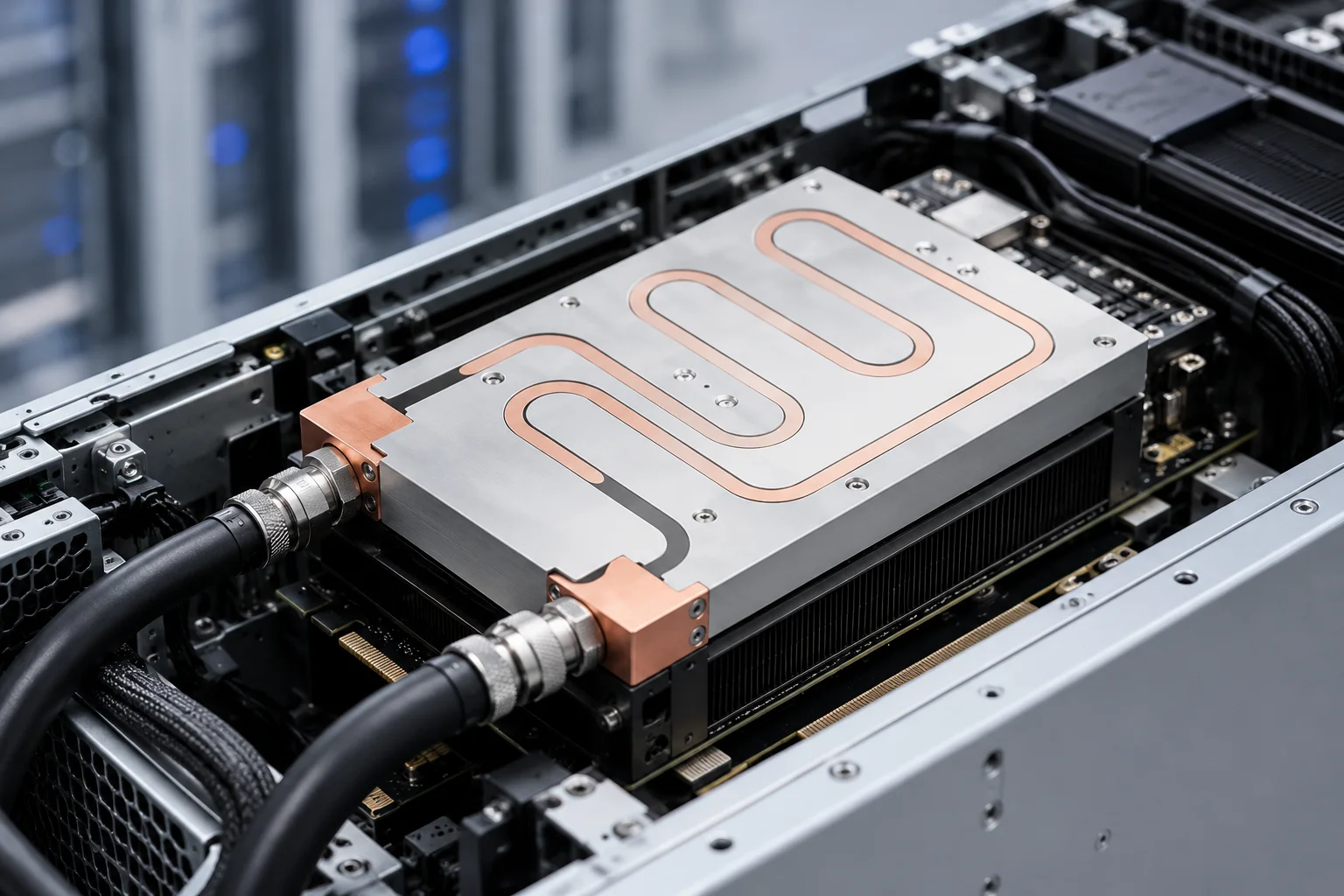
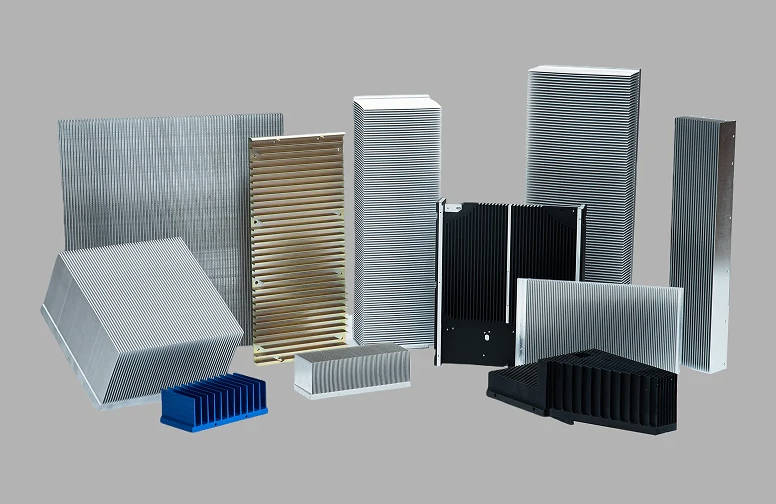
A skived fin heat sink is usually chosen when a project needs high fin density, thin fins and stronger thermal contact between the base and fins. An extruded heat sink is usually chosen when the project needs a cost-effective, repeatable aluminum profile for standard electronics cooling. The right choice depends on heat load, available space, airflow condition, fin geometry, production volume and budget.
For high power electronics, telecom modules, LED lighting, industrial drives, servers and power supplies, heat sink selection is not only about size. The manufacturing process affects fin thickness, fin spacing, heat transfer area, airflow resistance, tooling cost and production flexibility.
Skiving and extrusion are two widely used processes for aluminum heat sink manufacturing, but they are suitable for different design priorities. Skived heat sinks are often used when the cooling area is compact and the design needs a high density fin structure. Extruded heat sinks are often used when the fin profile can be standardized and the project needs scalable production at a controlled cost.
This guide compares skived fin heat sinks and extruded heat sinks from an engineering and purchasing perspective, helping buyers decide which process fits their cooling project.
For projects that require high density fins and custom thermal design, Jindu Tech provides skiving fin heat sinks for electronics and industrial thermal management applications.
Fast Comparison: Skived Fin vs Extruded Heat Sink
The table below gives a quick decision reference before going into detailed engineering factors.
| Comparison Point | Skived Fin Heat Sink | Extruded Heat Sink |
| Manufacturing method | Fins are cut and lifted from a solid metal base | Aluminum is pushed through a die to form a profile |
| Fin density | Usually higher | Limited by extrusion die and profile feasibility |
| Fin thickness | Can be very thin depending on design and process | Usually thicker than skived fins |
| Base-to-fin thermal path | One-piece structure with no bonded interface | One-piece extrusion profile |
| Design flexibility | Good for custom high-density fins | Good for repeatable straight profiles |
| Tooling requirement | Lower tooling dependency than custom extrusion | Custom die required for new profiles |
| Production suitability | Suitable for prototypes, custom parts and medium runs | Strong for medium to high-volume production |
| Cost direction | Often higher for large simple profiles | Often more cost-effective after tooling |
| Typical applications | High power electronics, telecom, compact cooling | Power supplies, enclosures, LED, general electronics |
| Main limitation | Process and size constraints; delicate fins may need protection | Limited fin aspect ratio and profile complexity |
Skiving is usually better for compact, high-performance cooling. Extrusion is usually better for standardized, cost-efficient production.
This does not mean one process is always superior. A well-designed extruded heat sink can outperform a poorly matched skived design if the airflow, fin spacing and mounting conditions are more suitable.
How a Skived Fin Heat Sink Is Made
A skived fin heat sink is produced by shaving thin layers from a solid block of aluminum or copper. A precision cutting tool slices the material and bends each slice upward to form fins. The fins remain attached to the base because they are created from the same piece of material.
This process creates a continuous metal structure between the base and the fins. There is no solder layer, adhesive layer or mechanical joint between them.
Why the Skiving Process Matters
The skiving process allows engineers to create thin fins and tight fin spacing that may be difficult to achieve through extrusion. More fins can increase the heat transfer surface area, especially when airflow is available to pass through the fin gaps.
The main value of skiving is the ability to produce high density fins from a single piece of metal, improving the thermal path from the base to the fin area.
Skived fin heat sinks are often considered when:
- The heat source is compact
- The available space is limited
- High fin density is needed
- The design uses forced airflow
- A copper or aluminum base is required
- The project needs custom geometry without extrusion tooling
However, skived fins may be thinner and more delicate than extruded fins. Packaging, handling and assembly should be considered during product development.
How an Extruded Heat Sink Is Made
An extruded heat sink is produced by forcing heated aluminum through a shaped die. The die forms the fin profile and base geometry. After extrusion, the profile is cut to length and may go through secondary machining, drilling, tapping, deburring, surface treatment or assembly.
Extrusion is one of the most common manufacturing methods for aluminum heat sinks because it is efficient and repeatable once the die is made.
Why the Extrusion Process Matters
Extrusion works well when the heat sink can use a consistent cross-sectional profile. This is useful for standard electronics cooling, LED housings, power supplies, industrial control units and telecom equipment.
The main value of extrusion is cost-efficient repeatability for aluminum heat sink profiles with stable fin geometry.
Extruded heat sinks are often selected when:
- The fin profile is relatively standard
- Production volume supports tooling
- Cost control is important
- The heat load is moderate to high but not extremely concentrated
- The design requires long profiles or different cut lengths
- The application uses natural convection or moderate forced airflow
The limitation is that extrusion cannot easily produce very thin, tall or dense fins beyond profile feasibility. If the design requires extremely high fin density in a compact footprint, skiving may be more suitable.
Fin Density and Thermal Performance
Fin density is one of the most important differences between skived and extruded heat sinks. In general, skiving can produce thinner fins and tighter spacing than many extrusion profiles. This increases surface area, which can improve cooling under the right airflow conditions.
However, higher fin density does not automatically mean better performance. If the fin gaps are too narrow and airflow is weak, air may not pass through effectively. This can reduce the real cooling benefit.
Fin Density Comparison
| Thermal Design Factor | Skived Fin Heat Sink | Extruded Heat Sink |
| Fin thickness | Can be thinner depending on process capability | Usually limited by die and extrusion feasibility |
| Fin spacing | Can be tighter | Typically wider than skived designs |
| Surface area | Often higher in compact size | Good for standard profiles |
| Natural convection | Needs careful spacing; very dense fins may restrict airflow | Often practical with wider fin spacing |
| Forced airflow | Often strong fit for dense fins | Also suitable if profile is designed for airflow |
| Heat source concentration | Good for compact high heat areas | Better when heat is more distributed |
| Airflow resistance | Can be higher with dense fins | Usually easier to control |
A high density fin heat sink performs well only when the airflow condition can support the fin geometry.
For natural convection, wider fin spacing may be more effective. For forced airflow, skived fins may provide stronger surface area within a compact volume.
Cost and Production Volume Comparison
Cost is not determined only by material weight. It is affected by tooling, machining time, fin geometry, surface treatment, inspection and production volume.
Cost Structure Differences
| Cost Factor | Skived Fin Heat Sink | Extruded Heat Sink |
| Tooling cost | Lower than custom extrusion in many cases | Requires extrusion die for custom profile |
| Unit cost for simple high-volume parts | May be higher | Often lower after tooling |
| Unit cost for custom low-volume parts | Often practical | May be less practical if a new die is needed |
| Design change cost | More flexible for machining changes | Die changes can increase cost and lead time |
| Processing time | Depends on skiving length and fin density | Efficient after profile is produced |
| Material utilization | Depends on block size and machining plan | Efficient for continuous profiles |
| Secondary machining | Often required for mounting features | Often required for cut length and holes |
For high-volume standard aluminum profiles, extrusion is often more economical. For custom cooling designs with high fin density and limited quantity, skiving can be more practical because it avoids the need for a custom extrusion die.
If the design is still changing, skiving may offer more development flexibility. If the design is stable and volume is high, extrusion may provide better cost efficiency.
Design Flexibility and Mechanical Constraints
Skiving and extrusion both create one-piece heat sink structures, but their design constraints are different.
Skived Fin Design Constraints
Skived heat sinks are affected by:
- Cutting direction
- Fin height and thickness
- Base thickness
- Material behavior
- Tool path
- Fin deformation risk
- Part size
- Handling and packaging needs
Skived fins can be thin and dense, but this also means they may require careful handling. If the heat sink will be exposed to rough assembly conditions, protective packaging and assembly planning matter.
Extruded Heat Sink Design Constraints
Extruded heat sinks are affected by:
- Die feasibility
- Fin aspect ratio
- Minimum wall thickness
- Profile width
- Material flow during extrusion
- Straightness and dimensional control
- Post-machining needs
- Tooling cost
Extrusion is strong for continuous profiles, but design freedom is limited by what can be extruded through the die.
Application Matching Table: Which Process Fits Better?
Different applications have different thermal, cost and mechanical priorities.
| Application | Common Requirement | Skived Fin Heat Sink Fit | Extruded Heat Sink Fit |
| Telecom modules | Compact size and high heat density | Strong fit when forced airflow is available | Suitable for standard profiles |
| Power electronics | High heat load and limited space | Strong fit for compact high performance cooling | Suitable for larger or distributed heat sources |
| LED lighting | Cost control and housing integration | Suitable for high power compact modules | Strong fit for standard aluminum designs |
| Server hardware | High heat density and airflow | Strong fit for dense fin designs | Suitable for standard airflow channels |
| Industrial power supply | Continuous operation and cost control | Suitable for high load zones | Strong fit for repeatable structures |
| Automotive electronics | Weight, reliability and volume | Suitable when compact cooling is needed | Suitable when profile is stable |
| Laser equipment | Localized heat source | Strong fit for high density cooling | Suitable for moderate heat distribution |
| Consumer electronics | Compact size and appearance | Design-dependent | Strong fit for volume production |
This table should be used as a starting point. Final selection should consider heat load, airflow, mounting surface, production volume and system cost.
Buyer Decision Matrix
The following matrix helps procurement and engineering teams make a practical decision.
| Project Condition | Recommended Direction |
| High fin density is required | Consider skived fin heat sink |
| The design needs a standard long aluminum profile | Consider extruded heat sink |
| Production volume is high and profile is stable | Extrusion may be more cost-effective |
| The project is in prototype or low-volume stage | Skiving may provide more flexibility |
| Forced airflow is available | Skived high density fins may be useful |
| Natural convection is the main cooling mode | Extrusion with wider fins may be easier to optimize |
| The heat source is compact and intense | Skived fin design may fit better |
| The heat source is spread across a large area | Extruded design may be sufficient |
| The budget cannot support a custom die | Skiving may be considered |
| Very rugged fins are needed for handling | Extruded fins may be more robust depending on design |
The right choice is not only a thermal decision. It is also a production, assembly and cost decision.
Airflow: The Factor That Often Changes the Answer
Many buyers ask whether skived fin heat sinks or extruded heat sinks dissipate more heat. The answer depends heavily on airflow.
A dense skived fin array can provide large surface area, but if airflow is weak, the center of the fin field may not receive enough air movement. In that case, wider fin spacing may perform better.
For forced airflow systems, dense fins may be more effective because the fan or blower can push air through narrow channels. For natural convection, wider spacing often helps air rise and move more freely.
Airflow-Based Selection
| Airflow Condition | Better Starting Point | Reason |
| Natural convection | Extruded heat sink or wider fin design | Lower airflow resistance |
| Low-speed forced air | Extruded or moderate-density skived design | Balance between surface area and airflow |
| High-speed forced air | Skived fin heat sink | Dense fins can use stronger airflow |
| Ducted airflow | Skived or extruded depending on pressure drop | Air path design matters |
| Uncertain airflow | Prototype testing recommended | Real airflow may differ from design assumptions |
For high power electronics, thermal simulation and prototype testing are useful because airflow behavior can be difficult to judge from heat sink size alone.
Material Considerations: Aluminum or Copper?
Both skived and extruded heat sinks are commonly associated with aluminum, but skiving can also be used with copper in some high-performance applications. Copper offers higher thermal conductivity but is heavier and usually more expensive.
Material Selection Comparison
| Material | Skived Fin Heat Sink | Extruded Heat Sink |
| Aluminum | Common, lightweight, cost-effective | Very common and suitable for extrusion |
| Copper | Useful for compact high heat flux areas | Less common for standard extrusion due to cost and weight |
| Hybrid designs | Possible depending on structure | Possible with secondary assembly |
Aluminum is often a practical choice for many electronics cooling projects because it balances weight, cost and manufacturability. Copper may be considered when the heat source is extremely concentrated and the project can accept higher weight and cost.
Quality Risks Buyers Should Check
Both skived and extruded heat sinks can perform well when properly designed and manufactured. But each process has quality risks that buyers should understand.
Skived Fin Heat Sink Quality Checks
| Inspection Point | Why It Matters |
| Fin thickness consistency | Affects surface area and airflow behavior |
| Fin spacing consistency | Affects thermal performance and pressure drop |
| Fin straightness | Affects airflow and assembly clearance |
| Base flatness | Affects contact with the heat source |
| Burr control | Prevents assembly and handling issues |
| Surface treatment coverage | Supports corrosion resistance and appearance |
| Packaging protection | Prevents fin bending during shipping |
Extruded Heat Sink Quality Checks
| Inspection Point | Why It Matters |
| Profile dimension | Confirms fit and assembly compatibility |
| Fin straightness | Affects airflow and appearance |
| Base flatness | Affects thermal interface performance |
| Cut length accuracy | Supports product assembly |
| Machining accuracy | Ensures hole and mounting consistency |
| Surface finish | Affects appearance and corrosion resistance |
| Die stability | Supports repeatable production |
Quality control should be discussed during RFQ, especially when the heat sink is used in power electronics, telecom equipment or industrial systems.
RFQ Specification Checklist for Custom Heat Sinks
To receive a useful quote, buyers should provide technical information instead of only asking for a price.
| Information to Provide | Why It Helps |
| Heat load | Defines cooling requirement |
| Heat source size | Determines base contact area |
| Available space | Defines maximum heat sink size |
| Airflow condition | Helps choose fin density and process |
| Natural or forced convection | Affects fin pitch and fin height |
| Target temperature | Defines thermal performance requirement |
| Material preference | Supports aluminum or copper selection |
| Mounting method | Affects base design and machining |
| Surface treatment | Defines corrosion and appearance needs |
| Production volume | Helps compare skiving and extrusion cost |
| Drawing or 3D file | Improves manufacturability review |
| Application environment | Helps evaluate vibration, dust, humidity and handling |
Jindu Tech provides custom skiving fin heat sinks for projects that require dense fins, compact cooling structures and application-specific machining.
For buyers comparing broader thermal management options, Jindu Tech’s thermal solution overview can also help identify related cooling technologies and product directions.
When You Should Choose a Skived Fin Heat Sink
Choose a skived fin heat sink when the project requires:
- High fin density
- Compact cooling size
- Thin fins
- Strong base-to-fin thermal path
- Custom geometry without extrusion tooling
- High power electronics cooling
- Forced airflow through dense fins
- Prototype or medium-volume production
- Aluminum or copper high-density cooling structures
Skiving is especially useful when the design needs more surface area than extrusion can practically provide within the same footprint.
When You Should Choose an Extruded Heat Sink
Choose an extruded heat sink when the project requires:
- Cost-effective aluminum production
- Stable cross-sectional profile
- Medium to high production volume
- Standard fin geometry
- Strong mechanical robustness
- Natural convection or moderate forced airflow
- Long profiles cut to different lengths
- Lower unit cost after tooling
Extrusion is often the better choice when the product design is stable and the cooling requirement can be met with a standard or custom profile.
FAQ
Is a skived fin heat sink better than an extruded heat sink?
A skived fin heat sink is better when the project needs high fin density, thin fins and compact cooling performance. An extruded heat sink is better when the design needs cost-effective, repeatable aluminum profiles. The better option depends on airflow, heat load, space and production volume.
What is the main difference between skiving and extrusion heat sinks?
Skiving forms fins by cutting and lifting thin layers from a solid metal base. Extrusion forms a continuous aluminum profile by pushing material through a die. Skiving is stronger for high density fins, while extrusion is stronger for repeatable profile production.
When should I choose a skived heat sink for power electronics?
Choose a skived heat sink when the power electronics module has high heat density, limited space and available forced airflow. Skived fins can increase surface area in a compact footprint, which helps when standard extruded profiles cannot meet the thermal target.
Are extruded heat sinks cheaper than skived heat sinks?
Extruded heat sinks are often more cost-effective for stable, high-volume aluminum profiles after tooling is completed. Skived heat sinks may be more practical for custom, lower-volume or high-density designs where creating an extrusion die is not economical.
Which heat sink is better for natural convection?
For natural convection, extruded heat sinks or wider fin designs are often easier to optimize because air can move more freely between the fins. Very dense skived fins may restrict natural airflow unless the fin spacing is designed carefully.
Can skived fin heat sinks be made from copper?
Yes, skived fin heat sinks can be made from copper in some high-performance applications. Copper provides higher thermal conductivity than aluminum, but it is heavier and usually more expensive, so it should be used when the thermal benefit justifies the cost.
What information is needed for a custom skived fin heat sink quote?
Buyers should provide heat load, heat source size, available space, airflow condition, target temperature, material preference, mounting method, surface treatment, production volume and drawings or 3D files. This helps the supplier evaluate fin density and manufacturability.
Does higher fin density always improve heat sink performance?
No. Higher fin density increases surface area, but it can also increase airflow resistance. Dense fins work better with forced airflow. For natural convection or weak airflow, wider fin spacing may provide better real-world cooling performance.
Conclusion
Skived fin heat sinks and extruded heat sinks both have clear advantages, but they are designed for different project priorities. Skived heat sinks are often selected for high fin density, compact size and high-performance cooling. Extruded heat sinks are often selected for cost-effective, repeatable aluminum profiles in standard electronics cooling.
The practical decision should be based on heat load, airflow, available space, fin density, production volume and cost target.
For high power electronics, telecom modules, LED systems, industrial equipment and server hardware, the right manufacturing process can improve thermal performance and reduce redesign risk. If your project requires a compact high density fin structure, Jindu Tech can review your drawing, thermal requirement and airflow condition to evaluate whether skiving fin heat sinks are suitable for your application.